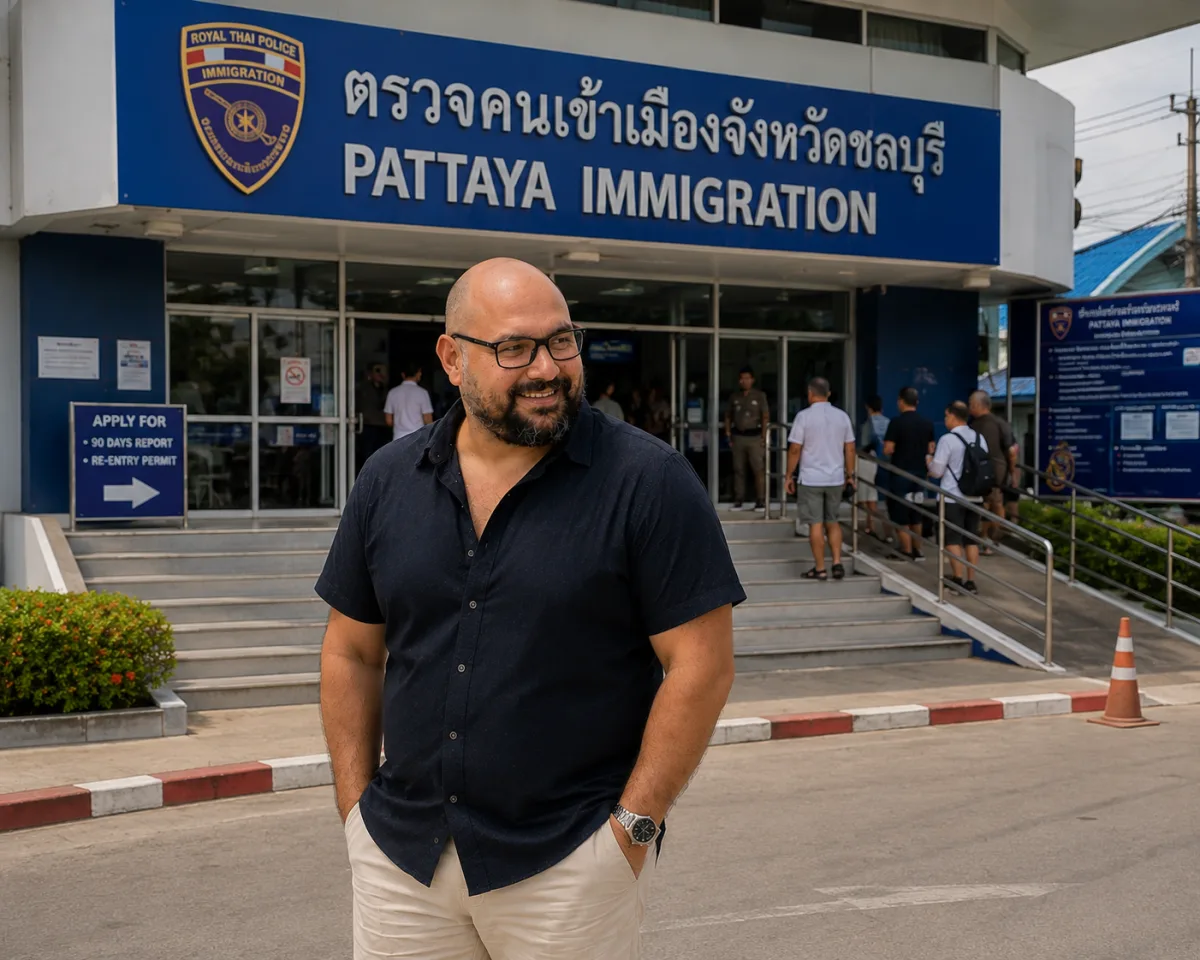
In brief: Permanent Residence (PR) in Thailand is achievable for DACH citizens, but it is no fast track: as a rule you need at least three consecutive years on a Non-Immigrant visa with a work permit, documented income of approximately 80,000 THB per month and patience for a one-year application process subject to a country quota. Thai citizenship typically builds on PR and only follows after a further five years of PR – for most Pattaya buyers it is a long-term aspiration rather than an immediate agenda item. Importantly: you need neither status to buy property or enjoy a comfortable life in Pattaya.
Permanent Residence in Thailand: who is this topic actually relevant for?
In German-speaking Pattaya forums, questions about Permanent Residence and citizenship come up regularly – often linked to the concern that life in Thailand is precarious without these statuses. That concern is unfounded. The vast majority of DACH residents live comfortably for decades on standard long-stay visas, such as the retirement visa (Non-O / Non-O-A), the spouse visa or the modern LTR visa (Long-Term Resident). Permanent Residence is the next level up – very attractive for a specific group, but simply unnecessary for others.
PR becomes genuinely relevant primarily for three profiles: first, for employed professionals with long-term positions in Thailand who want to be done with the annual visa process for good; second, for people with Thai family ties who wish to establish legal roots; and third, for those who later aspire to citizenship, since PR is almost always a prerequisite for that path. An investor who buys a condo and spends a few months a year in Pattaya, on the other hand, does perfectly well with a visa and a good agent by their side. (Note: this is not legal or immigration advice; all figures are indicative, as of June 2026.)

The two tiers: Permanent Residence and citizenship
It is worth distinguishing clearly between the two terms, as they are often confused.
Permanent Residence
PR is an open-ended right of residence. Holders no longer need to renew a visa, no longer need to report every 90 days and may live in Thailand indefinitely without having to leave the country periodically. The status does not expire – it can only be revoked in exceptional circumstances. You remain a German, Austrian or Swiss citizen throughout.
Citizenship (Naturalisation)
Naturalisation means full admission as a Thai citizen – with a Thai passport, voting rights and all the entitlements of a Thai national, including the right to own land. It is considerably more demanding, takes many years in total and requires, among other things, proficiency in the Thai language. For most DACH buyers it is a long-term, often emotionally driven goal – not the gateway to buying a condo.
Permanent Residence: requirements in detail
Thailand's Ministry of Interior grants PR through an annual application window with clearly defined conditions. The key core requirements for the standard route (via employment) are:
- At least three consecutive years on a valid Non-Immigrant visa with uninterrupted annual extensions up to the date of application.
- Work permit covering the same period, with at least one year (as a general rule) held with the current employer.
- Proof of income: typically from around 80,000 THB per month over at least two years – or documented tax payments of a corresponding level over two consecutive years.
- Clean tax record for three years, police clearance certificate, medical certificate, passport copies and further supporting documents.
- Basic Thai language ability for the immigration interview – not a high level, but a recognisable willingness to integrate.
Important to note: there are various application categories – in addition to employment, these include investment, marriage to a Thai partner and family reunification. Detailed requirements differ by category. Property purchase alone does not confer any entitlement to PR; Thailand does not have a "citizenship/residence by real estate" programme as some other countries do.
The country quota – the often underestimated bottleneck
Thailand caps PR at a maximum of 100 persons per nationality per year. The application window typically opens once a year, usually around October/November, with submissions often due in December. For German, Austrian and Swiss applicants this quota is rarely exhausted in practice – the bottleneck mainly affects nationalities with very large numbers of applicants. Nevertheless, it is important to know the window and to prepare documents in good time.
Timeline and costs for PR
From the first qualifying visa year to the final grant of permanent residence, realistically several years will pass. The overview below sets out the typical figures:
| Step | Indicative scale |
|---|---|
| Qualifying lead-up period (visa + work permit) | at least 3 consecutive years |
| Application window | once a year (approx. Oct/Nov, submission often Dec) |
| Processing until interview | approx. 5 months of review, then summons |
| Total duration of process | up to approximately 1 year |
| Fee at time of application | approx. 7,600 THB |
| Fee upon approval (marriage category) | approx. 95,700 THB |
| Fee upon approval (employment/investment category) | approx. 191,400 THB |
After approval you receive a Residence Certificate. Two short visits to government offices then follow: the "Alien Book" (red book) at the local police station – effectively the equivalent of a Thai national ID card, to be re-registered annually – and entry in the household register (Tabien Baan, the blue book). At that point you are officially recorded as a permanent resident.
The benefits of PR – and what it means for property
The practical gain is considerable once you are living in the country permanently:
- No more visa renewals or 90-day reporting – the annual bureaucratic cycle falls away.
- Entry in the household register in your own name.
- Simplified work permit and the ability to become, for example, a director of a Thai public limited company.
- Stepping stone to citizenship – PR is a practical prerequisite for the standard naturalisation route.
One point that is often misunderstood by DACH buyers concerns condo purchases: Permanent Residents can purchase a condominium without having to bring the purchase price in from abroad and present an FET certificate. That may sound like an advantage – but for most buyers it is irrelevant, because the standard route via overseas transfer is straightforward, well-documented and secures the foreign ownership quota (Foreign Quota). How that transfer works is explained in the article Money transfer to Thailand & FET certificate. The different forms of ownership are covered in Foreign Quota, Freehold & Leasehold. In short: to buy a new-build property in Pattaya you need neither PR nor citizenship.
Thai citizenship: the long road
Naturalisation is the ultimate challenge – and it demands stamina. For most applicants the sequence is: first obtain PR, hold it for five years, then submit the naturalisation application. Even after that, the process frequently continues for further years before the formal oath is administered.
Requirements for naturalisation
- Prior permanent residence, generally held for five years (exception: marriage route, see below).
- Thai language skills: the interview is conducted in Thai; the ability to speak and understand Thai is required. Applicants are also typically expected to be able to sing the national anthem (Phleng Chat) and the royal anthem (Sansoen Phra Barami).
- Income: without a close connection to Thailand, at least around 80,000 THB per month; with a connection (e.g. marriage to a Thai national, a child with Thai citizenship, a university degree from Thailand) around 40,000 THB is sufficient.
- Evidence of integration and conduct, tax history and an overall orderly period of residence.
From application to completion, experience suggests three to five years. Adding the PR lead-up period, the standard route can easily total eight to ten years or more. In practice Thailand also does not automatically permit dual citizenship in every constellation – this must be examined carefully on a case-by-case basis, including with regard to German law.
Special route: marriage to a Thai partner
Those married to a Thai spouse may in some circumstances pursue naturalisation directly without prior PR – a significant difference. Requirements vary considerably by gender, however:
| Situation | Typical requirements | Indicative duration |
|---|---|---|
| Foreign man, Thai wife | approx. 3 years' residence on a marriage/Non-O visa, work permit, income from approx. 40,000 THB, tax records | longer (often 8–10 years incl. PR) |
| Foreign woman, Thai husband | no work permit required, no fixed minimum period of residence; focus on the husband's qualifications | shorter (often 2–4 years) |
This asymmetry is historically established and surprises many people. Anyone considering the marriage route should seek specialist legal advice early, as the practice of the authorities varies and rules can change.
A realistic assessment for DACH buyers in Pattaya
What does all of this mean in concrete terms? For the typical Pattaya investor or part-time resident, PR is neither necessary nor the obvious first step. You can purchase a condominium in freehold ownership (Foreign Quota / Freehold), rent it out and live there comfortably for years on a suitable long-stay visa. A realistic gross rental yield of around 5–8% p.a. and ongoing market price appreciation of around 3–5% p.a. are entirely independent of your residence status.
PR or even citizenship only becomes interesting when your primary place of life shifts fully to Thailand – for example with permanent employment, setting up a business or starting a Thai family. At that point it is worth documenting the qualifying years carefully from early on (visa, work permit, taxes), because precisely that history counts later. For life planning, the articles on cost of living in Pattaya and on health insurance for long-term residents are helpful. Those wishing to understand the tax side of a purchase will find details under taxes on a condo purchase 2026.
Frequently asked questions about permanent residence & citizenship in Thailand
Do I need PR or citizenship to buy a condo in Pattaya?
No. As a DACH buyer you purchase a condominium within the foreign ownership quota (Foreign Quota) via a standard overseas transfer with an FET certificate. Neither permanent residence nor citizenship is required – a suitable visa is perfectly sufficient.
How long does it take to obtain permanent residence?
You need at least three consecutive years on a Non-Immigrant visa with a work permit as a qualifying lead-up period. The actual application process runs once a year and takes up to approximately one year. In total you should plan for several years.
What does PR approval cost?
At the time of application approximately 7,600 THB is due. After approval a larger fee applies: around 95,700 THB in the marriage category and around 191,400 THB in the employment/investment category. Additional costs for translations, legal assistance and supporting documents also apply.
Do I need to speak Thai for citizenship?
Yes. The naturalisation interview is conducted in Thai; you must be able to speak and understand Thai and are generally required to sing the national anthem and the royal anthem. Perfect fluency is not demanded, but demonstrable integration is.
Is citizenship faster if I am married to a Thai national?
Often yes – the marriage route may allow naturalisation without the prior five years of PR. However, requirements differ significantly by gender: foreign wives of Thai men tend to find the process easier and faster, while foreign husbands usually need to provide proof of a work permit, income and taxes over several years.
Will I lose my German/Austrian/Swiss passport?
This is a matter of your home country's law and Thai practice in each individual case and must absolutely be clarified with expert advice beforehand. Permanent Residence does not affect your existing nationality in any way – you remain a citizen of your home country.
Conclusion and next step
Permanent residence and citizenship in Thailand are achievable but long-term goals for people who relocate their primary life to Pattaya permanently. They require lead-up time, clean documentation and – in the case of naturalisation – Thai language skills and patience. The good news for most DACH investors: for property ownership, rental income and a good life in Pattaya you need neither status; a suitable visa is enough. If you are planning your entry into the Pattaya property market and would like to think through living, residence and investment together, I am happy to guide you. Arrange a no-obligation conversation via the contact form – or download the free Pattaya property guide with all the steps for DACH buyers first.
Free Guide
68 pages of Pattaya insider knowledge — download free of charge