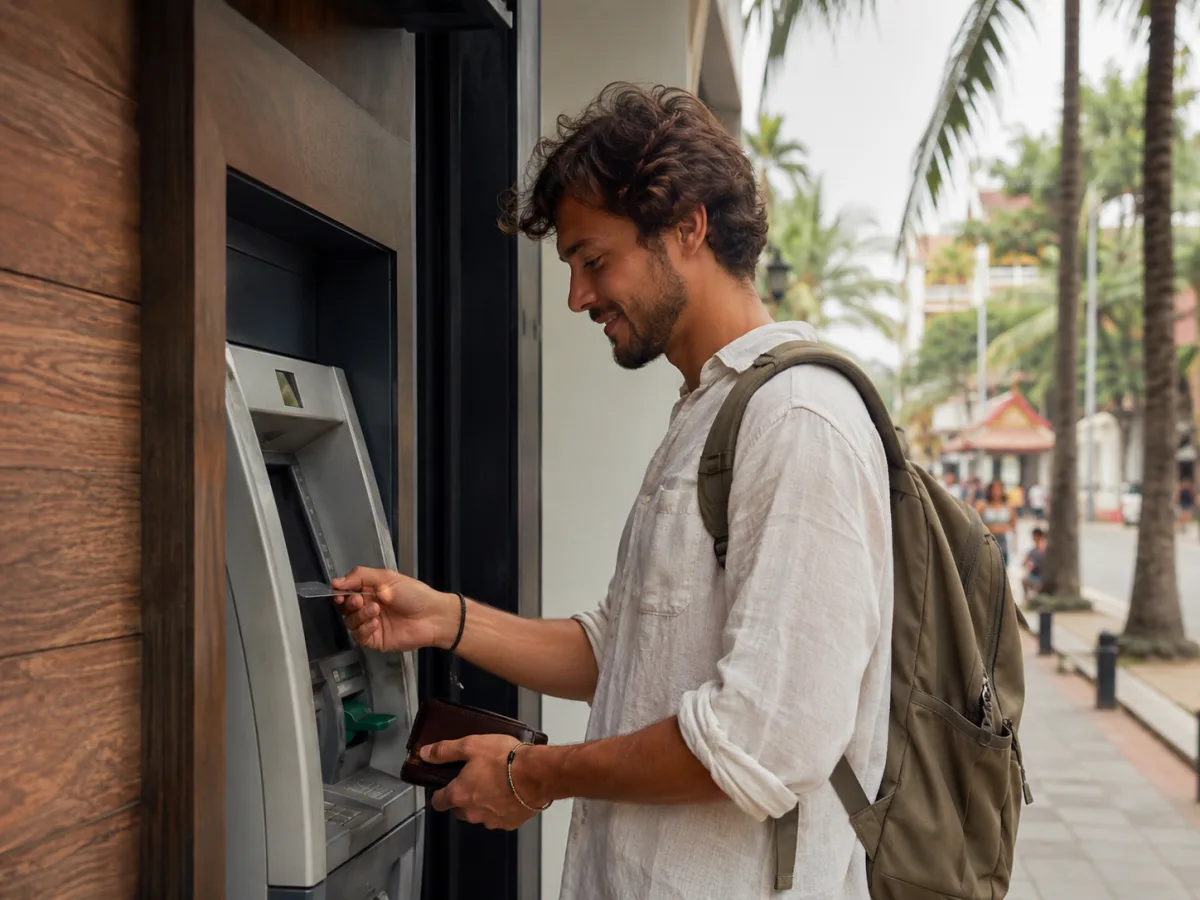
In short: The FET certificate (Foreign Exchange Transaction Certificate) is the official confirmation issued by a Thai bank for your inbound international transfer without it, a condominium cannot be registered to a foreign buyer at the Land Office. It is issued automatically from USD 50,000 upwards; below that threshold the equivalent Credit Advice is sufficient. Key points: transfer in foreign currency with a reference that includes the project name, unit number and your exact passport name, allow 4 to 6 weeks lead time, and actively request the document. From EUR 50,000 upwards, Germany's AWV reporting requirement also applies.
The moment an international buyer transfers a six-figure sum to Thailand for the first time is often more nerve-racking than the property purchase itself. Understandably so. It involves a cross-border capital transaction between two banking systems, each with its own compliance requirements, and an official certificate without which a condominium cannot later be entered in the title register. Mistakes here do not cost you money, but they cost you time, sometimes weeks, and in rare cases the ability to register ownership at all.
In this article I will guide you through the practical reality of transferring money for a Pattaya property purchase, with particular attention to the recent tightening of rules in 2025 and 2026, both at international banks and at the Bank of Thailand. Honestly, with concrete figures, and with practical solutions for the typical stumbling blocks. One thing first: I am a real-estate agent, not a financial adviser, and for an individual tax assessment you should additionally consult a tax adviser in your home country. What follows is a practical overview drawn from my day-to-day work supporting international buyers.
Free Guide
68 pages of Pattaya insider knowledge, download for free
Why the money transfer is so underestimated when buying in Pattaya
Most prospective buyers spend months choosing the right apartment and invest little time in planning the transfer. That is understandable, but risky. In my work I regularly see three typical stumbling blocks.
Stumbling block 1: The transfer is initiated too late. Anyone who only transfers the purchase price two weeks before the Land Office appointment risks delays. For larger international transfers, banks in your home country may raise queries under their compliance requirements. If you do not start at least four to six weeks in advance, you can end up under time pressure.
Stumbling block 2: The payment reference is unclear or incomplete. Without a precisely worded reference in the transfer, the Thai bank cannot recognise the context, cannot issue the FET certificate correctly, and the buyer ends up at the Land Office with a gap in the paperwork.
Stumbling block 3: The receiving bank has not been agreed in advance. Some Thai banks are more experienced with the FET process than others. Anyone who transfers without clarifying this beforehand may end up at a branch that is less familiar with the procedure and slow to issue the certificate.
Mistakes here do not cost you money, but they cost you time, sometimes weeks.
Alexander ReifenschneiderThe good news: anyone who understands and observes these three points has already eliminated the biggest risks. Let us go through them one by one.
The FET certificate: the most important protective document for international buyers
The Foreign Exchange Transaction Certificate, FET certificate for short, formerly known as the Thor Tor 3, is an official confirmation issued by a Thai bank. It documents that a specific sum of money in foreign currency was transferred from abroad to Thailand and converted there into Thai baht. Without this certificate, a condominium cannot be registered to a foreign buyer at the Land Office.
The FET certificate contains the following mandatory information: the full name of the sender, the full name of the recipient, the amount in both foreign currency and baht, the exchange rate applied, the date of the transaction and an explicit payment reference. In the case of a property transaction, this reference must explicitly establish the link to the specific apartment, ideally with the project name, unit number and the buyer's name as it appears in the passport.
Important to know: in Thailand the FET certificate is generally only issued automatically once the single transaction reaches a value of at least the equivalent of USD 50,000. For smaller amounts, Thai banks instead issue a so-called Credit Advice or Credit Note, which contains the same mandatory information and is recognised by the Land Office as equivalent to the FET form. Anyone with an off-plan payment plan involving smaller instalments can work with Credit Advices, but should clarify this in advance with the Thai receiving bank.
- FET certificate from USD 50,000 per single transaction (below this: Credit Advice, recognised as equivalent)
- AWV reporting requirement in Germany from EUR 50,000 per transaction (since 1 January 2025)
- Bank of Thailand: full review of spot transactions from USD 200,000 (around EUR 180,000, since 29 December 2025)
The requirement for the full transfer to be made in foreign currency derives from Section 19 of the Thai Condominium Act. It protects the Thai state from uncontrolled capital flows, but at the same time protects the foreign buyer, because it establishes a traceable paper trail for this ownership, which later makes it easier to transfer the sale proceeds back abroad on resale. More on the legal foundations of acquiring ownership in my article Off-Plan in Pattaya 2026: Opportunities, Risks and What Really Matters.

The right transfer route: SWIFT as the standard, Wise as the alternative
When it comes to choosing the transfer route, in my day-to-day advice I recommend the classic SWIFT bank transfer as the standard for international buyers. It is the established route, well known to all Thai banks, and the one that makes issuing the FET certificate the most straightforward.
SWIFT bank transfer (recommended): A direct transfer from your home bank to a Thai receiving bank, usually Bangkok Bank, Kasikorn Bank, Krungsri Bank or Siam Commercial Bank. Depending on the bank, these transfers can take two to five working days, are documented along a clearly defined correspondent-bank route, and allow the receiving bank to issue the FET routinely and promptly. Typical costs are EUR 25 to 80 per transfer plus the bank's exchange-rate spread.
Wise as the alternative: Wise transfers are often booked in Thailand as a local deposit, because Wise works with Thai partner banks. Contrary to a widespread assumption, this does not rule out an FET confirmation. At the buyer's express request, the Thai receiving bank can issue a Credit Advice or an FET document that documents the foreign origin of the funds and is accepted by the Land Office. In practice, Bangkok Bank is regarded as one of the most reliable banks for this process.
The pros and cons are clear: Wise typically offers a better exchange rate close to the mid-market rate with no hidden fees. On a EUR 130,000 purchase, the exchange-rate advantage can amount to several hundred to a thousand euros. Against this stand a slightly higher effort in applying for the FET documentation, isolated cases in which smaller Thai banks are hesitant with Wise transfers, and the need to document the payment reference particularly carefully.
My recommendation in practice: for most international buyers, the classic SWIFT transfer is the simpler, less stressful choice, especially for the first transfer. Anyone who is comfortable with Wise and has chosen Bangkok Bank as the receiving bank can take advantage of Wise's cost benefit, but should attach a clear payment-reference note to every transfer and proactively request the FET or Credit Advice from the receiving bank.
What does not work: cryptocurrency transfers, carrying cash without a proper customs declaration, or transfers via third countries. These routes do not meet the Thai requirement of a traceable foreign origin, or only with considerable additional effort, and are not recommended for ordinary property buyers.
The home-country side: AWV reporting requirement and bank compliance in 2026
On the German, Austrian and Swiss banking side there are several relevant requirements in 2026 that international buyers should be aware of.
In Germany, for cross-border payments from EUR 50,000 upwards the reporting requirement under the Foreign Trade and Payments Ordinance (Aussenwirtschaftsverordnung) towards the Deutsche Bundesbank applies. This threshold was raised on 1 January 2025 from the previous EUR 12,500 to EUR 50,000. The report is statistical not an approval, not a tax, not a ban. It is filed electronically by the person making the transfer via the Bundesbank's General Statistics Reporting Portal, or by phone via the free hotline 0800 1234 111. Deadline: by the 7th working day of the following month. Anyone who misses the report risks fines of up to EUR 30,000 under the Foreign Trade and Payments Act, although in practice private individuals making one-off transactions are typically dealt with by a simple subsequent report.
In addition, the Money Laundering Act applies with its own logic: for cash deposits from EUR 10,000 upwards, proof of origin is mandatory. Pure account-to-account transfers do not automatically trigger a check on the origin of funds, but can lead to queries in individual cases if the bank sees anything irregular. Anyone financing from savings, a property sale, an inheritance or ongoing income should have the relevant evidence ready. Experience shows that for international transfers from around EUR 100,000 upwards, banks increasingly ask about the origin and purpose of the funds, depending on the customer relationship and the individual bank's practice.
In Switzerland, the Anti-Money Laundering Act applies with a reporting requirement from the equivalent of EUR 12,500 (the corresponding CHF amount). In my observation, Swiss banks are, from experience, even more detailed in their compliance checks than their German or Austrian counterparts, which can lead to longer review times for customers with a complex financial history. Austria essentially follows the German logic with similar thresholds.
Important to understand: these home-country requirements are not hurdles that prevent a Pattaya purchase. They are administrative steps that need to be known and planned for. Anyone planning a first transfer is best advised to call their bank a week beforehand, clarify the intended payment reference and ask what specific documents are expected. This avoids queries during the transfer.
The Thailand side: the Bank of Thailand has tightened rules since the end of 2025
On the Thai side, with effect from 29 December 2025 the Bank of Thailand implemented a tightening of inbound controls on foreign capital flows via Circular No. 8434/2568. This tightening applies to amounts from USD 200,000 upwards, which is equivalent to around EUR 180,000, that is, the upper price range of the typical international buyer profile.
In concrete terms, the tightening means: for spot transactions from this threshold upwards, banks must carry out a full document review on the trade date, at the latest on the settlement date. This includes the sales contract, the developer's invoice and, where applicable, further supporting documents. Specifically for real estate, the simplified “Know Your Business” check can no longer be used as a shortcut. If documents are missing, the crediting of funds can be delayed.
The background: the Bank of Thailand wants to limit uncontrolled foreign capital inflows, which have contributed to the volatility of the baht. An interesting observation for international buyers: while the baht appreciated by around 9 percent against the US dollar in 2025, over the same period it actually weakened slightly against the euro. EUR buyers currently tend to have somewhat better purchasing power than they did twelve months ago, while USD buyers have lost ground.

In practice, this means for off-plan buyers: for every single instalment, you should make sure the Thai receiving bank has received the associated contracts and invoices in advance. Developers with experience in the international market know these requirements and actively help the buyer to submit the necessary documents to the bank in good time.
A further complexity arises from the Thai tax rule on foreign income, which has been reformed since January 2024. This rule is relevant to assessing when and how foreign money flows into Thailand, but it has primarily tax-related, not banking-related, consequences. For an individual assessment you should consult a tax adviser licensed in Thailand who is familiar with the latest rules. More on the tax situation in my article Taxes and Additional Costs When Buying a Condo in Pattaya 2026.
The off-plan advantage: capital in instalments instead of a single transfer
Here is a practical advantage of the off-plan model that is often overlooked. A typical off-plan payment plan in Pattaya in 2026 looks roughly like this: a 10 to 20 percent down payment on signing the contract, then staggered construction-phase instalments spread over 18 to 30 months, then a final payment on handover, which depending on the developer can amount to 40 to 50 percent. The exact split varies by project and developer.
In practical terms this means: instead of transferring EUR 130,000 all at once, you typically transfer EUR 15,000 to 25,000 as a down payment, then several instalments of EUR 5,000 to 15,000 each over the construction phase, then a final payment of EUR 50,000 to 65,000. Each individual instalment stays below the particularly sensitive USD 200,000 threshold of the Thai bank review and falls within a range that is comfortably manageable on the home-country side.
In addition, this split allows a strategic use of the exchange rate. Anyone who actively keeps an eye on the EUR/THB rate can transfer individual instalments at favourable moments and thereby noticeably improve the effective exchange rate across the total investment. On a EUR 130,000 investment with five to seven instalments over two to four years, this can add up to three- to four-figure euro amounts in exchange-rate optimisation.
Anyone who instead buys a resale apartment has to transfer the entire purchase price in one or two larger transfers, with the corresponding exchange-rate risk on a single day. Off-plan offers structural advantages here that many buyers only really come to appreciate after their first successful instalment.
In my advice, I recommend that international buyers draw up a complete instalment plan for themselves as early as the signing of the contract: when each instalment is due, in roughly what exchange-rate range, what home-country documents are needed, and which Thai receiving bank will be used. Anyone who does this planning in advance has a controlled and relaxed flow of money throughout the construction phase. The final step of registering ownership is described in detail in my article on the handover in Pattaya.
Practical checklist: how to make the transfer without delays
A compact checklist for every off-plan buyer, which I use in practice in my advisory work.
Before the first transfer (four to six weeks lead time):
- Contact your home bank and announce the intended payment reference. Ask specifically which documents the bank needs for the compliance check and whether the transfer of the planned amount can be carried out without queries.
- Clarify the Thai receiving bank that the developer or you yourself will use. Bangkok Bank is a proven choice for Pattaya transactions, as are Kasikorn Bank or Krungsri.
- Agree the exact wording of the payment reference with the developer, so that the later FET certificate or Credit Advice clearly documents the link to the specific unit.
- Reconcile the passport name with the contract name and all other documents. Discrepancies, even just in the spelling of first and last names, can cause problems later.
During the transfer itself:
- Enter the full payment reference in the transfer form, in a format such as: “Purchase of condominium unit XX/YYY in [project name] by [first and last name as per passport]”.
- Use the passport name exactly, without abbreviations, without typos, without additional accents.
- For larger amounts, do not forget the AWV report to the Bundesbank if the amount exceeds EUR 50,000. The report is quickly done, but forgetting it leads to avoidable hassle.
After the transfer:
- Actively request the FET certificate or Credit Advice from the Thai receiving bank. These are usually not sent automatically and must be requested in writing. The developer or an intermediary experienced with the international market can help with this.
- Keep all records permanently: the SWIFT confirmation or Wise receipt from the sender side, the receipt confirmation from the Thai bank, and the FET certificate or Credit Advice. These documents are needed later at the Land Office appointment and should be readily to hand for a later resale.
One final recommendation: keep a simple transfer folder, digital or physical, throughout the construction phase. Each instalment gets its own subfolder with all the associated documents. What sounds like bureaucracy will later save you valuable weeks of searching at handover and on a later resale. More on the current market situation in my article The Pattaya Property Market in May 2026: Why Now Is the Ideal Time for Off-Plan Investments.
In my free Pattaya Property Guide you will find a compact overview of all aspects of buying property in Pattaya, including a transfer checklist. A no-obligation initial consultation is free of charge for buyers. I am happy to guide you through all the instalments of the off-plan payment plan and ensure that every single transaction is cleanly documented and accompanied by the necessary FET confirmation.
Frequently asked questions
More on buying property in Pattaya