What the rainy season reveals about a location
Pattaya does not drizzle, it pours: the showers between May and October usually arrive in the afternoon or evening, last an hour and are gone. That very hour is worth gold to buyers. Is the access road to the project under water? Does the rain drain cleanly off the car-park ramp? Are the footpaths to Second Road passable? Pattaya has well-known flooding points at low-lying junctions, and a condo that stays dry 200 metres away is a different home in everyday life from one right at the dip. No brochure shows you that; an afternoon in September does.
Seven things you can only check in the low season
| Checkpoint | Why in the low season |
|---|---|
| Drainage and access | after a shower you can see whether water stands or drains away |
| Facade and balcony | traces of damp, early mould and leaking joints show in the rain, not in February |
| Noise | without high-season traffic you hear a neighbourhood's baseline, and with rain the drumming on the neighbours' metal roofs |
| Occupancy of the development | how many units are really lived in, how the pool feels on a Tuesday in July |
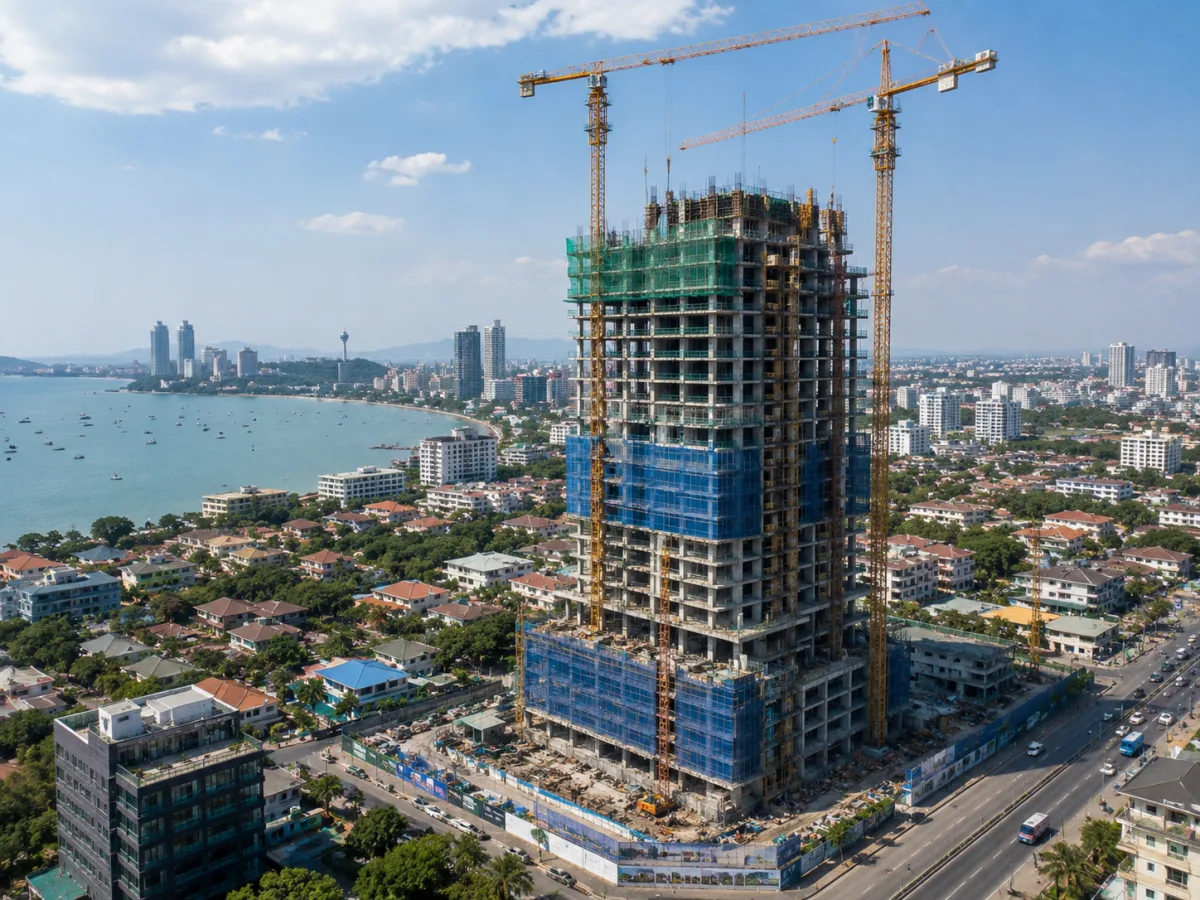
| Construction pace | on off-plan sites you can see whether work continues in the rain |
| Accessibility | empty roads show the real journey time, high-season traffic jams come on top later |
| Availability of contacts | developers and management have time for tours, documents and questions |

Prices, negotiation and payment plan
An honest assessment, because a lot is promised here: with a new build from the developer you buy in Thailand at the list price, regardless of season or agent, and that is exactly why our advice remains free for buyers. What moves more often in the low season are the side conditions: furniture packages, the developer covering transfer costs, a stretched payment plan or a unit from the remaining stock of a completed project. Sellers of resale apartments are also more open to talks in the quiet months because fewer prospective buyers are around. How purchase price, ancillary costs and the payment plan fit together is explained in the buying guide, and what a square metre costs per area in the price index.
How to plan the viewing trip
Ten to fourteen days are ideal: enough for two rounds of viewings, a rainy afternoon in your preferred neighbourhood and a day off to think. Flights and hotels are noticeably cheaper in the low season than from December to February, and anyone considering a trial stay will find a temporary apartment more easily, see Rent first, then buy. What each season offers is covered in the article on the best time to travel. My advice from many consultations: anyone who has seen Pattaya in September and still wants the city afterwards buys with a clear head.
Frequently asked questions
When is the low season in Pattaya?
From May to October, with the most rainy days in September and October. The showers usually come in the afternoon or evening and rarely last longer than an hour.
Are condos cheaper in the low season?
For new builds from the developer, the list price applies all year round. Room to manoeuvre arises rather in fittings, payment plans and remaining units of completed projects, as well as in resale apartments from private sellers, because fewer buyers are around.
What exactly should I check in the rain?
The access road and the car-park ramp, drainage around the building, traces of damp on the facade and balcony, the noise level, and whether work continues on an off-plan construction site.
Is there flooding in Pattaya?
Yes, in places at low-lying junctions and roads after heavy showers, usually for one to two hours. A viewing after a downpour shows whether a project is affected.
How long should the viewing trip last?
Ten to fourteen days. That leaves time for two rounds of viewings, a rainy afternoon in your preferred neighbourhood, talks with the developer and management, and a free day before the decision.
Free guide
68 pages of Pattaya insider knowledge — download for free