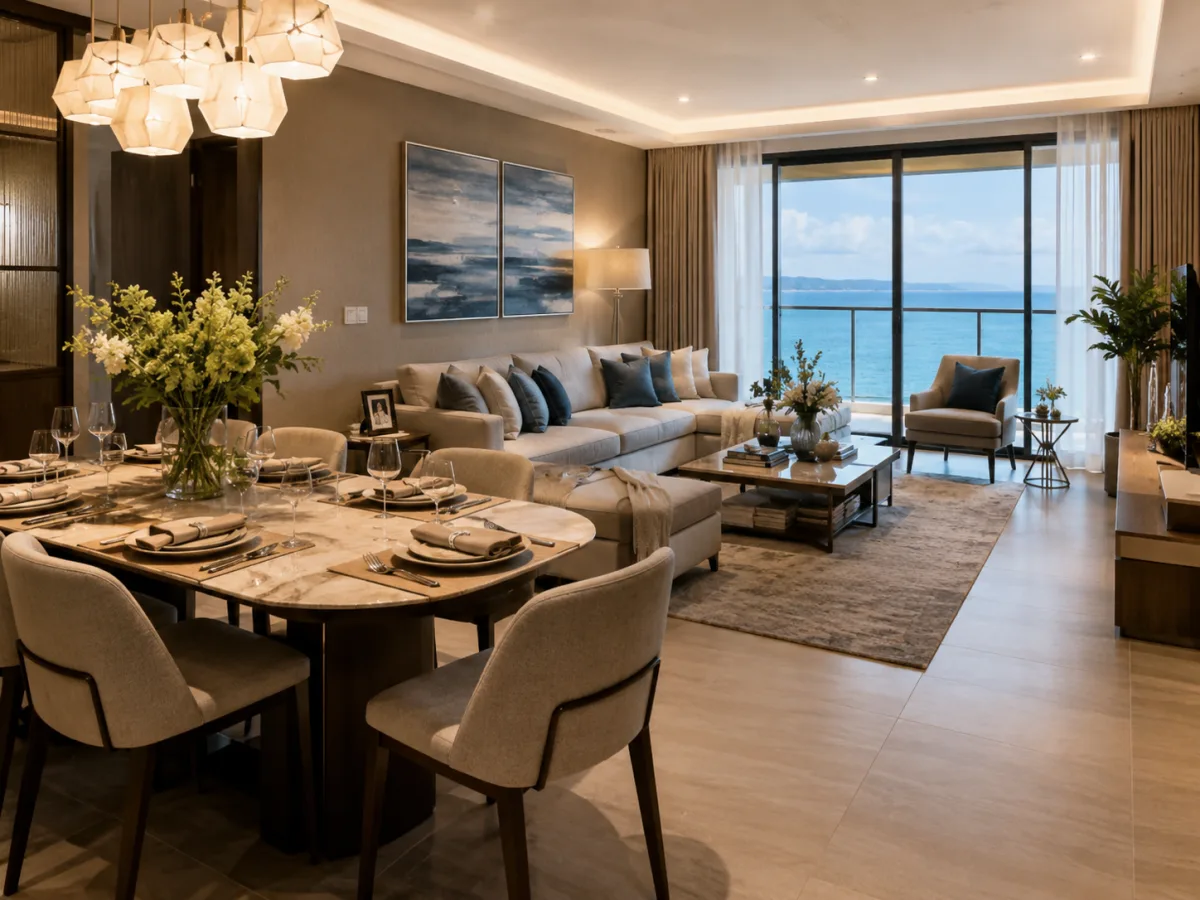
In brief: A pool villa in Pattaya becomes a cool, energy-efficient retreat when orientation, shading and tropical construction work together from the outset: main facades facing north and south, protected east-west sides, well-thought-out cross-ventilation and a pool in the right position all noticeably reduce cooling costs. As a DACH buyer you cannot own the land in your own name, but you can very much own the house: via leasehold plus superficies or a company structure. This is exactly the combination of building physics and sound ownership structure that I plan with you.
Why the Orientation of Your Pool Villa in Pattaya Determines Living Comfort
Pattaya lies approximately 12.9 degrees north of the equator. The sun is high throughout the year and moves from east to west during the day. The greatest heat load therefore falls not only on the roof, but on the east and west walls in the morning and late afternoon. Anyone building or buying a villa should understand this solar geometry, because it determines how hard the air conditioning will have to work later on.
The tried-and-tested rule for tropical houses is: the long main facades with large glazed areas face north and south, and the short, compact gable ends face east and west. This way the villa captures less of the low, aggressive morning and evening sun. The south side can be shaded effectively with roof overhangs and canopies, because the sun is high there. Studies of Thai residential buildings show that a coordinated package of orientation, shading and ventilation can reduce a villa's cooling requirement by more than 40 percent.
The Cardinal Directions at a Glance
| Facade | Solar Load | Recommendation |
|---|---|---|
| North | low, even | large windows, living and dining area, ideal for sea views towards the Gulf |
| South | high, but high-angle | shade glazed areas with deep roof overhang/brise-soleil |
| East | low morning sun | smaller openings, bedrooms with gentle morning light, bathrooms, utilities |
| West | intense afternoon heat | keep as closed as possible, carport, storage, planted wall as buffer |
On a plot with a sea view, orientation and outlook can sometimes be in tension: the attractive view is not always on the building-physics optimal side. We resolve this through external shading, solar-control glazing and deep loggias, rather than simply placing an unprotected glass facade into the western heat.
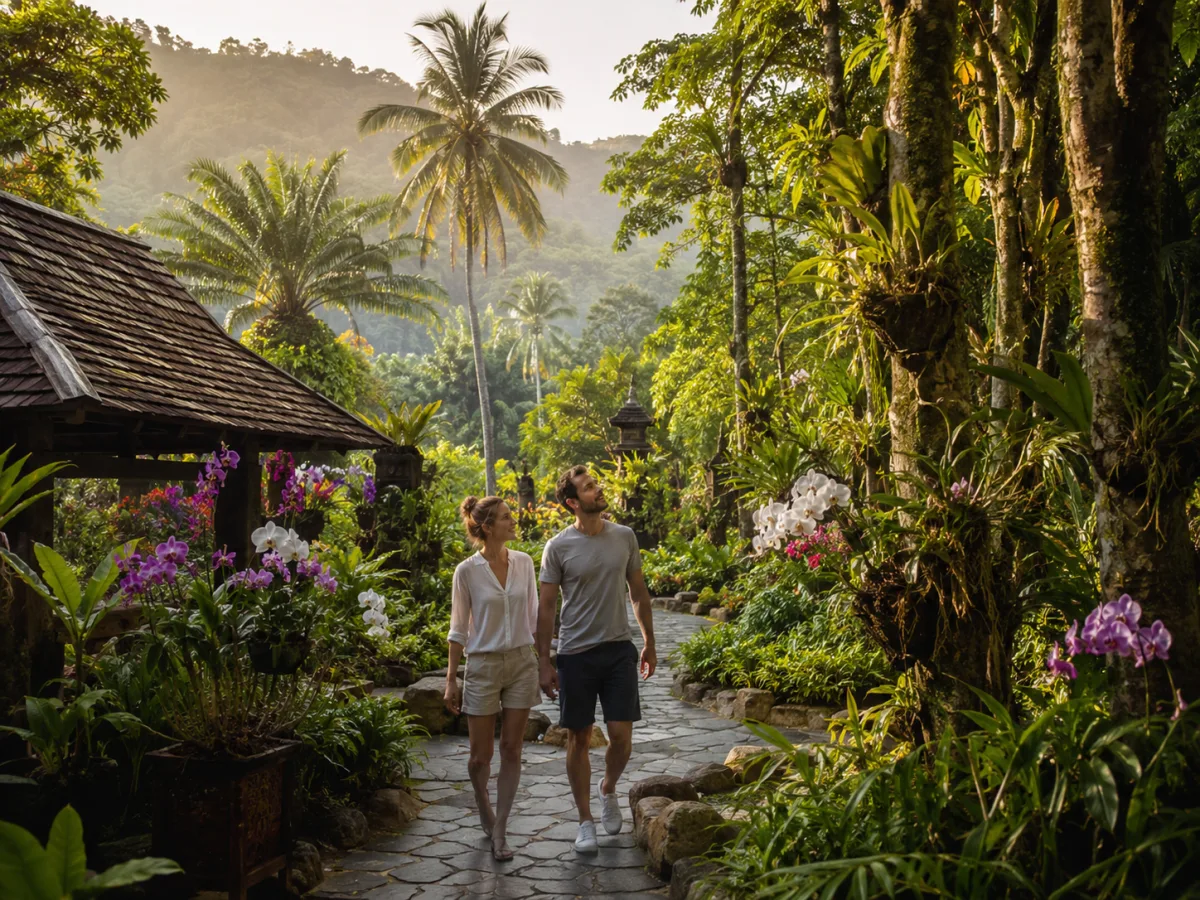
Tropical Construction: Keeping the House Cool Without the Air Conditioning Running Constantly
A well-built villa in Pattaya cools itself primarily passively. The air conditioning then only handles the fine-tuning in the bedrooms. Three building principles work together:
- Shading first. Deep roof overhangs (often 1.0 to 1.5 m), canopies, pergolas, louvres and planted walls keep the sun away from the wall before it even reaches the glass. External sun protection works many times more effectively than internal curtains.
- Cross-ventilation and stack effect. Openings on opposite sides allow the sea breeze to pass through. High rooms, skylights and an open void above the living area draw warm air upwards. This keeps the villa comfortable even without electricity.
- Roof and insulation. The roof is the largest heat-absorbing surface. A ventilated roof space, a reflective underlay membrane and proper ceiling insulation prevent the living area from being heated from above. Light roof colours further reduce heat absorption.
Material Choice and Windows
With materials there are two schools of thought that work well in combination in practice. Solid, well-insulated walls store the night-time coolness and release it slowly during the day. Lightweight, rear-ventilated construction barely heats up and cools down again quickly. In both cases the decisive factor is the insulation layer between outside and inside. For windows, double glazing with a solar-control coating (Low-E) is worthwhile: it keeps radiant heat out without obscuring the view of the pool and sea. The investment typically pays for itself within a few years through lower electricity bills.
Pool Placement: More Than Just a Pretty Picture
The pool is the centrepiece of every villa in Pattaya, and its position influences comfort, maintenance effort and even the microclimate around the house. A pool on the north or east side of the terrace receives sun for swimming in the morning and at midday, but lies in the welcome shade of the house during the hot afternoon. Evaporating pool water additionally cools the breeze passing by before it enters the house.
Key points in pool planning:
- Wind and leaves. Large trees directly beside the pool provide shade but bring leaves and more cleaning effort. A staggered planting of palms and low hedges gives shade without dirtying the pool.
- Sightline and privacy. Ideally you look from the living area over the pool into the garden or out to sea. A wall, planted screen or privacy barrier keeps curious eyes away without blocking the breeze.
- Equipment and operation. Salt-water electrolysis saves on chemicals, a heat pump extends the swimming season during the cooler dry season, and an efficient circulation pump reduces running costs. I plan these aspects together with the developer.
Those who want to understand the seasonal variations will find details in our article on climate and the best time to visit Pattaya. The rainy season in particular, with its high humidity, places special demands on ventilation and material choice.
House and Land: How DACH Buyers Own a Villa in Pattaya Correctly
Unlike a condo, which you can own directly in your own name through the foreign quota, there is a special consideration for houses and land: foreigners in Thailand cannot generally acquire land in their own name. This is not an obstacle but a question of the right structure, and there are well-established, legally sound approaches for this. The key point: the building and the land are treated as legally separate.
Leasehold Plus Superficies: The Proven Standard
The most common and cleanest solution today for a pool villa combines two registered rights:
- Leasehold: You lease the land under a contract registered at the Land Office with a term of 30 years. Extension options (typically 30 plus 30 years) are agreed contractually.
- Superficies (right of superficies): This registered right allows you to own the building separately from the land in your own name. Your name thus appears on the building permit and in the house register (Tabien Baan) as the owner of the villa.
In combination this creates a clear legal position: the land is secured long-term, and the house unambiguously belongs to you. This stacked structure of lease and superficies has established itself as the standard model for foreign villa buyers.
The Company Structure: Possible, but Requires Care
Alternatively, a Thai company with at least 51 percent Thai shareholding can hold land. This option requires genuine, active Thai shareholders and real business activity. Pure nominee arrangements without substance are not permitted, and the authorities now scrutinise inactive land-holding companies considerably more closely. Whether lease/superficies or a properly managed company suits you depends on your objectives. We make this decision together with an independent lawyer, because especially when buying a house privately or on the resale market, an independent legal review is advisable — a clear buyer advantage that I organise for you.
How the individual ownership structures work in detail is covered in our article on Foreign Quota, Freehold and Leasehold for DACH Buyers. The legal basis for residential property ownership is explained in the Condominium Act explained in German.
Location and Budget: Where Pool Villas Are Being Built in Pattaya
Pool villas are found primarily in the quieter, greener areas around Pattaya. On the elevated Pratumnak Hill, in the hills behind Jomtien, in Na Jomtien towards Bang Saray and in parts of Huai Yai there are plots that offer space for gardens and pools. The closer to the sea and the better the view, the higher the land price.
For orientation: off-plan new-build prices per square metre of living space are around 115,000 to 180,000 THB in Na Jomtien, approximately 138,000 to 220,000 THB in Jomtien and 120,000 to 200,000 THB on Pratumnak Hill. For villas, the land value is added on top, which varies considerably by location. These figures are indicative benchmarks and not investment advice; portal prices are asking prices, not completed transactions.
Those who want to compare the districts will find the differences covered in detail in our Pattaya district comparison. Current price levels and trends are summarised in the Off-Plan Price Report 2026. Incidentally, many off-plan projects also offer the well-known price advantage of buying in an early construction phase — sometimes up to 40 percent less than at completion — while the general market appreciates at around 3 to 5 percent per year. Those looking to rent out their property should also factor in a realistic gross rental yield of around 5 to 8 percent per year. More on this in the article Rental yield explained realistically.
Calculating Running Costs Correctly
A villa incurs different running costs from a condo. Instead of a common-area fee, you bear garden and pool maintenance, insurance, a repair reserve and the electricity for the air conditioning and pool pump yourself. This is precisely where tropical construction pays dividends: the better the shading, insulation and ventilation are planned, the lower the monthly electricity bill. In a thoughtfully built villa, the air conditioning only runs where it is needed, rather than fighting around the clock against an overheated house.
How the ancillary costs of living in Pattaya break down is covered in our article on cost of living and monthly budget. The one-off taxes and fees on purchase are explained in the article on taxes on property purchase 2026.
Frequently Asked Questions About Pool Villas in Pattaya
What is the best house orientation in Pattaya?
Ideally, the long main facades face north and south, and the compact gable ends face east and west. This way, the low, intense morning and afternoon sun strikes only small, easily shaded surfaces. If the sea view cannot be reconciled with this rule, we compensate with external shading and solar-control glazing.
How much does tropical construction actually reduce cooling costs?
A coordinated package of orientation, roof overhangs, cross-ventilation and insulation can reduce a villa's cooling requirement by more than 40 percent. In practice, this means the air conditioning runs for shorter periods and in fewer rooms, which shows directly on the electricity bill.
Can I as a German, Austrian or Swiss citizen own a villa with land?
Not the land itself directly in your own name, but the house yes. The proven approach is a registered 30-year leasehold on the land combined with a registered superficies right on the building. This makes you the owner of the villa on the building permit and in the house register.
Where should the pool be positioned relative to the house?
A position on the north or east side of the terrace is usually ideal: sun for swimming in the morning, shade from the house during the hot afternoon. Evaporating pool water also cools the breeze that flows into the house.
Is a heat pump for the pool worthwhile?
During the cooler dry season from December to February, a heat pump can pleasantly extend the swimming season. In combination with a saltwater system and an efficient circulation pump, operating costs remain manageable.
Your Next Step Towards Your Own Pool Villa
A pool villa in Pattaya that is cool, comfortable and legally sound does not come about by chance, but through integrated planning of orientation, construction, pool placement and ownership structure. That is precisely my role as your local agent — based in Pattaya since 2018. Let us discuss your wishes, your budget and the right structure at your leisure. Get in touch simply via the contact form, and secure our free guide in advance, with all the important steps to buying property in Thailand.
Free Guide
68 pages of Pattaya insider knowledge — download free of charge