In brief: "Dual pricing" in Thailand exists mainly for admissions to national parks, temples and museums – where foreigners often pay five to ten times the Thai price. When buying a condo in Pattaya, however, this two-tier pricing system does NOT apply: off-plan and new-build prices are listed transparently in official price lists and apply equally to DACH buyers and Thais alike. Differences arise only with certain fees and bank financing – and with private resales, where the final price is a matter of negotiation.
What "Dual Pricing" in Thailand actually means
Anyone who has spent time in Thailand knows the phenomenon: at the entrance to a national park, temple or museum, two price boards are displayed – one in Thai showing the low local rate, one in English showing the significantly higher foreigner price. This officially practised two-tier system is called dual pricing. It has been established in Thailand for decades and affects almost exclusively state-managed attractions and some public services.
The authorities' justification: Thais already fund the upkeep of these sites through their taxes, while foreigners do not – so the higher admission is, in effect, a deferred contribution. Whether one considers this fair is a separate debate. For DACH buyers of a property in Pattaya, one question is particularly relevant: does this system also affect property purchases? The short answer is: essentially no. This article provides the longer answer.
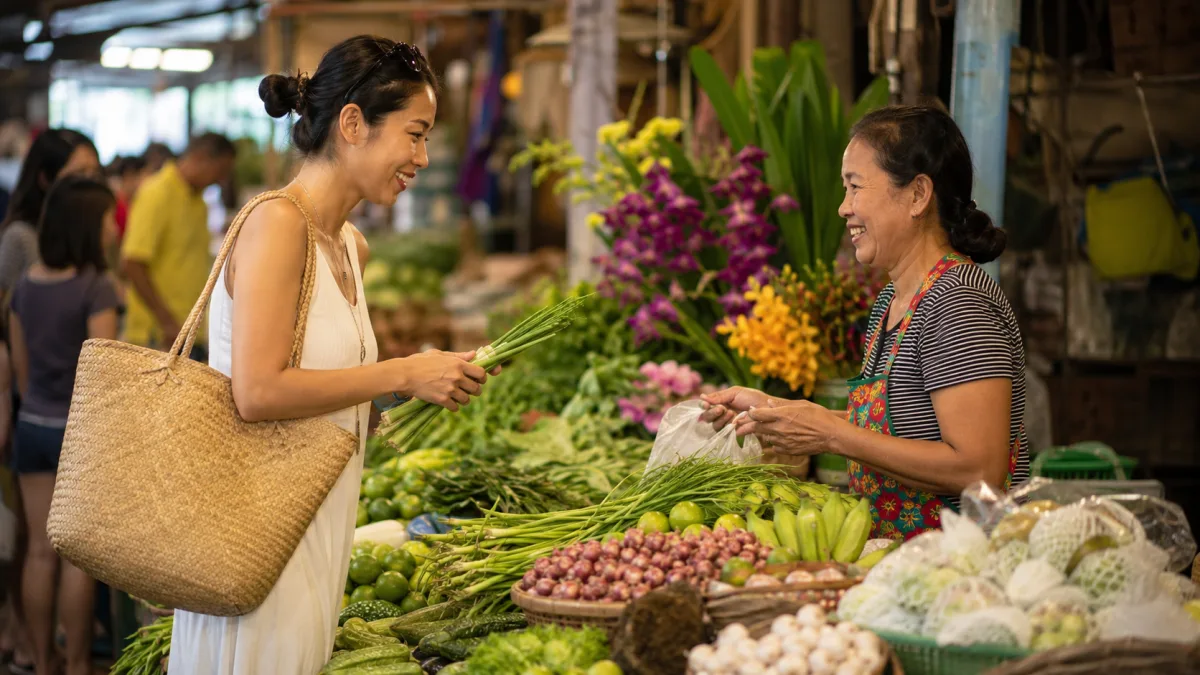
Where foreigners in Thailand actually pay more
To make clear what we are talking about, here are the typical areas with genuine dual pricing – as of 2026, with example prices. These figures are indicative and subject to change.
| Area | Thai price | Foreigner price |
|---|---|---|
| National parks (e.g. Khao Yai, Doi Inthanon) | 20–40 THB | 300–400 THB |
| Grand Palace / Wat Phra Kaew (Bangkok) | free (with ID) | 500 THB |
| Wat Pho / Wat Arun (Bangkok) | free | 200–300 THB |
| National Museum / Historical Parks | 20–30 THB | 150–200 THB |
| Erawan Waterfalls (Kanchanaburi) | 30 THB | 300 THB |
As you can see: the surcharge at state attractions is substantial – sometimes tenfold. In Pattaya itself, this only affects a few things in practice (such as some island excursions or admission to certain parks). For a DACH property owner's everyday life – restaurants, supermarkets, landlords, property management – this system does not exist. Your weekly groceries, electricity bill or monthly common area fee will not cost you a single penny more than they cost a Thai.
An important distinction: tourist attraction ≠ property market
Dual pricing is a state-set admission tariff. The property market operates under entirely different rules: there is no authority that mandates a surcharge on purchase prices for foreigners. A condo costs what is stated in the contract – and the price per square metre depends on location, developer, floor and furnishings, not on your passport.
Does dual pricing apply when buying a condo in Pattaya?
This is the key question, and the answer is reassuringly clear: when purchasing a new-build or off-plan condo from a developer, you as a DACH buyer pay the same list price as a Thai buyer. Reputable developers in Pattaya work with published price lists per unit – broken down by floor, size and orientation. This list is transparent and applies to everyone.
Some projects do have two allocation pools – the Foreign Quota (up to 49% of total floor area is open to foreign freehold ownership) and the Thai Quota. However, this is not a pricing mechanism but an ownership mechanism under the Condominium Act. The price per square metre is generally identical in both pools. It can even happen that Foreign Quota units are more sought-after and therefore marginally more expensive – but not because you are a foreigner, rather because that quota is limited. I explain the legal foundations in detail in my article on the Condominium Act.
Verified price ranges – the same for everyone
To give you a sense of real off-plan prices in Pattaya (THB per m², new-build, 2026):
- Wongamat / Naklua: 115,000–260,000 THB/m² (prime locations 300,000+)
- Pratumnak Hill: 120,000–200,000 THB/m²
- Central Pattaya: 130,000–250,000 THB/m²
- Jomtien: 125,000–220,000 THB/m²
- Na Jomtien: 115,000–247,000 THB/m²
A concrete example from my portfolio: at Aquarous Jomtien, Foreign Quota units are priced at approximately 138,000–217,000 THB/m² – and these exact figures appear in the official price list that every buyer can view. I provide a deeper market overview with figures in the Pattaya Off-Plan Price Report 2026.
Where differences do arise with property
The picture is not entirely without caveats – but the differences lie not in the purchase price, but in ancillary fees and financing. These are the two real points that DACH buyers should be aware of.
1. Transfer fee discount for Thais only
To stimulate the economy, Thailand temporarily reduced the transfer fee (normally 2%) and mortgage registration for residential properties up to 7 million THB to 0.01%. This discount applies exclusively to Thai nationals and expires in mid-2026. As a Foreign Quota buyer, you cannot count on this and should conservatively budget for the full 2% transfer fee. With direct new-build purchases, however, the developer often covers this fee in full or in part as a sales incentive – a genuine advantage that I negotiate on behalf of my buyers. You can read about the other costs that arise at the Land Office in the article on taxes when buying a condo.
2. Bank financing on different terms
Thai banks do in principle extend loans to foreigners (for example via UOB or Bangkok Bank), but at higher interest rates – typically 5.5 to 9% p.a. in 2026, significantly above what Thais pay. In practice, however, most DACH buyers finance their condo with equity or through cheaper loans from their home country, and use the developer's payment plan locally. I explain how these payment plans work in the article on financing and payment plans.
What is NOT dual pricing
- Common area fee and sinking fund: calculated per square metre, the same for all owners – details in the article on ongoing costs.
- Sales taxes: transfer fee, SBT/stamp duty and withholding tax treat foreign and Thai private sellers equally under tax law.
- Property tax: the annual Land and Building Tax is based on value and use, not nationality.
Private resales: here the price is a matter of negotiation
The situation is different with private resales – not because of dual pricing, but because of a lack of price transparency. On some portals and with some private sellers, asking prices for comparable units can vary enormously. Anyone unfamiliar with the local market risks accepting an inflated "wish price". Importantly: portal prices are asking prices, not actual completed sales – the real market value is often lower.
This is exactly where my work comes in. I know the price per square metre for individual developments, rental levels and realistic negotiating margins. This ensures that you as a DACH buyer do not pay the "tourist price" of a private negotiation, but rather the fair market value. Why a solicitor is often unnecessary with new-builds from a vetted developer – as the contracts are standardised – but makes sense with a private resale, is explained in the comparison article buying off-plan in Pattaya.
How I secure fair prices for my buyers
Transparency is the decisive lever against any form of surcharge when buying property in Pattaya. In practical terms, my advisory service delivers:
- Official price lists, not hearsay: You see the genuine, published developer price list – the same price that Thai buyers also pay.
- Market comparison by district: I place every price within the verified ranges for the relevant location, so you can immediately see whether an offer is fair.
- Negotiation of incentives: coverage of the transfer fee, complimentary furniture packages or discounts for advance payment – I secure these for you.
- Vetted developers: choosing the right developer is my responsibility. This helps you avoid projects with non-transparent pricing from the outset.
- Clear contract review: every item – purchase price, fees, payment plan – is discussed in German before signing.
The result: you pay the price stated in the list – fair, transparent and without any hidden "foreigner margin". This price advantage in the early construction phase – off-plan units can be up to 40% cheaper than at completion – is the same for all buyers and is one of the strongest arguments for buying new-build. I explain what capital appreciation is realistic in the Forecast 2026/2027.
Frequently asked questions about dual pricing and property in Pattaya
Do I have to pay more than a Thai when buying a condo in Pattaya as a foreigner?
No. With new-build and off-plan purchases, the same list price applies to you as to Thai buyers. Dual pricing does not affect property purchases – only state-run admissions (parks, temples, museums). Differences exist only with the temporary transfer fee discount for Thais and with bank interest rates.
Are Foreign Quota units more expensive than Thai Quota units?
Not usually – the price per square metre is generally identical in both quotas. Since the Foreign Quota is limited to 49% of total floor area, it can be scarce in popular projects and therefore slightly more sought-after. That is supply and demand, not a nationality-based surcharge.
Where do I actually pay more as a foreigner in Thailand?
Mainly at state-managed attractions: national parks (300–400 THB instead of 20–40 THB), the Grand Palace (500 THB), museums and some island excursions. In everyday life – supermarkets, restaurants, property management, electricity bills – there is no dual pricing.
How do I avoid paying an inflated price on a resale?
By knowing the real market value. Portal prices are asking prices, not completed sales. A market comparison by district and development shows whether a price is fair – that is exactly what I check for my buyers before every negotiation.
As an owner with permanent residence, can I get the Thai price at attractions?
In practice, almost never reliably. In the past, a Pink ID Card or Yellow Book occasionally helped, but at major parks this rarely works any more. For property calculations, however, this point is irrelevant in any case.
Conclusion and next step: Dual pricing is not an issue when buying a condo in Pattaya – off-plan prices are transparent and the same for everyone. What matters is an adviser who knows the real market prices and negotiates fair terms for you. That is exactly what I am here for. Arrange a no-obligation conversation via the contact form or download my free guide first – it summarises all price and process details in a compact format. Note: this article does not constitute investment advice; all prices are indicative.
Free Guide
68 pages of Pattaya insider knowledge — download for free