In brief: Pattaya's property market offers an attractive entry window in 2026 to 2027: the overall market is expected to grow by 2 to 5% (2026) and 3 to 6% (2027), with EEC-adjacent locations such as Na Jomtien and Bang Saray rising by as much as 10% per year. Rental yields remain stable at roughly 5 to 8%, with the average price at around 98,000 euros. Off-plan buyers benefit from acquisition costs of only about 1%, OCPB buyer protection in place since January 2025, and 10 to 25% appreciation by completion.
Pattaya is no longer just a beach resort. The coming 18 to 24 months rank among the most decisive phases in the city's property history. Rail connections, airport expansion and a new consumer protection law for off-plan purchases are reshaping the market structurally. DACH investors who act on solid information now will benefit from a constellation of factors that is unlikely to last for long.
In this forecast I analyse the key trends for 2026 and 2027 based on current data from CBRE Thailand, Knight Frank, the Real Estate Information Center (REIC), Bamboo Routes and the Bank of Thailand. Honestly, with figures, with clear implications for German-speaking investors from Germany, Austria and Switzerland. First, a word about me: I have been a property agent in Pattaya for eight years, with fifteen years of Asia experience before that, and my work focuses predominantly on off-plan investments with reputable, licensed developers. What follows is my professional assessment on a robust data foundation, not a sales pitch.
Free Guide
68 pages of Pattaya insider knowledge, download for free
The big picture: where Pattaya really stands in 2026
Before we look ahead, it is worth establishing a clear assessment of the current situation. The Pattaya property market in 2026 is characterised by a striking split between two very different dynamics.
On one side stands the Thai domestic market under pressure. High household debt, restrictive lending and weak domestic purchasing power have created a difficult environment for local buyers across Thailand. The Real Estate Information Center has classified 2026 as a challenging year for the national market, with transfer figures below pre-pandemic levels.
On the other side, the foreign buyer market in Pattaya is stable to strong. International demand, particularly from Europe, China and Russia, remains solid. This divergence defines the market in 2026: weakness in domestic demand, stability to growth in international demand. For DACH buyers this creates a rather favourable environment, with less competition from local buyers and developers actively courting international buyers.
DACH investors who act on solid information now will benefit from a constellation of factors that is unlikely to last for long.
Alexander ReifenschneiderThe average apartment in Pattaya costs around 3.6 million baht in 2026, which converts to roughly 98,000 euros. The median is 3.2 million baht or around 87,000 euros. Around eighty percent of all apartments on the market fall within a price range of 1.6 to 6 million baht, that is between 44,000 and 164,000 euros. This data comes from the current CBRE Thailand market report and was cross-checked against REIC data on Chonburi. Listing prices typically sit seven percent above actual sale prices, which opens up negotiating room for prepared buyers. You will find a detailed analysis of the current market snapshot in my market report for May 2026.
Trend 1: The infrastructure transformation, opportunity despite delays
The most important long-term driver of the Pattaya market is the Thai government's Eastern Economic Corridor initiative, EEC for short. This special economic zone covers the provinces of Chonburi, Rayong and Chachoengsao, and Pattaya lies at its centre. The investment sums are considerable.
Three major projects are in focus, and I treat them here with the reality I see in my day-to-day market observation, rather than with the marketing view of some developers.
First, U-Tapao International Airport. The expansion of U-Tapao Airport into Thailand's third international hub alongside Suvarnabhumi and Don Mueang officially entered its construction phase on 3 April 2026, after several years of delay. However, this is a reduced first phase of around three million passengers per year instead of the originally planned six to eight million. The full expansion to 60 million passengers annually is set over the long term but remains dependent on the link to the high-speed rail line.
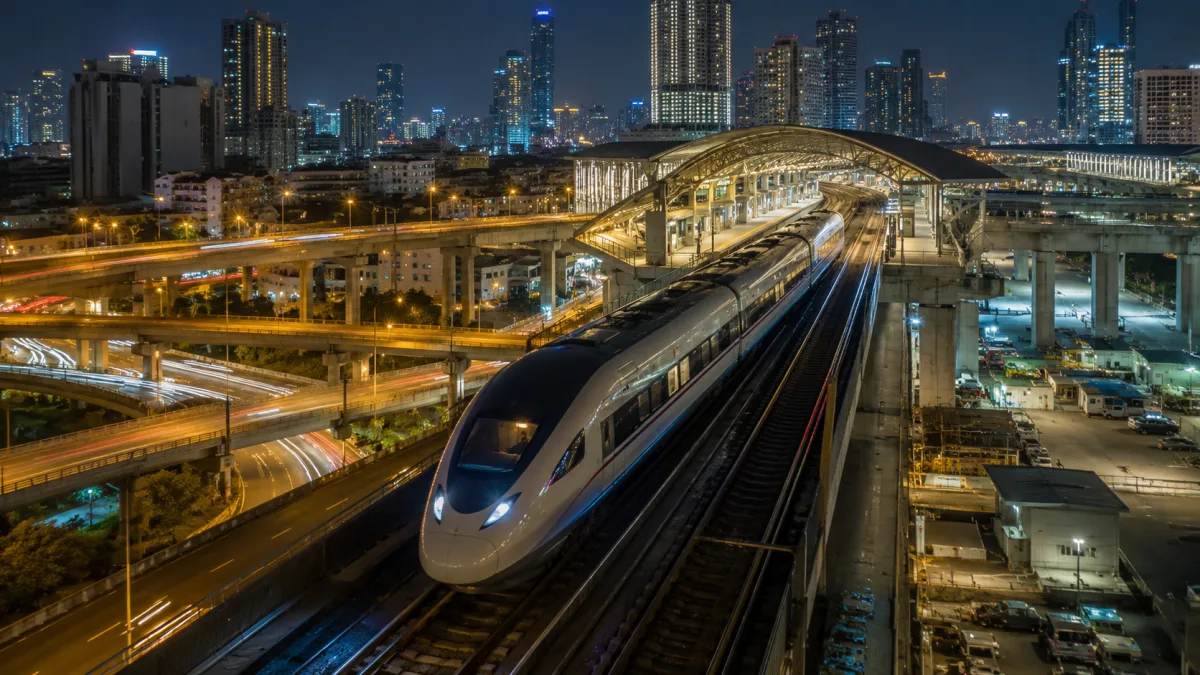
Second, the Don Mueang, Suvarnabhumi, U-Tapao high-speed rail link. This 220-kilometre rail project was originally meant to connect the three airports in under 45 minutes. Six years after the contract was signed in 2019, the contract structure is still being reworked. A realistic launch is, on current standing, no earlier than 2030, with the EEC authority and private partner Asia Era One working on a solution. Anyone budgeting for a fast rail connection should plan for two scenarios, a likely one and a delayed one.
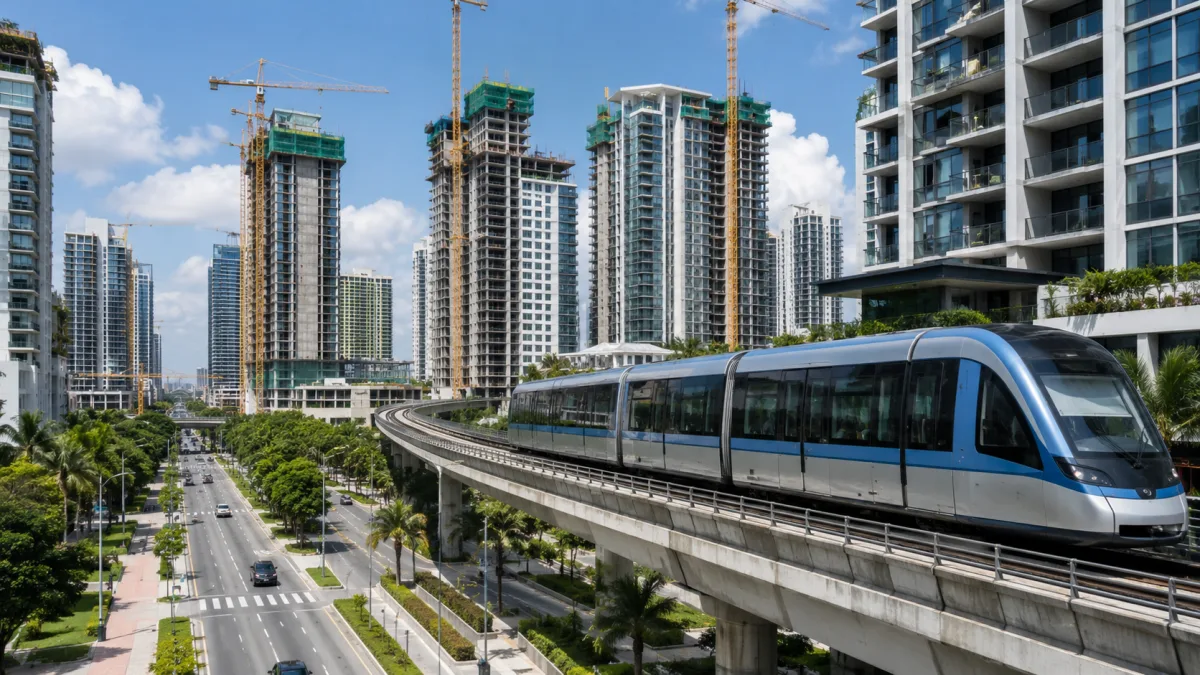
Third, the Pattaya monorail. The planned green line is intended to connect the future railway station location with the beach zone as far as Bali Hai Pier. The second phase, the purple line, is due to be built from 2027. Here too, the same applies: the plans have been approved, but their realisation depends on the larger EEC projects and on political stability in Bangkok.
- U-Tapao Airport: construction phase since 3 April 2026, reduced first phase of 3 million passengers
- Don Mueang, Suvarnabhumi, U-Tapao high-speed line: realistic launch no earlier than 2030
- Pattaya monorail purple line: construction planned from 2027
What does this mean for DACH investors? The infrastructure story is real, but it is arriving more slowly than some agents portray. Anyone betting on property prices doubling within three years because of the rail link is taking on high speculative risk. By contrast, anyone investing for the long term in EEC-adjacent locations such as Na Jomtien, Bang Saray or the corridor around the planned Pattaya railway station is buying today at prices that do not yet fully reflect the infrastructure premium. Analysts expect these EEC-adjacent locations to see the strongest price growth in the Thai property market in 2026 and 2027, in the order of six to ten percent per year.
An honest assessment: the EEC initiative is substantial, but it is a ten-year story, not a three-year one. Those who think accordingly long term will benefit. Those expecting quick speculative gains will probably be disappointed. You will find more on the structural off-plan approach in my article Off-plan in Pattaya 2026: opportunities, risks and what really matters.
Trend 2: Flight to quality, prime locations pull ahead
The same pattern appears across all 2026 market reports from CBRE, Knight Frank and Colliers: an increasing concentration of demand on genuinely good products. In the industry this is referred to as flight to quality. In practice it means that well-located, professionally managed, high-quality apartments continue to gain, while mediocre stock in unattractive locations becomes harder to sell.
For Pattaya this trend shows up in three clear ways.
First, new apartments versus older construction phases. Move-in-ready apartments from 2026 projects with modern fit-out standards, smart-home integration, high-quality communal areas and energy efficiency achieve noticeably better prices and rents than apartments from construction phases before 2018. The difference is especially noticeable on resale.
Second, professionally managed buildings versus poorly run developments. Residential developments with an active sinking fund, professional property management and well-maintained communal areas retain their value performance even in difficult market phases. Poorly managed developments systematically lose substance and value. This is one of the reasons why I strongly advise DACH buyers to examine not only the apartment itself before buying, but also the building management, the proportion of foreign owners and the financial situation of the owners' association.
Third, prime locations versus inland. The price premium for genuine beach proximity or sea-view locations widened markedly in 2026. In Wongamat and Pratumnak, a direct beachfront location appreciates two to three times faster than comparable apartments a few hundred metres inland.
What does this mean for DACH investors? The cheapest price per square metre is rarely the smartest purchase in 2026. A cheap apartment in a poorly managed development is not an opportunity but a liability. The premium you pay today for quality in location, building substance and management pays for itself many times over through the rental yield, the lower vacancy rate and the stronger value performance on later resale.
Trend 3: The buyer profile is shifting, DACH remains core business
Pattaya's foreign buyer base has shifted over the past three years, and anyone buying in 2026 should understand who the resale market will be in five years' time.
| Buyer group | Trend 2026 | Main motivation |
|---|---|---|
| DACH (Germany, Austria, Switzerland) | Stable core market | Retirement, lifestyle, rental income |
| Scandinavia | Stable | Lifestyle, long-term stays |
| Russia | Recovery after the 2022 slump | Lifestyle, long-term residence option |
| China | Stronger again, especially new builds | Investment, second home |
| UK | Stable to slightly declining | Retirement, lifestyle |
| India | Growing new segment | Investment, lifestyle |
| Domestic Thai buyers | Constrained by debt and lending conditions | Weak relative to foreign demand |
For DACH buyers the most important observation is this: the German-speaking market remains one of the most stable core clusters of Pattaya property demand. Pattaya enjoys a level of recognition among Europeans that no other Thai city achieves, and the DACH buyer recognition value on later resale is correspondingly high.
One important recent data observation: Thailand's Ministry of Tourism recorded a slight decline in tourist numbers from the West for 2025, offset by strong growth from Asia. For the property market this has barely any noticeable impact, however, because buyers and tourists have different profiles. Someone who buys an apartment comes several times a year for longer stays, not for a week of peak season. Pattaya's roughly thirty thousand permanently resident foreign residents are the dependable foundation of the housing market, not the seasonal tourists.
Trend 4: Rental market stability, Pattaya's quiet strength
Despite the broader economic fluctuations in Thailand, the Pattaya rental market is proving remarkably robust in 2026. The established expat community of around thirty thousand long-term foreign residents forms a demand base that functions largely independently of Thai economic cycles.
Key rental market observations for 2026:
Long-term rentals of six to twelve months have risen by five to eight percent year on year in high-quality buildings in Pratumnak and Jomtien. This reflects the scarcity of quality apartments relative to stable demand.
Vacancy rates in professionally managed buildings in top locations are mostly below five percent. Quality apartments practically never stand empty.
The digital nomad segment is growing steadily, especially in Jomtien and Central Pattaya. The improved internet infrastructure and the Thai government's Long-Term Resident Visa programme are actively contributing to this.
Short-term rental in the Airbnb style has recovered strongly in the high season from November to March, but remains volatile in the low season. For DACH investors with an investment objective I consistently recommend long-term rental as a reliable source of returns.
| Location | Gross yield 2026 | Note |
|---|---|---|
| Central Pattaya | 7-10% | highest ongoing yield, high tenant demand |
| Jomtien / Na Jomtien | 6-8% | stable rental demand, family cluster |
| Pratumnak | 6-8% | high value stability, premium segment |
| Wongamat | 5-7% | premium value retention, lowest vacancy rate |
Trend 5: A new developer reality, OCPB protection and buyer power
Here comes a regulatory change that is often underestimated in English-language Pattaya analyses, but which is central for DACH buyers. Since January 2025, new rules from the Office of Consumer Protection Board apply to off-plan purchases in Thailand. The short version: buyers who put down a deposit for an apartment under construction are considerably better protected against the loss of that deposit than before 2025.
Specifically, this means that if a buyer has to withdraw from the purchase for legitimate reasons, for example because the developer significantly delays the promised completion date or fails to meet agreed quality standards, the legal hurdles for a refund of the deposit are markedly lower than before the OCPB reform. Combined with the Condominium Act, this produces a level of consumer protection that can genuinely compete with off-plan purchases in European markets.
The effects on the market are clearly noticeable in 2026. Prospective buyers who used to hesitate now make decisions faster. Developers, for their part, are operating more transparently because the consequences of contractual default have become more expensive. At the same time, material costs rose significantly in 2025 and early 2026. Anyone entering today on still more favourable terms with an ongoing or just-launching off-plan project benefits from price levels that will no longer be available in subsequent sales phases or in the next projects from the same developers.
Current off-plan projects with an excellent developer track record include the Grand Solaire Pattaya, the Zenith Pattaya 2 and the Copacabana Coral Reef. Each of these projects has its own positioning in location, price segment and buyer profile. The entire process from signing the contract to formal handover is described in detail in my guide to the key handover in Pattaya.

Price forecast 2026 to 2027 by location
Based on current market data, infrastructure development and demand trends, here is my assessment of price movements over the coming 18 to 24 months. The figures refer to annual price growth and should be understood as ranges, not guarantees.
| Location | Forecast 2026 | Forecast 2027 | Driver |
|---|---|---|---|
| Overall Pattaya market | +2% to +5% | +3% to +6% | Stabilisation |
| EEC-adjacent locations (Na Jomtien, Bang Saray) | +5% to +8% | +6% to +10% | Infrastructure effect begins |
| Pratumnak | +4% to +7% | +5% to +8% | Supply scarcity, premium demand |
| Wongamat | +3% to +6% | +4% to +7% | Premium value retention |
| Jomtien (beach proximity) | +3% to +6% | +4% to +7% | Stable rental demand |
| Central Pattaya | +1% to +3% | +2% to +4% | High supply, more competition |
| Rental yields (quality properties) | 6.0% to 8.0% | 6.0% to 8.0% | Stable expat demand |
The most important takeaway: the phase of pre-infrastructure prices is gradually closing. As soon as construction work at U-Tapao becomes visible and the rail project shows progress, the market will increasingly price in the infrastructure premium. Anyone investing in the EEC corridor in 2026 is buying before this is fully priced in.
Strategic implications for DACH investors
What does this forecast mean in concrete terms for German-speaking investors with an investment budget between 80,000 and 250,000 euros, which is the typical range in the DACH buyer profile?
First, the off-plan route remains strategically superior. Lowest acquisition costs of around one percent, staggered payment plans over two to four years, the newest building substance and, since 2025, expanded OCPB buyer protection. Resale can make sense in special cases, but is significantly inferior in the typical DACH constellation. You will find a detailed comparison of taxes and acquisition costs in my article on the taxes on a condo purchase in Pattaya 2026.
Second, the choice of location matters more than ever. Anyone looking to buy an investment in 2026 should not be lured by the cheapest prices in mid-tier locations. Prime locations such as Pratumnak and Wongamat deliver more stable value performance over the long term, EEC-adjacent locations such as Na Jomtien the greatest upside potential at higher risk, and Central Pattaya the highest ongoing yield with more moderate value performance. The choice of location depends directly on your personal investment objectives.
Third, the financial handling should be planned early. The DACH AWV reporting obligation from 50,000 euros, the Bank of Thailand's tightening of entry controls above USD 200,000 since 29 December 2025, the need for the FET certificate for every transfer. All of this is manageable, but requires lead time. My detailed guide on this topic is in the article Transferring money to Thailand 2026: the FET certificate and the compliance reality for DACH buyers.
Fourth, the Long-Term Resident Visa as an additional option. Anyone planning to live permanently in Pattaya or to spend longer periods here regularly should consider the LTR visa. It offers a ten-year residence permit and tax advantages on foreign income for qualified applicants. Details in the article Visa and residence 2026 for German-speaking property buyers.
Fifth, the honest filter. Pattaya is not the right location for every DACH buyer. Anyone who wants to do a thorough self-assessment will find it in my article When Pattaya is not the right property location for you. This honesty is part of my advisory approach: not every potential buyer is also a good buyer for Pattaya, and addressing that openly protects both sides.
My conclusion: The Pattaya property market in 2026 and 2027 offers a rarely simultaneous combination of favourable factors. Stable rental demand, improving infrastructure, new buyer protection, diverging demand between a weak domestic market and stable foreign demand. The DACH investors who, in five years, will look back on 2026 as their year of entry are those who act today on the basis of data rather than waiting until the story becomes obvious to everyone. By then, the best opportunities are typically already gone.
In my free Pattaya Property Guide you will find a compact overview of all the important aspects of buying property in Pattaya, including a location map and a developer overview. A no-obligation initial consultation for DACH buyers is free of charge. We go through your specific situation together, examine suitable off-plan projects and discuss which location and which developer best fit your strategy.
Frequently asked questions
More on buying property in Pattaya