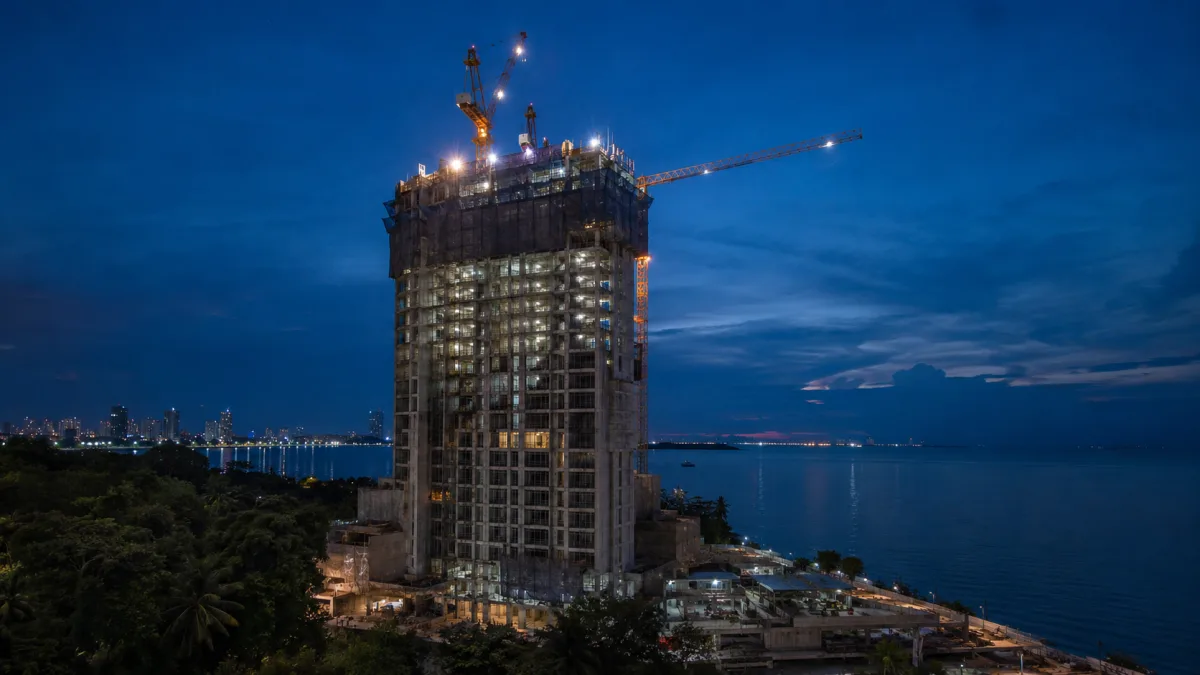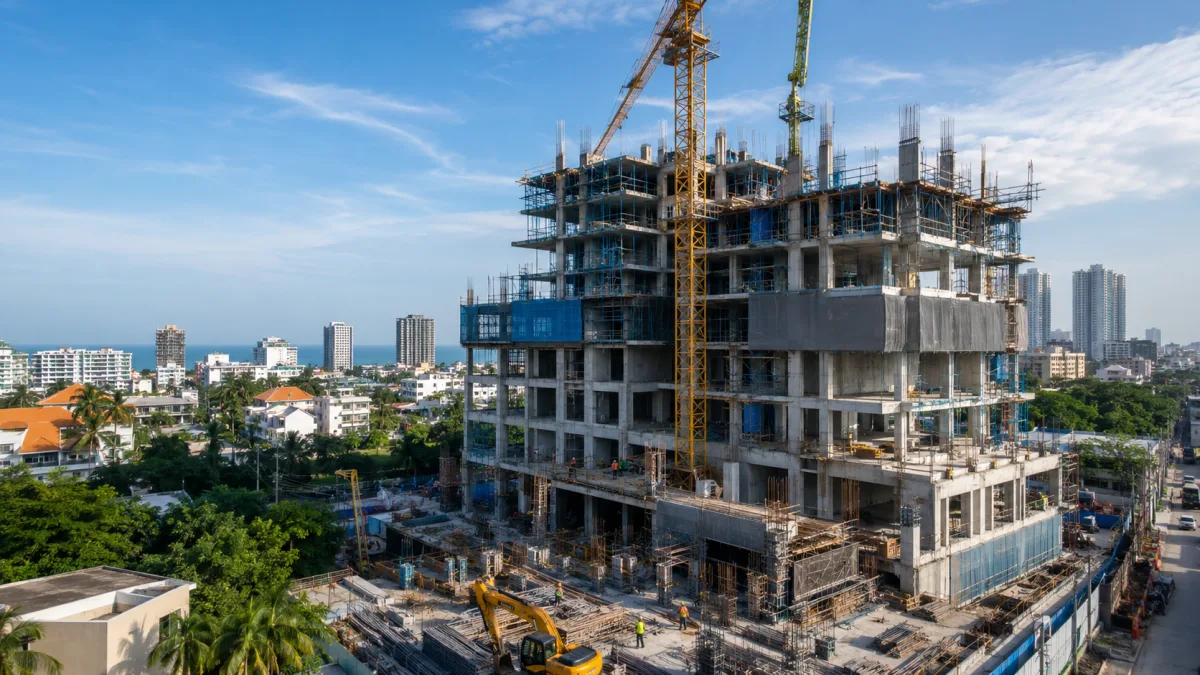
In brief: Minor new-build defects in Pattaya are completely normal and part of an orderly handover process – no cause for concern. At inspection you document every item on a defect list (snagging list), give the developer a rectification period (typically 30 days) and release the final payment only once everything has been ticked off. In addition, the Condominium Act provides a statutory warranty: five years on the structural fabric and two years on other building components. I accompany the inspection in person – that is exactly what I am here for.
New-build defects in Pattaya: why this is part of the normal process
When your off-plan project is complete and handover is imminent, there is first some good news: an inspection at which minor items come to light is the norm – not the exception. Every newly built apartment in the world is checked before occupation, and virtually every one turns up something: a scratch in the flooring, a door that does not close cleanly, a silicone joint that needs touching up. That is not a sign of poor quality; it is part of an established, orderly process.
There is a clear procedure for exactly this moment: the inspection with defect list, a rectification period and – as the most powerful lever – the final payment, which is released only once rectification is complete. Anyone who knows and consistently uses this procedure moves into a defect-free apartment. This article walks you through the process step by step as it works in Pattaya and explains what matters most. For the full off-plan journey from reservation to this point, see the companion article Buying Off-Plan in Pattaya.

The handover process at a glance
The handover of an off-plan apartment in Pattaya follows a fixed sequence. Here is how it typically looks:
- Completion notice: The developer notifies completion and invites you to the inspection.
- Initial inspection: You – or I on your behalf – walk through the apartment systematically. All defects are recorded in writing on the defect list.
- Rectification period: The developer remedies the documented items within the agreed period (typically 30 days).
- Follow-up inspection: You verify that every item has been resolved. Often two or three rounds are needed before everything is truly in order.
- Final payment & title transfer: Only once the list is fully ticked off do you release the final instalment. Ownership is then transferred to you at the Land Office (Chanote/title deed).
The critical point: inspection and defect list come before the final payment. That gives you the most effective instrument available – money that has not yet been released. How instalments are spread over the construction period and how large the final payment typically is can be found in the article Financing a Condo in Pattaya & Payment Plan.
The defect list: what is checked at inspection
The defect list (also called a snagging list) is your central tool. It documents every defect with a photo, a brief description and its location. The more precise it is, the smoother the rectification. The key areas checked are:
- Surfaces: scratches and cracks in floors, walls and ceilings; uneven paintwork; loose or cracked tiles.
- Doors and windows: clean closing action, seals, locks, balcony sliding doors, glass panes free of scratches.
- Plumbing: water pressure, drains, watertightness of fittings and connections, function of toilet and shower, silicone joints.
- Electrics: all sockets and switches, fuse box, lighting, connections for air conditioning and appliances.
- Air conditioning: cooling performance, noise levels, condensate drainage.
- Kitchen and fitted elements: cabinets, worktop, hinges, drawers, sink.
- Balcony and view: balustrade, waterproofing, correspondence with the purchased floor plan and the agreed orientation.
A practical tip for the walkthrough: bring a charger (to test sockets), a small water test for the drains and your smartphone for photos. Switch on every air-conditioning unit and let it run for a few minutes. In Pattaya it is also worth paying close attention to moisture and waterproofing – the tropical climate with its pronounced rainy season places greater demands on joints and balcony drainage. Background on this is in the article Pattaya Climate & Best Time to Visit.
Rectification period and final payment as leverage
Once the defect list is finalised, rectification begins. Standardised developer contracts in Thailand typically provide a period of 30 days within which defects must be remedied. This period is not a suggestion; it is a contractual obligation.
Your most effective lever is the final payment. In off-plan projects in Pattaya a significant portion of the purchase price is typically due only at handover – depending on the payment plan, often 10% or considerably more. This final payment is released only when the apartment genuinely meets your expectations and the contract. While material defects remain open, you do not pay the full amount. This is entirely legitimate and the standard approach in practice.
Proportionality matters here: withholding the entire final payment over a single small silicone joint would be disproportionate and unnecessarily strains the working relationship. A tried-and-tested approach is to distinguish between two categories:
| Type of defect | Examples | Approach |
|---|---|---|
| Material defects | Water damage, faulty air conditioning, door that will not close, missing fixtures | Withhold final payment until resolved |
| Cosmetic defects | Scratches, joint, minor paint blemish | Place on defect list, rectification within the period, retain a small residual amount if needed |
With reputable developers – and those are precisely the ones I select for my clients – rectification is routine. Construction companies have dedicated teams for this and a strong vested interest in ensuring you move in satisfied, because happy owners are the best sales proof for the next project phase. The precise sequence of the final payment and title transfer, including the fees involved, is covered in the article Taxes on Condo Purchase in Pattaya 2026.
The statutory warranty under the Condominium Act
Even after moving in you are not without protection. The Thai Condominium Act and the standard sales contract with the developer prescribed by the Ministry of Interior (mandatory since 2008) provide new-build buyers with a clear statutory warranty. The developer is liable from the date of title registration:
- 5 years for the structural fabric – i.e. the load-bearing structure, foundations and essential structural elements.
- 2 years for other building components – such as installations, surfaces and fixtures.
These periods are enshrined in law and cannot be contractually reduced to your detriment – deviations are permissible only in the buyer's favour. If a defect covered by the warranty emerges after you move in, the developer is obliged to remedy it. This legal protection is one of the major advantages of a new build over a resale apartment, where you buy "as seen" with no construction warranty. The legal foundations are explored in depth in the article Condominium Act Thailand – Explained Clearly.
Do I need my own lawyer for this?
When buying new from a vetted developer, a personal lawyer is not necessary for the inspection. The sales contracts with the developer follow the standardised format of the Ministry of Interior, which clearly governs rectification and warranty periods and expressly protects the buyer. This is a genuine buyer advantage: you save yourself time and expense because the legal framework is already cleanly established. The situation is different when buying resale from a private seller – there a personal lawyer is advisable, since there is no standardised contract and no construction warranty. At the inspection itself, experience with the specific project matters above all, and that is exactly what I bring.
What to do if rectification stalls
In the vast majority of cases rectification runs smoothly. Should an item nevertheless remain unresolved, there is a clear, calm course of action – entirely without conflict:
- Document in writing: Every defect list and every follow-up inspection round is dated and recorded with photos. This creates clarity for both parties.
- Retain the relevant amount: As long as a specific, named defect remains open, the corresponding portion of the final payment is held back.
- Use escalation channels: First the site office, then the developer's project management. With reputable developers this is almost always sufficient.
- Agent support: I know the developer contacts in Pattaya personally and can resolve matters directly that would otherwise take weeks.
The most important protection, however, comes much earlier: in choosing the right developer. Working with a developer with a strong track record and solid construction quality means experiencing rectification as a routine service rather than an obstacle. Which projects and developers the market currently offers and how it is evolving is assessed in the Pattaya Property Forecast 2026/2027.
My role at your inspection in Pattaya
Many of my German-speaking clients are not on-site for handover – or would like someone experienced by their side for their first apartment in Thailand. Neither is a problem. I carry out the inspection in person, compile a complete defect list with photos, coordinate rectification with the developer and verify at each follow-up inspection that every single item has been resolved. Only when everything is in order do we proceed to the final payment and title transfer.
This turns "defects at handover" – which sounds daunting at first glance – into a clearly managed, plannable step, at the end of which you take possession of a defect-free, modern apartment in Pattaya. Examples of projects I accompany include SkyPark Lucean Jomtien, Grand Solaire Noble and Aquarous Jomtien.
Frequently asked questions about defects and rectification for new builds in Pattaya
Are defects at handover a sign of poor construction quality?
No. Minor items at inspection are completely normal and occur with virtually every new apartment worldwide. What matters is not whether something appears on the list, but that the developer rectifies it reliably and promptly. That is precisely the standard with the developers I select in Pattaya.
How long does the developer have to fix defects?
Standardised contracts typically provide a rectification period of 30 days from notification. In practice, minor cosmetic items are often resolved within a few days; sometimes two or three follow-up inspections are needed before everything is truly in order.
Can I really withhold the final payment?
For material, unresolved defects it is common and legitimate to withhold the final payment until rectification is complete. For purely cosmetic minor items, proportionality is required – it is usually sufficient to keep them on the defect list and retain a small residual amount until they are resolved.
What does the statutory warranty under the Condominium Act cover?
The developer is liable from the date of title registration for five years on the structural fabric (structure, load-bearing elements) and two years on other building components such as installations and surfaces. These periods are prescribed by law and apply in addition to rectification at handover.
Who bears the ongoing costs from handover onwards?
From the date of ownership transfer you as the owner pay the ongoing common area fee and, where applicable, the sinking fund. How these are composed is explained in the article Running Costs of a Condo in Pattaya. Defect rectification under the rectification period and warranty is separate and is borne by the developer.
Are you approaching the handover of your off-plan apartment, or would you like to be guided safely through the entire process from the very start? Let's have a no-obligation conversation – simply use the contact form. You will also find a compact overview for your planning in the free guide.
Free Guide
68 pages of Pattaya insider knowledge — download free