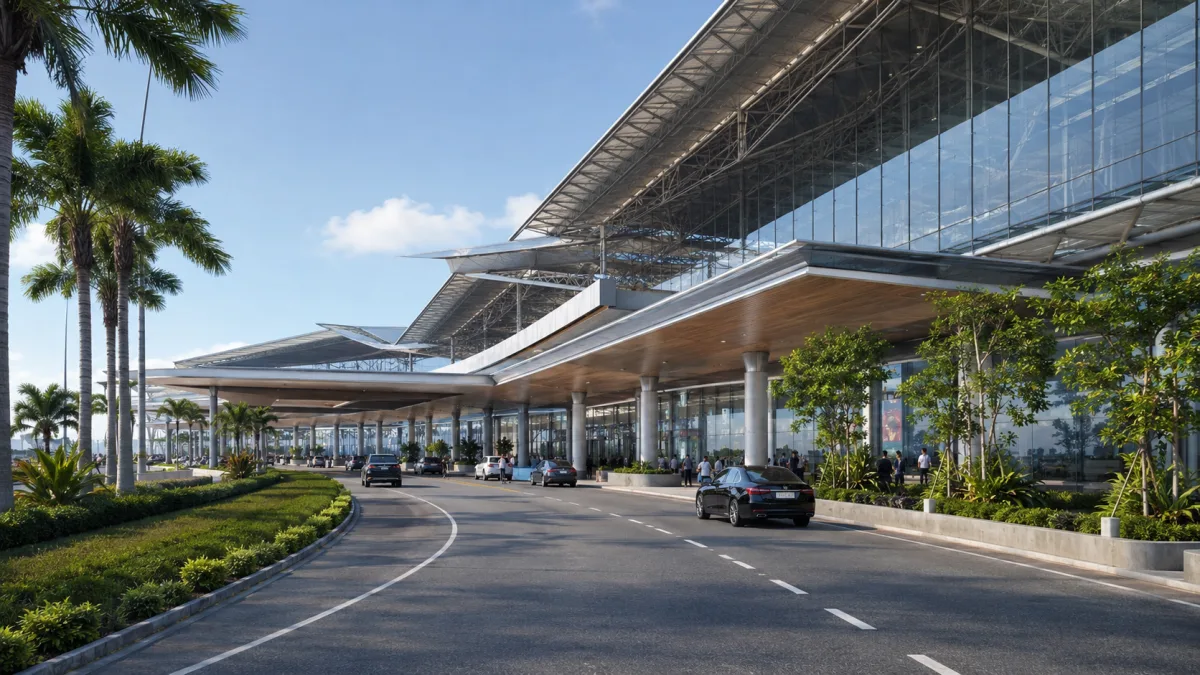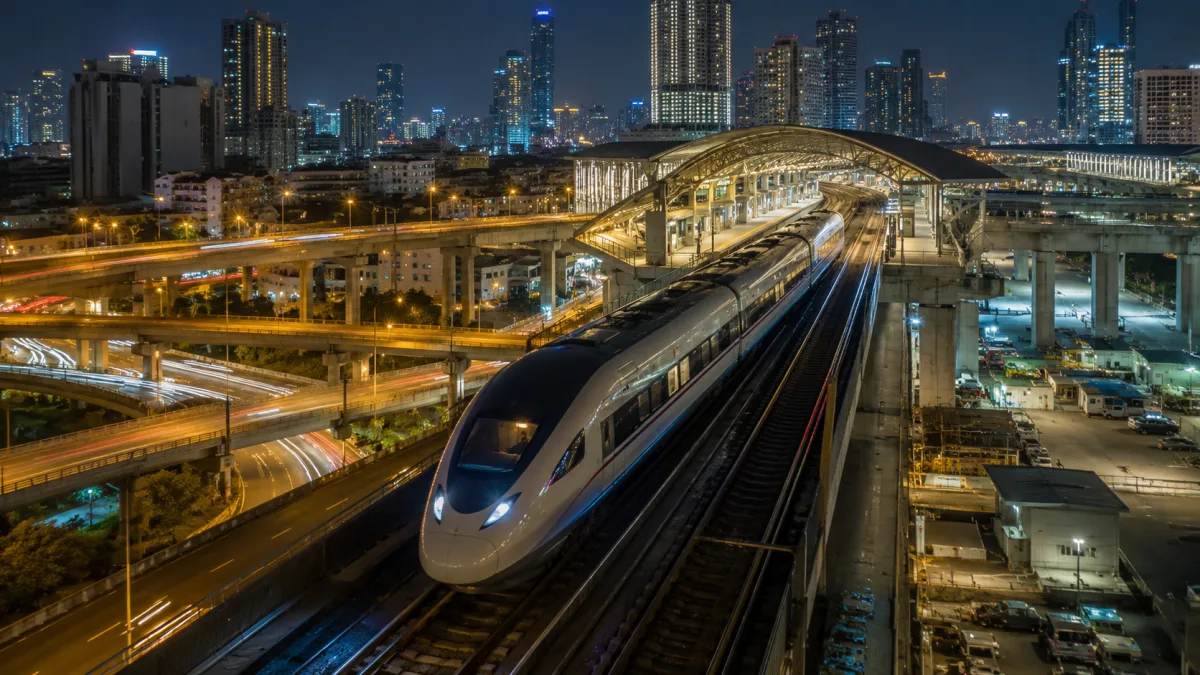
In brief: The Bangkok–Pattaya–U-Tapao high-speed train is set to connect three airports – Don Mueang, Suvarnabhumi and U-Tapao – across roughly 220 km at speeds of up to 250 km/h, cutting the Bangkok–Pattaya journey to around one hour. The officially targeted opening is around 2029; realistically, given the 2026 contract status, the early 2030s is a more likely operational start. For off-plan buyers, the project is a long-term value driver that should already factor into location decisions today.
What is the Pattaya high-speed rail project?
The project is officially named the "Don Mueang–Suvarnabhumi–U-Tapao High-Speed Railway" and is the centrepiece of the transport infrastructure in the Eastern Economic Corridor (EEC). The concept is elegantly straightforward: a through high-speed rail line connecting Bangkok's two major airports with the regional airport at U-Tapao near Pattaya – turning the eastern seaboard into a seamless extension of the capital region.
The plan covers approximately 220 kilometres of track, a top speed of around 250 km/h, and a total investment of roughly 276 billion baht (approximately 7 billion euros). The project is structured as a public-private partnership: the state through the State Railway of Thailand (SRT), and a private consortium led by CP Group, now operating under the name "Asia Era One".
Planned stops at a glance
The line will serve the following stations – from the capital to the eastern seaboard:
| Station | Significance |
|---|---|
| Don Mueang | Bangkok's second airport (low-cost hub) |
| Bang Sue / Krung Thep Aphiwat | Bangkok's central rail hub |
| Makkasan | City terminal in central Bangkok |
| Suvarnabhumi | Bangkok's main international airport |
| Chonburi | Provincial capital, industrial region |
| Si Racha | Port and industrial centre |
| Pattaya | Stop for the tourism and residential region |
| U-Tapao | Regional airport, end of the line |
An originally envisaged extension to Rayong was dropped at an early stage; the line terminates at U-Tapao Airport. Important to note: based on current plans, the Pattaya stop is not planned at the beach or along Beach Road, but further inland in the Huai Yai area (Bang Lamung district). A supplementary connection to the city centre – for example via a planned Pattaya monorail – is the subject of separate planning discussions.
Travel time and the Bang Saray connection
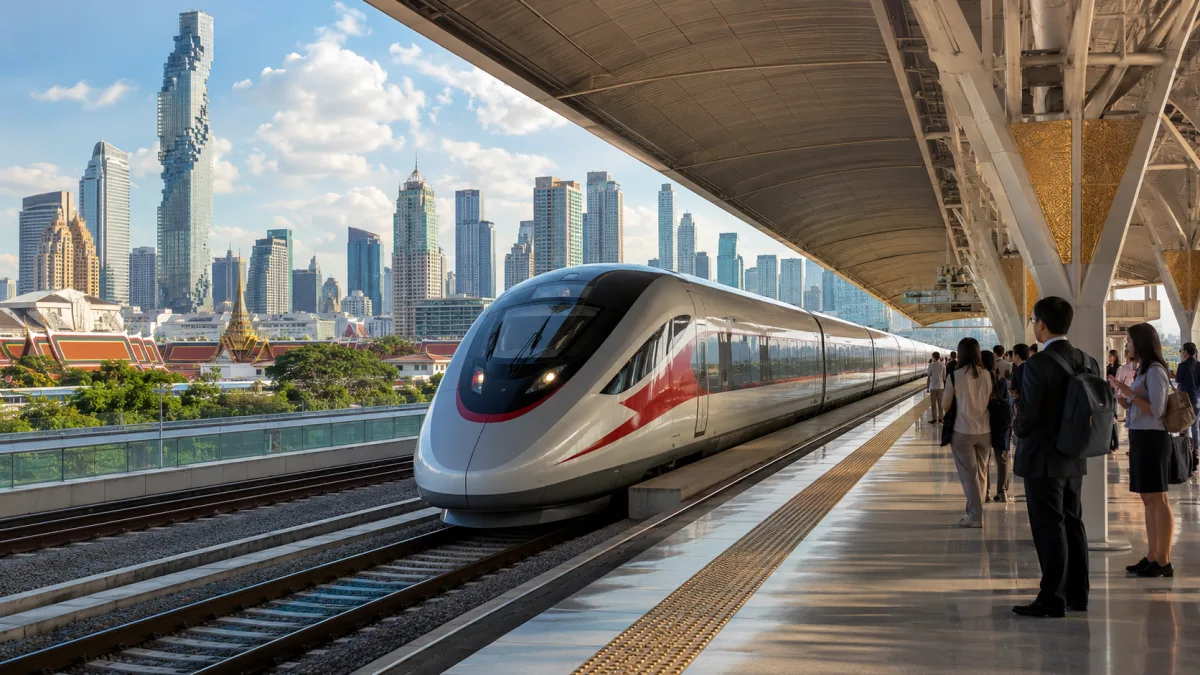
The high-speed rail's strongest argument is the time saving. Today, the journey from Bangkok to Pattaya takes two to three hours by car or bus depending on traffic. With the high-speed train, the pure travel time between the capital and Pattaya is expected to drop to around one hour – a genuine leap that brings Pattaya within commuting distance of the metropolitan region.
The terminal area around U-Tapao is particularly interesting for the southern districts. The airport is near Sattahip, and the up-and-coming coastal village of Bang Saray – situated between Na Jomtien and Sattahip – benefits from its proximity to the future transport hub. In recent years Bang Saray has evolved from a sleepy fishing village into a sought-after location for premium new-build projects. Buyers here or in neighbouring Na Jomtien sit, in the medium term, close to not just one but two infrastructure catalysts: the expansion of U-Tapao into the region's third major airport, and the high-speed rail terminus.
2026 status: where does the project actually stand?
Honesty is required here, because the project has a turbulent history. The concession was awarded back in 2019, but since the pandemic actual construction progress has largely stalled. The sticking point is the financial structure of the PPP contract.
Throughout 2025 and 2026, the SRT, the EEC Office and Asia Era One have been negotiating a contract amendment. The private partner is seeking a "build-and-pay" model, under which the state pays in line with construction progress during the build phase rather than only after operations begin. The government was at times sceptical about this shift from the originally agreed payment logic. Also under discussion are additional bank guarantees of around 160 billion baht, with which the concessionaire would underwrite completion within five years.
According to the most recent timelines (as of 2026), the SRT is targeting a contract signing in July, followed by a Notice to Proceed a few weeks later, and then calculates approximately five to five-and-a-half years for construction and systems testing. The Bang Sue–Don Mueang section shares infrastructure with another high-speed rail scheme, which has further slowed coordination.
What does this mean for the opening date?
An opening horizon of around 2029 is still cited officially. Given the 2026 contract situation, buyers should treat this date as an optimistic target – a realistic operational start is more likely in the early 2030s. This context matters so that nobody bases a purchase decision solely on a firm opening date. That said, it does not alter the fundamental direction: Thailand continues to pursue the project as a strategic cornerstone of the EEC, and political commitment to its delivery has remained stable across changes of government.
What impact does the high-speed rail have on Pattaya property?
Infrastructure is one of the most reliable drivers of property values – true worldwide and especially so in dynamic growth regions like Thailand's eastern seaboard. Experience from other markets shows that even a credible prospect of a new high-speed rail connection lifts price levels in the catchment area long before the first train runs.
For Pattaya, the combination of the high-speed railway, the U-Tapao expansion and motorway improvements creates a structural tailwind. Buying an off-plan condo in a well-connected location positions you early for this trend. Several levers work together in practice:
- Commuter potential: Bangkok professionals can use Pattaya as a second home or weekend base – broadening demand well beyond tourists and retirees.
- Rental demand: Better connectivity supports occupancy rates for rental properties. A realistic gross rental yield of around 5–8% per annum remains the benchmark; the high-speed rail can further underpin long-term rentability.
- Capital appreciation: Ongoing market price growth in Pattaya stands at around 3–5% per year. Infrastructure projects of this scale can trigger above-average effects in specific areas.
- Off-plan leverage: Buying in the early construction phase can mean paying up to 40% less than at completion. This entry advantage and the long-term infrastructure effect are two separate factors – but both point in favour of an early move.
Those who want to explore the infrastructure topics in more depth will find a comprehensive overview in the article on EEC infrastructure as an investment driver. The mechanism behind capital appreciation is explained in detail in the Market Forecast 2026/2027.
Which locations benefit most?
Not every district benefits equally. What counts is proximity to the future transport hubs and the overall quality of the location. A rough overview of current off-plan price levels (guide figures, THB/m²):
| Location | Off-plan price (THB/m²) | Relation to high-speed rail |
|---|---|---|
| Na Jomtien | 115,000–247,000 | Close to U-Tapao and the southern growth axis |
| Jomtien | 125,000–220,000 | Good access to Pattaya stop and the south |
| Central Pattaya | 130,000–250,000 | Benefits from city connection (monorail planning) |
| Pratumnak Hill | 120,000–200,000 | Central premium location, short distances |
| Wongamat / Naklua | 115,000–260,000 | Northern premium location, independent demand |
For the south around Na Jomtien and Bang Saray, projects such as Aquarous Jomtien (Foreign Quota from approx. 138,000 THB/m²) or Arom Jomtien are worth considering. Those who prefer a central location with short distances will find, for example, Grand Solaire Noble (142,000–219,000 THB/m²) a high-quality new-build option. A complete overview of all current projects is available under Projects.
A detailed comparison of the districts and their respective strengths is provided in the comprehensive district comparison. Those keeping an eye on price trends will find reliable figures in the Off-Plan Price Report 2026.
What should buyers watch out for now?
An infrastructure project of this scale is a long-term bonus, not a reason to rush. It makes sense to base a purchase decision primarily on the current qualities of a property – developer quality, location, price, specifications – and to factor in the high-speed rail as an additional future lever.
Choosing the right developer is the single most important safety factor. That is precisely my role on the ground: I work exclusively with vetted developers whose contracts are standardised and sound. With a new-build from a vetted developer, no separate lawyer is needed – a practical and cost advantage for buyers from German-speaking countries. Only when purchasing privately (resale) is additional legal review advisable.
For the legal structure of ownership, the article on Foreign Quota, Freehold and Leasehold is worth reading. The full cost breakdown of a purchase is explained in What does a condo in Pattaya really cost?.
Frequently asked questions about the Pattaya high-speed train
When will the Bangkok–Pattaya–U-Tapao high-speed train run?
An opening around 2029 is the official target. Based on the 2026 contract status – with a signing aimed for July followed by approximately five to five-and-a-half years of construction – a realistic operational start is more likely in the early 2030s. No fixed date should be set in stone.
How long is the journey from Bangkok to Pattaya?
At speeds of up to 250 km/h, the pure travel time between Bangkok and Pattaya is expected to drop to around one hour. Today, travelling by car or bus takes two to three hours depending on traffic.
Does the train stop in Pattaya itself or near Bang Saray?
A Pattaya stop is planned in the Huai Yai area (Bang Lamung district), slightly outside the city centre; a city connection via a planned monorail is being discussed separately. The southern terminal area around U-Tapao is close to Sattahip and the up-and-coming Bang Saray, which benefits from its hub location.
Does the high-speed rail increase property prices in Pattaya?
Infrastructure is one of the most reliable value drivers. The prospect of improved connectivity supports demand and prices – in Pattaya we continue to expect around 3–5% appreciation per year, with well-connected locations tending to outperform. This is a professional assessment and not investment advice.
Is it worth buying now because of the high-speed rail?
Yes – entering early in a good location secures the off-plan price advantage and positions you for the infrastructure tailwind. What matters most, however, is that the location, developer and price already stack up today; the high-speed rail is the long-term bonus on top.
Would you like to know which off-plan projects benefit most from the future high-speed rail connection? I have been on the ground in Pattaya since 2018 and guide you personally from location selection through to handover. Send me a no-obligation message via the contact form – or download my free guide first, which explains every step of buying a condo in Pattaya in concise detail.
Free Guide
68 pages of Pattaya insider knowledge — download for free