In short: Pattaya sits within the Eastern Economic Corridor (EEC), the growth triangle of Chonburi, Rayong and Chachoengsao, into which the state is channelling tens of billions for industry, high-tech, logistics and tourism. The drivers for property values are the expansion of U-Tapao Airport (construction starting in 2026, around 30 minutes to the south), the high-speed rail line with a Pattaya stop (operating from around 2030) and a planned city monorail. Well-connected areas such as Wongamat, Pratumnak and central Pattaya benefit the most.
Anyone buying a property in Pattaya is not just buying beach and sunshine, but a region into which the Thai state is investing tens of billions. The keyword is EEC, the Eastern Economic Corridor. It is the main reason why I view Pattaya's long-term prospects positively, and at the same time a topic where a great deal is exaggerated.
In this article I give an honest assessment of the major infrastructure projects: what is the EEC, what will the expansion of U-Tapao Airport bring, where does the high-speed train really stand, and what does all of this mean for the value of your property? Without hype, but with a clear message: this region is being developed strategically, and that supports values.
Free Guide
68 pages of Pattaya insider knowledge, download for free
What is the Eastern Economic Corridor?
The Eastern Economic Corridor, EEC for short, is Thailand's largest economic development programme. It covers the three east-coast provinces of Chonburi (to which Pattaya belongs), Rayong and Chachoengsao. The aim is to turn this region into a leading hub for industry, high technology, logistics and tourism in Southeast Asia, as the centrepiece of the national Thailand 4.0 strategy.
In concrete terms, enormous public and private investments will flow over the coming years into airports, ports, railways, roads and industrial zones. For Pattaya this means: the city does not lie on the fringe, but right in the middle of the country's most important development area. That is a fundamental difference from pure tourist destinations without an economic backbone.
- Three provinces: Chonburi (with Pattaya), Rayong, Chachoengsao
- Aim: a hub for industry, high-tech, logistics and tourism
- Part of the national Thailand 4.0 strategy
- Billions invested in airport, rail, ports and roads
U-Tapao: Bangkok's third airport
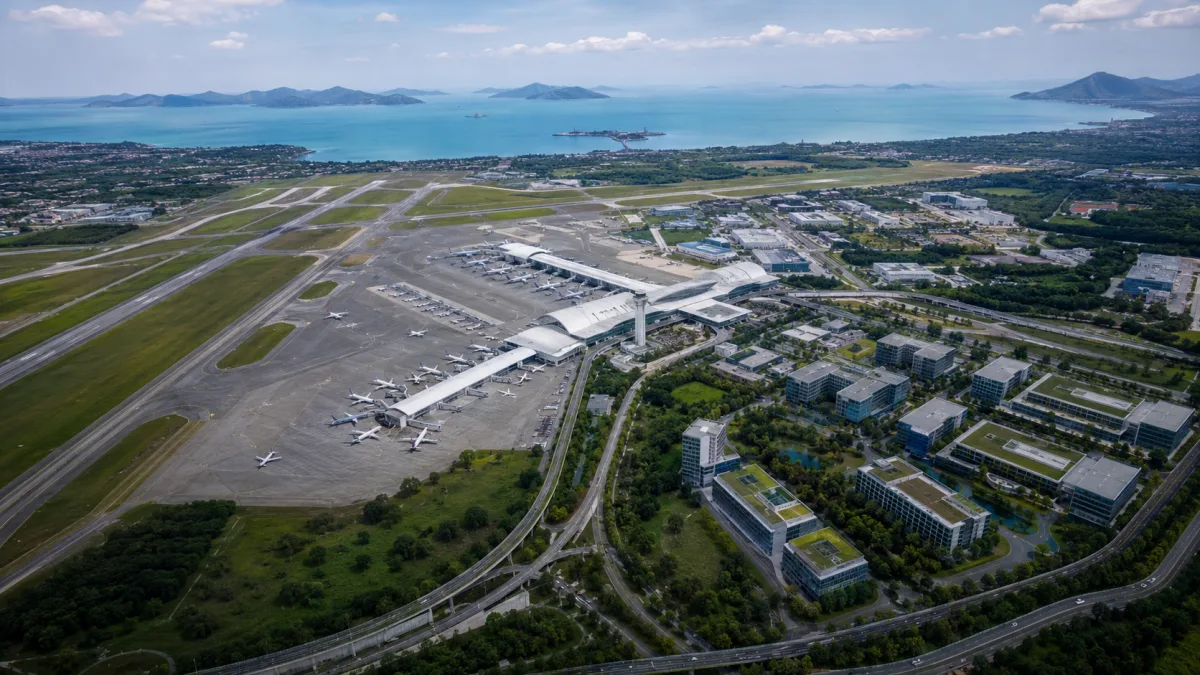
The single most important project for Pattaya is the expansion of U-Tapao Airport, around 30 minutes south of the city. It is set to be developed into the third major international airport of the Bangkok metropolitan region, alongside Suvarnabhumi and Don Muang. A modern passenger terminal with substantial capacity is planned, connecting the region directly to international markets.
An honest assessment: construction began in 2026, the first phase was initially scaled back somewhat compared with the original plans, and the full impact will unfold over years, not overnight. But the direction is clear: a major airport on the doorstep is a massive, lasting locational advantage for Pattaya, both for tourists and for the lettability of property.
High-speed train and monorail
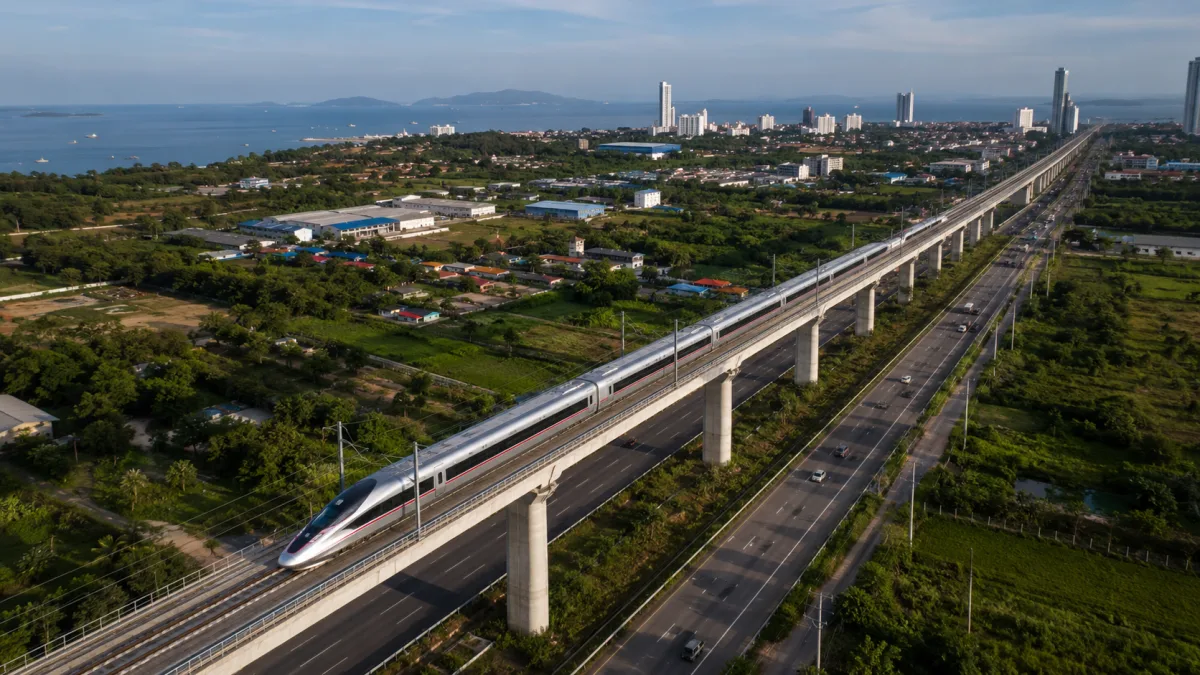
The second mega-project is the high-speed rail line that is set to connect the three airports of Don Muang, Suvarnabhumi and U-Tapao, with a stop in Pattaya. It would drastically shorten the travel time from Bangkok to Pattaya and tie the region even more closely to the capital.
When it comes to rail, the rule is: the plans are real and funded, but patience is needed. Realistically, the high-speed train will be in operation closer to 2030.
Alexander ReifenschneiderHonesty matters here: the high-speed train has been delayed several times, and a realistic start of operations lies closer to the year 2030. An inner-city monorail for Pattaya is also being planned. Anyone buying should see these projects as a long-term tailwind, not as a short-term price driver. You can read more about the time horizons in my Forecast 2026/2027.
What this means for property value
Why is this relevant for buyers? Because infrastructure is the most important long-term value driver for property. Better accessibility, more jobs and greater economic strength increase the demand for housing, both for purchase and for rent. That supports prices and rental yields over the years.
| Project | Impact on property | Time horizon |
|---|---|---|
| U-Tapao expansion | more tourists, better lettability | from 2026, growing |
| High-speed train | closer connection to Bangkok | realistically around 2030 |
| Pattaya monorail | better inner-city mobility | in planning |
| EEC industry & jobs | more purchasing power and rental demand | ongoing, long term |
The key point remains: infrastructure is a long-term factor. No one should buy solely because of a station or airport that will only be completed in a few years' time. But as an additional foundation beneath an investment that already makes sense, the EEC is a strong argument. Pattaya is not a region left to its own devices, but one that is being invested in strategically.
Which areas benefit the most
Not every location benefits equally. As a general rule: areas with good connections to the future transport hubs, to the main arteries and with their own quality of life have the best cards. Established, sought-after areas such as Wongamat, Pratumnak and the centre benefit most steadily anyway thanks to their scarcity and popularity.
Anyone wanting to benefit from the infrastructure should focus on the quality of the location and the project, not on pure speculation on the periphery. Which districts suit which use I describe in detail in my article on the districts for owner-occupiers.

Conclusion: a strong long-term foundation
The EEC is one of the main reasons why I rate Pattaya's long-term prospects positively. Here are the key points.
Strategic region. Pattaya lies at the heart of Thailand's most important economic development area, not on the fringe.
U-Tapao as the key project. The airport expansion brings the greatest and most tangible benefit for lettability.
Rail with patience. The high-speed train and monorail are a real tailwind, but a long-term one, more likely from 2030.
A foundation, not hype. Infrastructure supports values over the years, but never replaces a good location and a good project.
In my free Pattaya Property Guide you will find all the factors around location and investment. An informal initial consultation is free of charge for buyers. Together we will find the location that benefits most from the long-term upswing.
Frequently asked questions
More on buying property in Pattaya