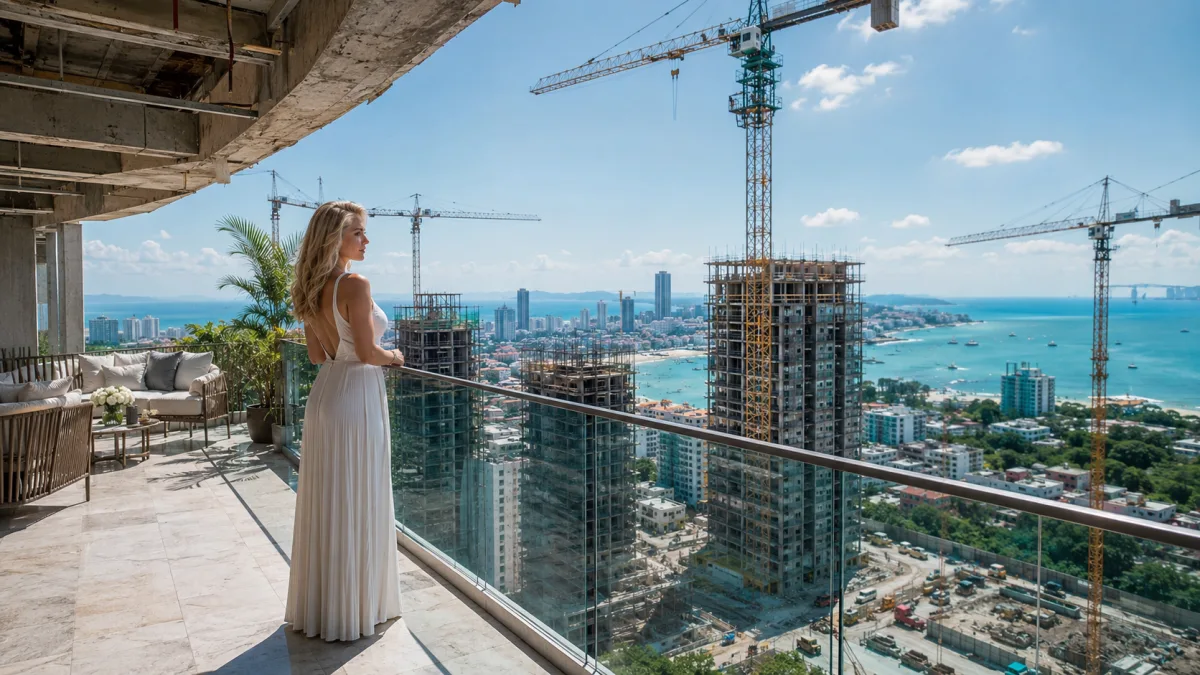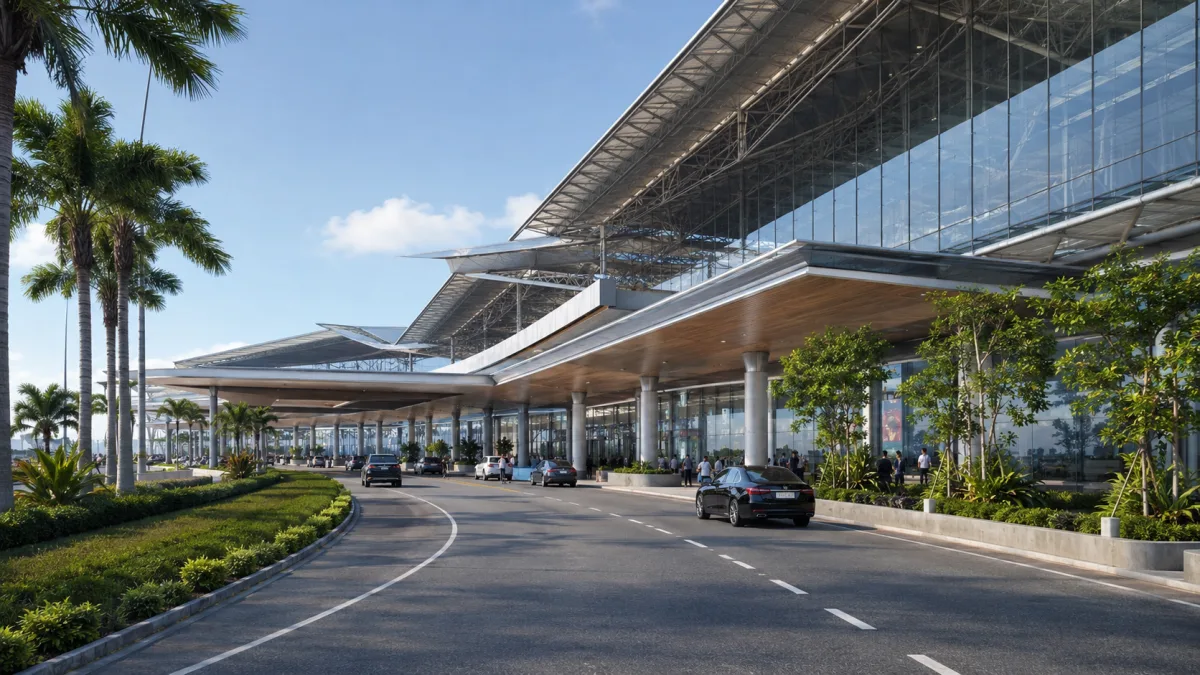
In brief: U-Tapao Airport is being developed into Bangkok's third major international airport and the aviation hub of the Eastern Economic Corridor (EEC) — with construction starting on 3 April 2026, a total investment of around 300 billion THB, and a target capacity of up to 60 million passengers per year. For southern Pattaya (Jomtien, Na Jomtien), this is a structural value driver: better accessibility, more jobs and greater demand — a long-term opportunity for off-plan buyers, with the market seeing around 3–5% appreciation p.a.
U-Tapao Airport: from naval base to EEC hub for Pattaya
U-Tapao Airport is located in the Ban Chang district of Rayong Province, about 30 to 45 minutes by car south-east of Pattaya city centre. Its official name is "U-Tapao–Rayong–Pattaya International Airport" — Pattaya's inclusion in the name is no coincidence, as the city is the most important destination in the catchment area. For a long time, U-Tapao was primarily a naval airfield with modest scheduled services. That is now changing fundamentally.
As part of the Eastern Economic Corridor — Thailand's ambitious development programme for the eastern seaboard — U-Tapao is being expanded into the third major international airport serving the capital region, alongside Suvarnabhumi and Don Mueang. After more than five years of delays, the decisive step has been taken: on 3 April 2026, the construction phase officially began, tied to a 50-year concession running until 2076. What was a planning project has become an active major development — and it is precisely this change in status that matters for property buyers.
Why the EEC is the real driving force
U-Tapao cannot be viewed in isolation. It is the centrepiece of the EEC, which aims to develop the three provinces of Chonburi (including Pattaya), Rayong and Chachoengsao into a high-technology and logistics region. Around the airport, an "Eastern Aviation City" is taking shape, encompassing maintenance, air cargo, commercial uses and — crucially for the residential market — hotels, retail and residential zones. For a detailed look at how deeply the EEC acts as an investment driver, see the article EEC Infrastructure as an Investment Driver.
Status 2026: what is actually being built right now
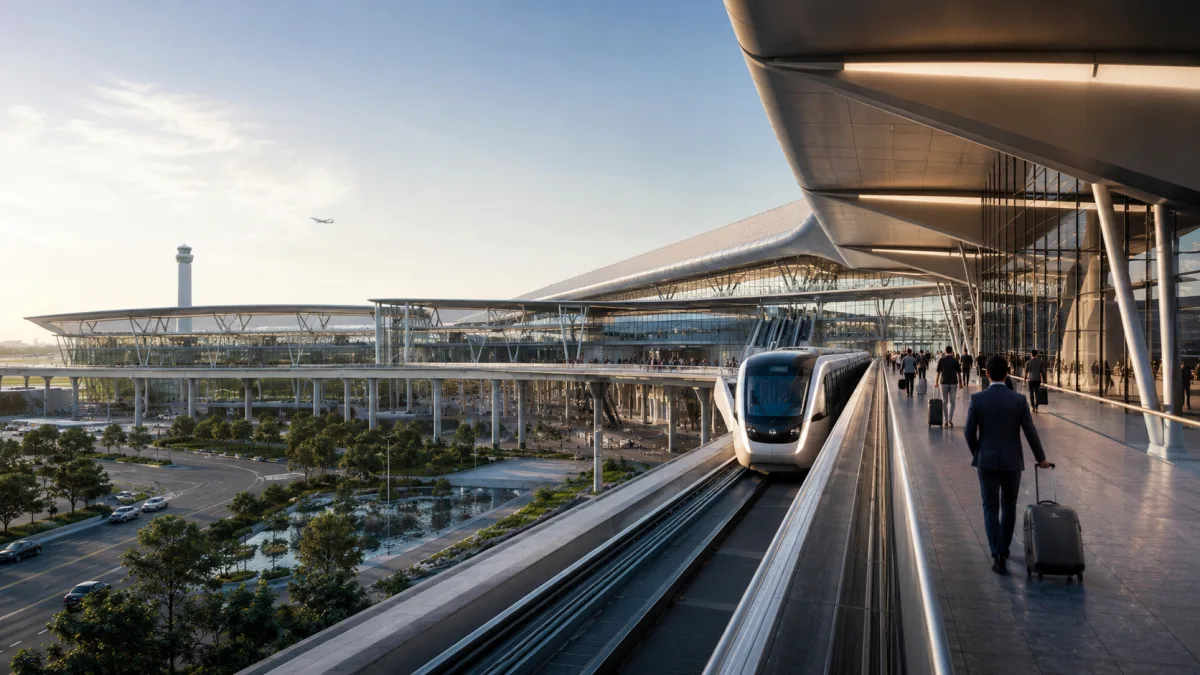
The critical bottleneck has been resolved. On 29 January 2026, the EEC Office (EECO) and operator U-Tapao International Aviation (UTA) signed an agreement that ended years of stalemate: UTA waived certain contractual conditions that had previously linked airport construction to the completion of the high-speed rail link. In plain terms: construction of the runway and terminal is now under way — regardless of when the rail link is delivered.
The following overview summarises the confirmed key figures:
| Metric | Status 2026 |
|---|---|
| Construction start | 3 April 2026 (groundbreaking) |
| Concession | 50 years, until 2076 |
| Total investment | approximately 300 billion THB |
| Runway 2 + taxiways | Construction by the Royal Thai Navy, completion planned for May 2028 |
| Phase 1 – new terminal | Capacity of approximately 12 million passengers per year |
| Target capacity (final build-out, 6 phases) | up to 60 million passengers per year, 450,000 m² of terminal space, 124 aircraft stands |
| Commercial zones / Aviation City | Development commencing from late 2026 |
An important note for realistic context: the expansion takes place in six phases over several decades. Phases 2 through 6 will each only commence once the preceding phase reaches approximately 80% of its capacity. The 60-million mark is therefore a final-phase end goal — not a figure for 2028. This is not a weakness; it is sound, demand-driven planning. For property buyers, what matters most is that the first phase is now under construction and creating tangible facts on the ground.
The high-speed rail link — a bonus, not a prerequisite
Running in parallel is a planned high-speed rail link that would connect Don Mueang, Suvarnabhumi and U-Tapao — including a tunnel beneath the runway. This rail project is delayed, but the January 2026 agreement means it no longer holds up the airport. If the rail link arrives later, south Pattaya will benefit additionally from a fast rail connection towards Bangkok. It represents a potential bonus on top — but the investment case for Pattaya stands firmly without it.
What U-Tapao specifically means for southern Pattaya
The geographical logic is clear: travelling from U-Tapao, you reach southern Pattaya first. Na Jomtien, Jomtien and Pratumnak are closest to the airport — Jomtien around 30 to 40 minutes by car, Na Jomtien even closer. It is precisely these southern locations that are the structural beneficiaries of the expansion. Three effects work in combination:
- Accessibility: More international and regional flights mean shorter, more affordable journeys for owner-occupiers and rental guests alike. A nearby major airport noticeably enhances the appeal of a residential location.
- Jobs and population growth: Aviation City, logistics and EEC industry will create skilled employment. More workers on the ground means greater rental demand — a solid foundation for ongoing lettings.
- Tourism and short-term rentals: Higher passenger numbers feed directly into the rental market for furnished units, especially in the beachside south.
For owner-occupiers, the practical benefit is just as tangible as for investors: shorter journeys from the plane to your own front door, instead of lengthy transfers from the distant Suvarnabhumi. For a detailed look at how Pattaya's neighbourhoods compare, see the comprehensive neighbourhood comparison.
Price levels in the south — where the leverage lies
The south still offers more attractive entry prices today than the premium locations in the north. The table below positions each area (new-build/off-plan, indicative values in THB/m², approximate conversion: 38–39 THB/€):
| Location | New-build off-plan (THB/m²) | Proximity to U-Tapao |
|---|---|---|
| Na Jomtien | 115,000–247,000 | closest, strong catch-up potential |
| Jomtien | 125,000–220,000 | very close, popular beachside district |
| Pratumnak Hill | 120,000–200,000 | close, leafy and upmarket |
| Central Pattaya | 130,000–250,000 | urban, well connected |
| Wongamat / Naklua | 115,000–260,000 (peak 300,000+) | northern, premium |
Na Jomtien, at around 115,000–247,000 THB/m², is the most affordable of the locations listed — and at the same time the closest to the airport. It is precisely this combination of a moderate entry price and structural appreciation driven by U-Tapao that makes the south interesting for forward-looking buyers. For a broader look at how Pattaya prices are developing overall, see the Off-Plan Price Report 2026. As a rough EUR guide: studios from around €100,000, one-bedroom units typically €120,000–170,000, two-bedroom apartments €180,000–250,000.
Note: All prices are indicative values and do not constitute investment advice. Portal prices are asking prices, not achieved transaction values.
Investor perspective: keeping three figures clearly separate
To ensure that a positive trend does not become an inflated expectation, three metrics must be clearly distinguished:
- Ongoing market price growth: In Pattaya, approximately 3–5% p.a. over the long term. An infrastructure boost such as U-Tapao tends to support this trend in the south, but does not replace it.
- Off-plan price advantage: Buying in an early construction phase can mean paying up to 40% less than the completed price. This is a one-off capital gain opportunity — not an annual return and not a rental yield.
- Rental yield: Realistically around 5–8% p.a. gross. This figure comes from lettings, not from the construction-phase discount.
These three levers must never be mixed up. Keeping them clearly separate protects against disappointment and makes the decision a sound one. The mechanics of rental yield are explained in the article Rental Yield Explained Realistically, and the construction-phase advantage in the article Buying Off-Plan in Pattaya.
Timing: why now is a good moment for off-plan
With infrastructure projects, the price effect typically plays out in two waves: a first boost at the point of a credible construction start (which has now occurred), and a second upon completion of the first phase (from 2028 onwards). Buyers who enter in an early off-plan phase in the south today can capture both waves — the construction-phase advantage at purchase and the structural appreciation over the years. For new-build projects in the south that may be worth considering, see for example Aquarous Jomtien or the project overview.
The new-build advantage: standardised and predictable
Particularly when making a forward-looking investment in a growing region, buying new-build from a vetted developer is the straightforward path. Sales contracts with the developer are standardised and the processes are well established — you generally do not need your own lawyer for a new-build purchase (that is more relevant for resale, i.e. buying from a private seller). I handle the selection of the right developer and project on your behalf; that is precisely why I am here on the ground. You focus on location and specification while the contractual side is handled cleanly.
An important point for buyers from German-speaking countries: foreigners can purchase condominium units in Thailand on a freehold basis via the so-called Foreign Quota. How this works in detail is explained in the article Foreign Quota, Freehold and Leasehold. The required funds transfer with FET certificate is covered in the article Transferring Money to Thailand.
Frequently asked questions about U-Tapao Airport and Pattaya
How far is U-Tapao from Pattaya?
U-Tapao Airport is located in the Ban Chang district (Rayong Province), about 30 to 45 minutes by car south-east of Pattaya city centre. The south — Na Jomtien and Jomtien — is closest to the airport and therefore benefits most from the improved accessibility.
When will the expansion be completed?
The expansion runs in six phases over several decades. Construction began on 3 April 2026; Runway 2 and taxiways are scheduled for completion by May 2028. The first new terminal will open with a capacity of around 12 million passengers per year, while the target capacity of up to 60 million is the end goal of the final phase.
Will property prices in south Pattaya automatically rise as a result?
There is no automatism, but there is a clear structural tailwind. The market grows long-term at around 3–5% p.a.; a nearby major airport plus Aviation City tends to provide additional support for this trend in the south through better connectivity and increased demand.
Which location benefits the most?
Geographically, the airport-adjacent south benefits most directly — led by Na Jomtien, where prices are still moderate from around 115,000 THB/m², followed by Jomtien and Pratumnak. This is where the leverage from an affordable entry price and structural appreciation is greatest.
Should I wait for the high-speed rail link?
No. Airport construction is proceeding independently of the delayed rail project. The investment case for Pattaya stands today; the rail link would be an additional bonus if and when it arrives — not a reason to let an attractive early off-plan phase pass you by.
Conclusion: structural tailwind for the south
With the construction start in 2026, U-Tapao has moved from promise to active major project. For southern Pattaya — Na Jomtien, Jomtien, Pratumnak — this means better accessibility, new jobs and additional demand: a solid foundation for long-term positive value growth. Buyers who enter in an early off-plan phase today combine the construction-phase advantage with a clear infrastructure trend.
Would you like to know which new-build project in the south fits your goals? I offer personal, no-obligation advice via the contact form. For a thorough introduction, I also recommend my free guide to buying a condo in Pattaya.
Free Guide
68 pages of Pattaya insider knowledge — download for free