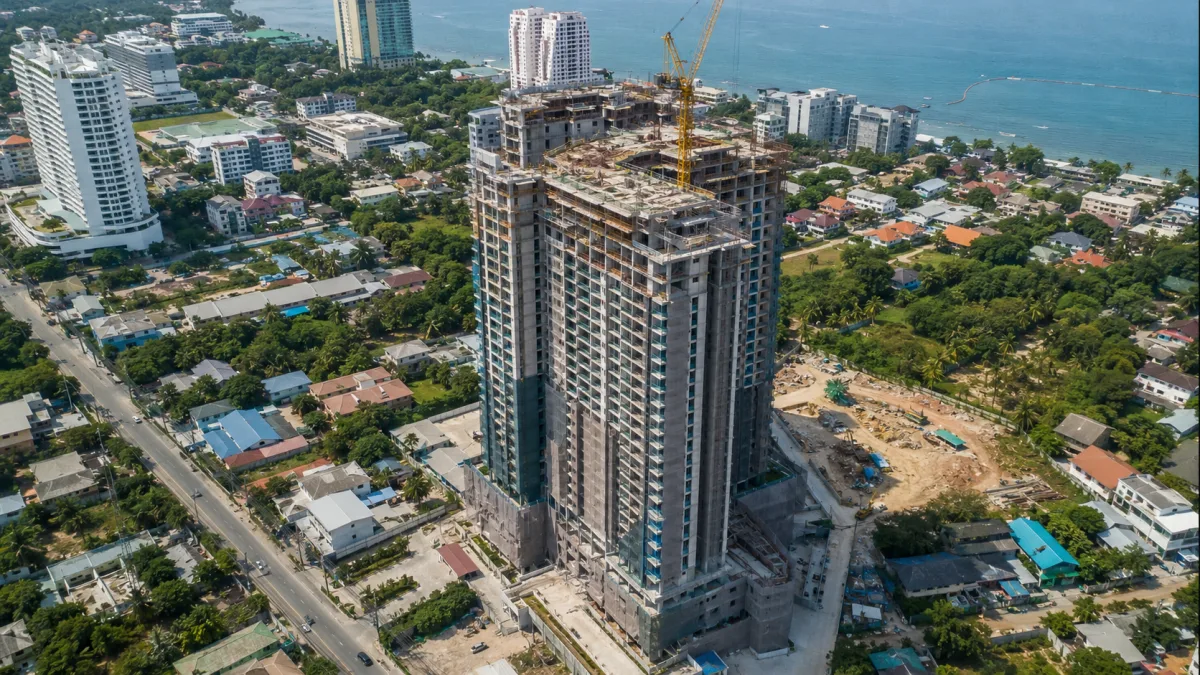
In brief: The condo handover in Pattaya is, for a new-build condo, a normal and well-plannable step: before the ownership transfer, we inspect the unit together in a structured defect inspection, checking floors, walls, windows, electrics and plumbing for defects. Any items found are recorded on a defect list and remedied by the developer before transfer. In addition, the statutory warranty under the Condominium Act applies: five years on the structure and two years on building components.
Condo handover in Pattaya: why the defect inspection is part of the process
When your off-plan condo is completed, the developer invites you to the handover. This appointment – often called a "Defect Inspection" or "Snagging" – is the moment when you see the unit for the first time in its finished state and carry out a systematic inspection. Only after this does the ownership transfer take place at the Land Office and the keys are handed over.
There is no reason for concern; this is standard practice: with reputable developers in Pattaya it is perfectly normal for a few minor items to come up during the initial inspection – a scratch on a window frame, an uneven silicone seal, a socket without an earth. That is exactly what the inspection is for. The vast majority of items are cosmetic and sorted out within a few days. What matters is that they are properly documented and resolved before transfer. I personally accompany this inspection and bring the experience of many handovers with me – so no detail gets missed.
Anyone who is still considering how the purchase process works will find the full overview in my article Buying off-plan in Pattaya. The handover is the second-to-last step – just before the ownership transfer.

The right preparation for the handover
Before entering the unit, a little preparation pays off. Ideally the inspection takes place in daylight, as scratches, seals and water stains are easiest to spot then. Allow enough time: 60 to 90 minutes is realistic for a studio or 1-bedroom unit; for a 2-bedroom condo allow closer to two hours.
Useful tools for the defect inspection
A few simple aids will help you find significantly more than the naked eye alone. None of them is expensive, and for a professional inspection I bring the essentials with me:
- Socket tester (outlet tester): Plug it into every socket to see immediately whether the live, neutral and earth connections are correct. The single most important safety test.
- Spirit level or laser level: For floors, doors, window sills and worktops. A short 30 cm spirit level is sufficient for most spots.
- Marble or table-tennis ball: The simplest trick for checking floor drainage – place it on the floor and watch whether it rolls away uncontrolled.
- Moisture meter: Detects hidden moisture in walls and under tiles, especially around the bathroom and balcony. Pinless devices measure non-destructively.
- Torch and phone light: For cupboards, ducts, behind toilets and into dark corners.
- Tape measure, sticky labels/painter's tape and a smartphone camera: Mark, photograph and number each defect – this is the basis for the defect list that follows.
A bottle of water and a simple charger are also useful: use them to test drains and to check that every socket delivers power under load.
Step-by-step checklist for the defect inspection
The best approach is to go room by room and work through each area using the same method. The following sequence has proven itself at Pattaya handovers.
1. Floors and drainage
- Tap tiles – a hollow sound indicates a void beneath the tile.
- Check grout lines for even width and clean filling.
- Floor drainage in the bathroom and on the balcony: water must run towards the drain, not towards the door. Use the marble or a small splash of water to check.
- Check transitions between living area and balcony for trip hazards and watertightness.
2. Walls and ceilings
- Rake a torch beam across the wall surface – waves, bumps and plaster defects become visible immediately.
- Note any cracks: hairline cracks are usually harmless; wider or diagonal cracks should be documented.
- Check for moisture and discolouration, especially on external walls and ceilings below wet rooms.
- Inspect paintwork for coverage, drips and splashes.
3. Windows, doors and balcony
- Open and close every window and door several times – does everything move smoothly and close flush?
- Check rubber seals, locks and handles.
- Inspect glass for scratches and cracks; test sliding doors in their tracks.
- Check balcony railings for firm fixing – a key safety point in a high-rise.
4. Electrics
- Test every socket with the outlet tester (earthing!).
- Operate all light switches, ceiling lights and the doorbell.
- Open the consumer unit: are the circuits labelled and is an RCD (residual current device) fitted?
- Switch on the air-conditioning units and test for cooling performance, noise and condensate.
5. Plumbing and kitchen
- Turn on all taps and check water pressure and hot water.
- Flush the toilet several times and check the cistern for leaks.
- Test drains in the shower, washbasin and kitchen with water – does it drain quickly and without odour?
- Look under the washbasin and behind the toilet for leaks and damp connections.
- In the kitchen: test built-in appliances, the extractor hood and the sink; check drawers and cupboard doors for smooth operation.
The defect list: how documentation works
Every item goes on a written defect list (often called a "Defect List" or "Snag List"). This list is countersigned by the developer and forms the basis for remediation. Clear details are essential: location, description, photo and number. This makes it straightforward to verify later that everything has been resolved. The following structure has proven effective:
| No. | Room/Location | Defect | Category | Status |
|---|---|---|---|---|
| 1 | Bathroom | Floor drainage does not run fully towards the drain | Floor | Open |
| 2 | Living room | East-wall socket has no earth connection | Electrics | Open |
| 3 | Bedroom | Sliding door sticks in the track | Window/Door | Open |
| 4 | Kitchen | Silicone seal around the sink is untidy | Plumbing | Open |
| 5 | Balcony | Hairline cracks in the wall render | Wall | Open |
My tip: record one item too many rather than one too few. At the second walkthrough – the "re-snag" – every entry is then ticked off. Only when the list has been fully resolved do we proceed to transfer.
What to do about defects before transfer
The great advantage with a new build: you hold the stronger hand. The final purchase price instalment is generally not due until transfer. As long as open defects remain on the list, the developer has a clear incentive to remedy them quickly. The process typically runs as follows:
- Initial inspection: We inspect the unit and draw up the defect list.
- Remediation: The developer fixes the items, usually within a few days to weeks.
- Second inspection (re-snag): We check each item again and tick it off.
- Transfer: Only when everything is satisfactory does the ownership transfer and key handover take place.
For a new build from a vetted developer, the sales contracts with the developer are standardised and having your own lawyer for the handover is not strictly necessary – I accompany the process and know the procedures. The situation is different only for a purchase from a private seller (resale): there, having your own lawyer is genuinely advisable. More on this in my overview of the Condominium Act explained.
Warranty under the Condominium Act: 5 years on structure, 2 years on components
You are protected even after moving in. The standard sales contract with the developer prescribed by the Thai Ministry of Interior includes a statutory warranty:
| Area | Warranty period | Examples |
|---|---|---|
| Structure and load-bearing elements | 5 years | Foundation, load-bearing walls, floor slabs, columns |
| Other building components | 2 years | Plaster, tiles, installations, doors, windows, plumbing |
The periods run from the date the condominium is registered. If a defect is reported in writing, the developer is generally required to remedy it within 30 days; for urgent damage, immediately. Keep all handover documents, the defect list and your photos in a safe place – they are your evidence in a warranty claim. This statutory protection is a genuine buyer advantage and one of the reasons why a new build compares favourably with older resale properties.
Handover costs and ongoing costs to keep in mind
With the handover, the ongoing costs of the unit also begin. At transfer a one-off contribution to the Sinking Fund (maintenance reserve) is usually due, together with the ongoing Common Area Fee. Both are typically calculated per square metre. I have broken down how these items are composed in my article on ongoing costs of a condo in Pattaya. For the overall purchase calculation, it is also worth looking at what a condo in Pattaya really costs.
A typical new-build condo in a good location currently ranges from around 120,000 to 220,000 THB per square metre, and above that in premium locations such as Wongamat. A 1-bedroom apartment therefore starts at roughly 120,000 to 170,000 euros. Buyers planning to rent out the unit can expect a realistic gross rental yield of around 5 to 8 percent per year – more on this in my article on rental yields explained realistically.
Frequently asked questions about condo handover in Pattaya
How long does a defect inspection of a condo in Pattaya take?
Allow 60 to 90 minutes for a studio or 1-bedroom condo, and around two hours for a 2-bedroom apartment. Thoroughness takes priority over speed – every defect found now saves effort later.
Do I need to be there in person for the handover?
No. Many buyers from German-speaking countries are not in Thailand at the time of completion. In that case I carry out the inspection with the defect list and document everything with photos and videos. The transfer can also be handled via a power of attorney, so you do not need to travel to Thailand.
What happens if the developer does not fix the defects?
With vetted developers this is the absolute exception, because the final payment is only due at transfer. As long as items remain open, remediation is usually carried out promptly. In addition, the statutory warranty of 2 and 5 years applies – even after you move in, the developer remains responsible.
Do I need my own lawyer for the handover?
For a new build from a vetted developer this is not strictly necessary, as the sales contracts with the developer are standardised and I accompany the inspection. For the purchase of a second-hand condo from a private seller (resale), however, having your own lawyer is advisable.
When exactly do I pay the final instalment?
The final payment is due at the ownership transfer at the Land Office – that is, after a successful inspection. I explain how payment plans are structured for off-plan purchases in the article on financing and the payment plan.
Are you facing the handover of your new-build condo, or planning a purchase and want expert support from the very start? I personally accompany the entire inspection process, from the defect list through to transfer. Get in touch without obligation via the contact form or download my free guide in advance. Note: this article does not replace investment or legal advice; prices and yields mentioned are indicative figures.
Free Guide
68 pages of Pattaya insider knowledge — download for free