The honest answer first: most condominiums in Pattaya ban pets in their building rules, regardless of what a seller promises verbally. But there is a small and growing number of genuinely pet-friendly projects with clear written rules, plus houses as the relaxed alternative. This guide shows how to verify that a pet is truly allowed before you buy or rent.
Why most condos in Pattaya ban pets
Every condominium in Thailand is governed by its owners’ association, the juristic person, and its building rules are binding for everyone in the tower. In the majority of projects those rules contain a clear pet ban. The reasons are practical: shared lifts and corridors, noise in densely built towers, allergies, pool areas. Two things matter here: the rules apply to owners just as much as to tenants, and they apply even if an agent or seller claims otherwise.
Equally important: “tolerated” is not “allowed”. In some older buildings pets live quietly because nobody enforces the rule. One resolution of the owners’ meeting or one new building manager can end that overnight, and then you own a unit in the wrong tower.

How to spot a genuinely pet-friendly project
A growing number of newer projects in Pattaya explicitly allow pets and position themselves that way. You recognise a serious pet-friendly project by four things:
- A written rule in the building regulations, not just a verbal promise.
- Clear limits: typically weight caps (often between 7 and 15 kilograms), one or two animals per unit, and mandatory registration with the management.
- Everyday rules: leash in common areas, carrying the animal or using a box in the lift, sometimes dedicated lifts or time windows.
- Lived practice: you actually see pets in the building, and the management answers the question routinely instead of evasively.
Which projects currently allow pets changes constantly with every amended set of building rules. I keep an up-to-date list from daily practice. Book a free consultation online or send a short WhatsApp message and you will get the projects that match your budget and the size of your pet, without a nasty surprise after the purchase.
What happens if you keep a pet secretly
The classic: the condo is perfect, the dog is small, “nobody will notice”. In practice somebody always notices, at the latest in the lift. What follows is typically a formal warning from the management, then fines according to the building rules, sometimes per day of violation, and in escalation legal enforcement. Tenants additionally risk termination and their deposit. For an animal that is part of the family, a hide-and-seek life is not worth it. Buy or rent correctly from the start.

The alternatives: house, townhouse or the right rental
- House or townhouse, above all in East Pattaya and towards Huay Yai: own garden, no lift, no pet paragraph. What foreigners need to know legally about buying a house is exactly what we clarify in a consultation, or start with the buying guide.
- Renting pet-friendly on purpose: for a rental, two levels must agree, the owner and the building rules. A landlord’s yes alone is not enough. An extra deposit or pet fee is common. How monthly rentals in Pattaya work in general: the rental guide.
Daily life with a dog in Pattaya: beach, heat, vets
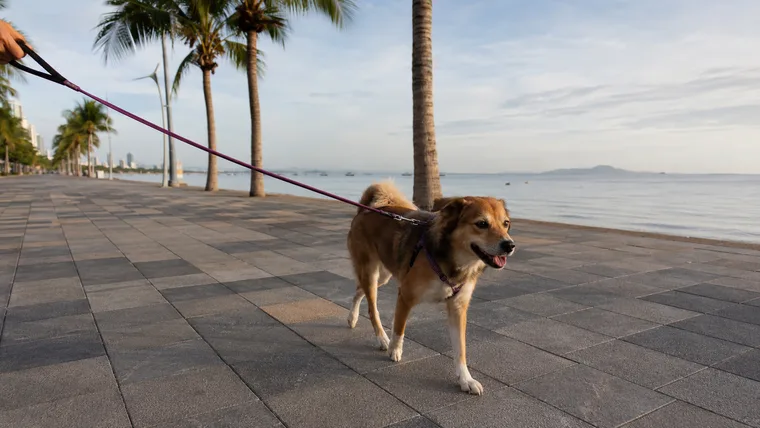
- Beach: on the main beaches dogs are not welcome during the day; early mornings and evenings the Jomtien promenade firmly belongs to them. South of town there is the well-known Dog Beach where four-legged visitors are officially welcome.
- Heat: walks before 9 am and after 5 pm, the asphalt gets too hot for paws at midday. Plan for an air-conditioned home.
- Care: veterinary clinics are plentiful, including emergency service, plus boarding and sitters for trips. Costs are noticeably below European level.

Bringing your pet to Thailand
The import is routine when the paperwork is right: microchip, a rabies vaccination at least 21 days old on entry, an official health certificate issued shortly before departure, and an import permit from the Thai livestock authority, processed at Suvarnabhumi airport. With complete papers there is regularly no quarantine. Plan the vaccination dates backwards from your flight and book cabin space or climate-controlled cargo early, especially in the hot season.
Frequently asked questions
Are dogs and cats generally banned in Pattaya condos?
In the majority of projects yes, through the building rules of the owners’ association. But genuinely pet-friendly projects with written rules exist and their number is growing. What counts is the current set of building rules, checked before you buy or rent.
What happens if I keep my pet secretly?
Typically a warning, then fines according to the building rules, sometimes per day, and legal enforcement in escalation. Tenants additionally risk termination and their deposit. In a tower with shared lifts a pet practically never stays undetected.
Which rules do pet-friendly projects usually have?
Common are weight caps of roughly 7 to 15 kilograms, a maximum of one or two animals per unit, registration with the management, leash duty in common areas and transport rules for the lift.
Can the owners’ meeting revoke a pet permission later?
Yes, building rules can be changed by resolution. Ask for the current version before buying and ask how existing pets are treated when rules change. These are exactly the points I check for my buyers.
How do I bring my dog or cat to Thailand?
Microchip, rabies vaccination at least 21 days before entry, official health certificate and an import permit, processed at Suvarnabhumi airport. With complete papers there is regularly no quarantine.
Next step: tell me your budget and the size of your pet and I will name the currently pet-friendly projects. Book a slot online, free and without obligation, or check prices first: What does a condo in Pattaya cost?