In short: As a foreigner, you can buy a condo in Thailand completely legally and in your own name, provided the unit falls within the so-called Foreign Quota (up to 49 % of a building's floor area may be owned by foreigners as Freehold). The condition is that you transfer the purchase price into Thailand from abroad and have it confirmed by an FET Certificate. With this certificate and your passport, the title is registered in your name at the Land Office, no visa, no permanent residence, no Thai company required.
Buying a condo in Pattaya as a foreigner: the legal basis
Many international buyers ask first: am I even allowed to own property in Thailand as a foreigner? With a condominium, the answer is clear: yes. Thailand's Condominium Act B.E. 2522 (1979) has governed for more than four decades, on a binding basis, that foreigners may acquire condominium units fully and in perpetuity (Freehold). This is the decisive difference compared with land and houses, which cannot be owned directly by foreigners.
The law was created to attract international investment into residential construction, and that is exactly what makes buying a condo in Pattaya so straightforward for international buyers. You receive your own title (the Chanote ownership document for the unit), registered in your name, with all rights: to rent out, sell, bequeath or use it yourself. How Freehold, Foreign Quota and Leasehold differ in detail, we explore in the guide Foreign Quota, Freehold and Leasehold for international buyers. The legal foundation itself we explain step by step in the article The Condominium Act explained.
The 49 % Foreign Quota clearly explained
The core of the rule is the 49 % quota: in every condominium building, at most 49 % of the total saleable living area may be held in foreign Freehold ownership. The remaining 51 % (or more) belongs to Thai nationals or Thai companies. Important: this is measured by square metres of living area, not by the number of units.
For you as a buyer, this means very practically: as long as a unit falls within the Foreign Quota, you buy it as pure foreign Freehold, in your name, with no special structure. In sought-after new-build projects, the Foreign Quota is a limited resource: it is allocated on a first-come, first-served basis. This is precisely where one of the advantages of buying early and with a knowledgeable agent lies, we secure your quota unit before it is taken. That is part of my job: I check in advance with the developer and at the Land Office how much Foreign Quota is still available, and reserve your chosen unit within it.
Should the Foreign Quota in a desired project ever be sold out, there is the Leasehold alternative (a long-term right of use). With our hand-picked new-build projects, however, Foreign-Quota availability is usually good, and I always clarify this before you sign a reservation.
The FET Certificate: the key to ownership
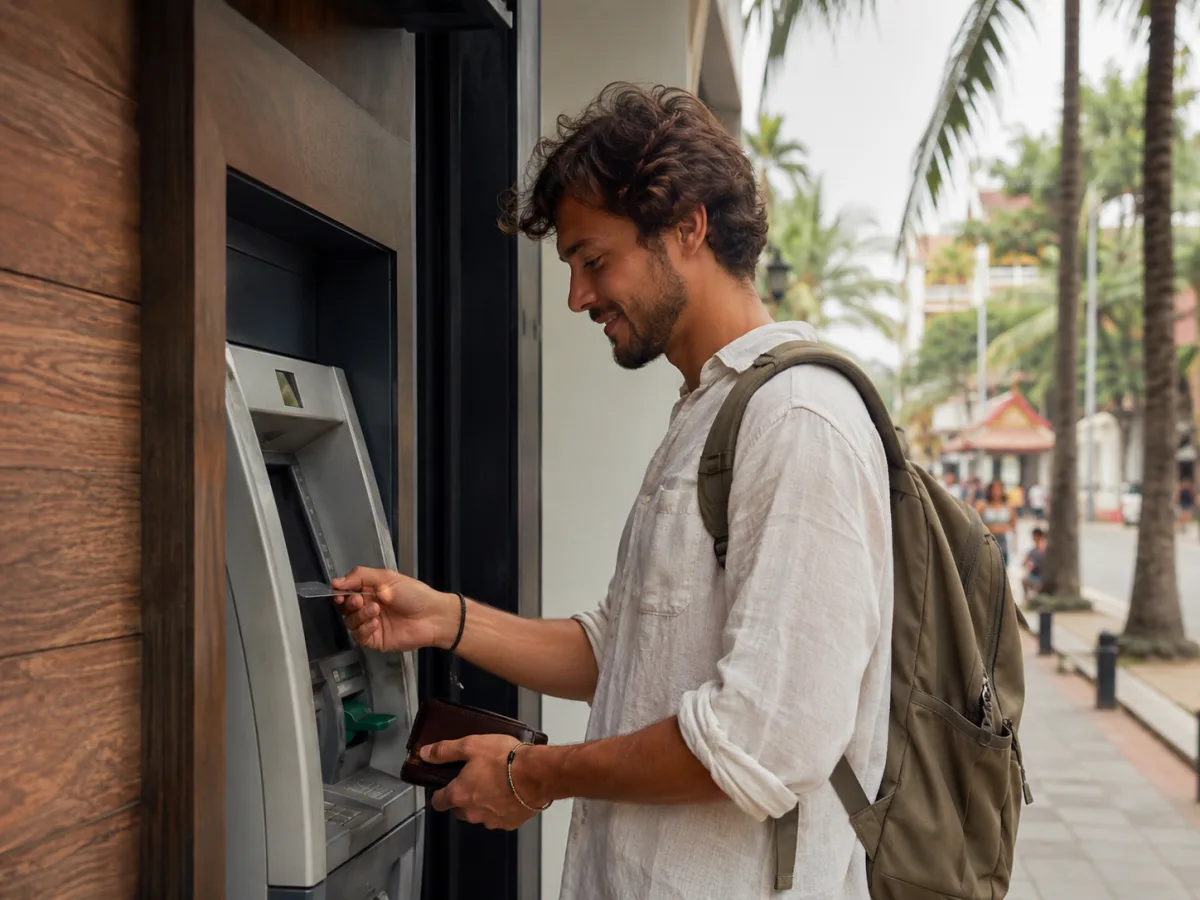
For the registration in your name to work, the law requires clean proof of funds. The purchase price must be transferred into Thailand from abroad in foreign currency and converted there into Baht by a Thai bank. The bank then issues the FET Certificate (Foreign Exchange Transaction Form, formerly „Thor Tor 3“). For amounts from roughly the equivalent of USD 50,000, this certificate is issued as standard.
The FET Certificate is the central document: without an FET, the Land Office will not register the title in your foreign name. Pay attention to three points, which I go through with you in advance:
- State the purpose: the transfer should be marked „purchase of condominium unit“.
- Correct recipient: the money goes to your name (or directly to the developer with your name as the sender).
- Full purchase price: ideally the entire foreign portion is transferred this way.
The details for a smooth money transfer we have laid out thoroughly in the guide Transferring money to Thailand and the FET Certificate, including tips on how to optimise the exchange rate and bank fees.
The buying process step by step
Here is how the legal condo purchase in Pattaya works for you as a foreigner, from selection through to registration at the Land Office. With a new build from a vetted developer, the contracts are standardised and have been checked by the authorities multiple times; you do not need your own lawyer here (unlike a private resale). This is precisely what saves you a great deal of effort and cost.
| Step | What happens | Typical effort |
|---|---|---|
| 1. Selection & quota check | Choose your unit, have Foreign-Quota availability confirmed at the Land Office | handled by us |
| 2. Reservation | A reservation deposit secures the unit | approx. 50,000 to 100,000 THB |
| 3. Purchase contract (SPA) | Standardised Sale & Purchase Agreement, reviewed | 1 to 2 weeks |
| 4. Payment plan | Down payment 10 to 30 %, instalments by construction progress | off-plan over the build period |
| 5. Money transfer & FET | Transfer from abroad, bank issues the FET | a few days |
| 6. Handover & Land Office | Title transfer into your name, handover of keys | 1 day |
Step 4, the down payment and instalment structure, we cover separately in the article Financing a condo and the payment plan. Especially with Off-Plan, the staggered payment over the build period is a real liquidity advantage.
Which documents you need as a foreign buyer
The good news: the paperwork is manageable. For registration at the Land Office you essentially need:
- A valid passport (no visa or residence permit required!).
- The FET Certificate from the Thai bank for the incoming foreign funds.
- The signed purchase contract (SPA) and proof of payment.
- Confirmation of the Foreign Quota from the developer or the building management.
You do not need to live in Thailand to buy, and you need no Thai company. The once-common „Thai company structure“ is simply unnecessary for condos, and since the DBD (Department of Business Development) tightened the rules in early 2026, with stricter proof of the source of funds, it has also become clearly less attractive. With a condo you avoid this detour entirely: the Foreign Quota is the clean, legally intended route.
Taxes and fees on purchase: what applies in 2026
On the transfer of ownership, fees and taxes are due at the Land Office. For a new build from the developer these are usually split contractually or clearly assigned, I set it out for you transparently before every reservation. The main items for 2026:
| Item | Rate | Who typically pays |
|---|---|---|
| Transfer Fee | 2 % of the official assessed value | often split |
| Specific Business Tax (SBT) | 3.3 % (if sold within a holding period < 5 years) | seller |
| Stamp Duty | 0.5 % (waived if SBT applies) | seller |
A note on a current concession: Thailand has temporarily reduced the Transfer Fee to 0.01 % for properties up to 7 million THB (until 30 June 2026), however, this reduction applies only to Thai buyers; for foreigners it remains at 2 %. So plan with the regular rate. The ongoing running costs after purchase (Common Area Fee approx. 50 to 80 THB/m²/month, a one-off Sinking Fund approx. 600 to 800 THB/m²) we explain in detail under Running costs of a condo in Pattaya. A complete tax overview can be found under Taxes on a condo purchase in 2026.
Buying Off-Plan: legal, secure and with a price advantage
Especially with our top new-build projects, international buyers prefer to buy in an early construction phase (Off-Plan). This is not only completely legal but also attractive: in the early phase, units can be up to 40 % cheaper than on completion, that is pure capital appreciation. In addition, market prices in Pattaya have been rising for years by around 3 to 5 % p.a., and a new build commands a premium of roughly 20 % over an older resale. A realistic gross rental yield is around 5 to 8 % p.a., these three figures should never be mixed up.
Whatever needs to be secured legally off-plan, I take care of for you, from choosing a vetted developer to reserving the quota. Take a look at our recommendations, in fixed order:
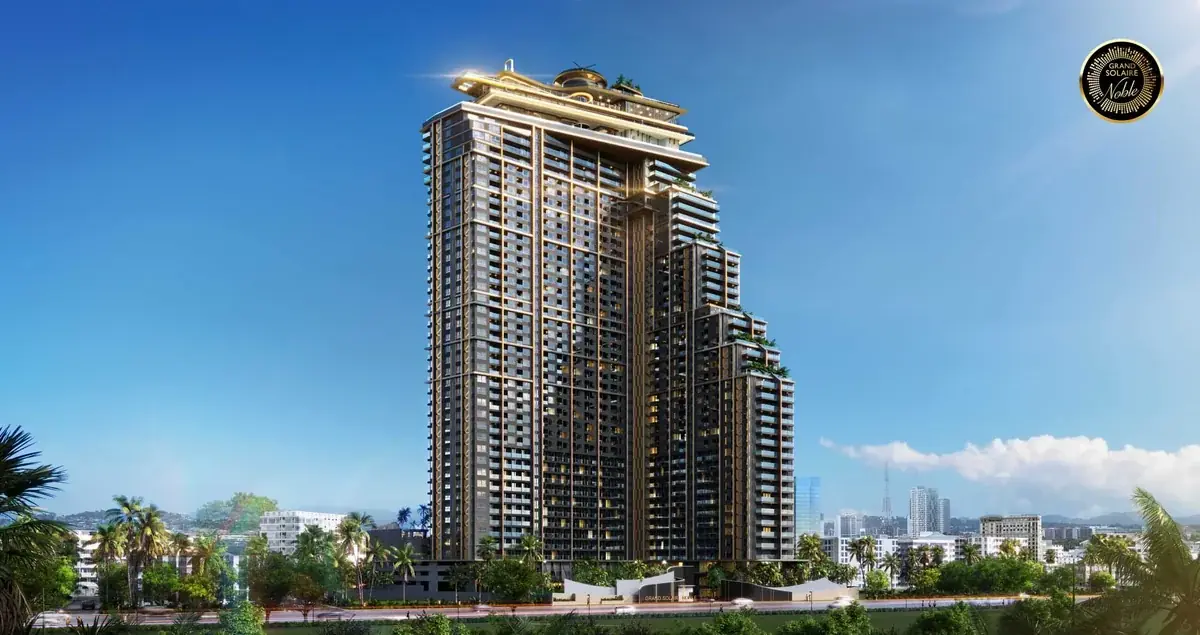
- Grand Solaire Noble, a premium address, Off-Plan from approx. 142,000 THB/m².
- Copacabana Coral Reef, beachfront location with a strong yield profile.
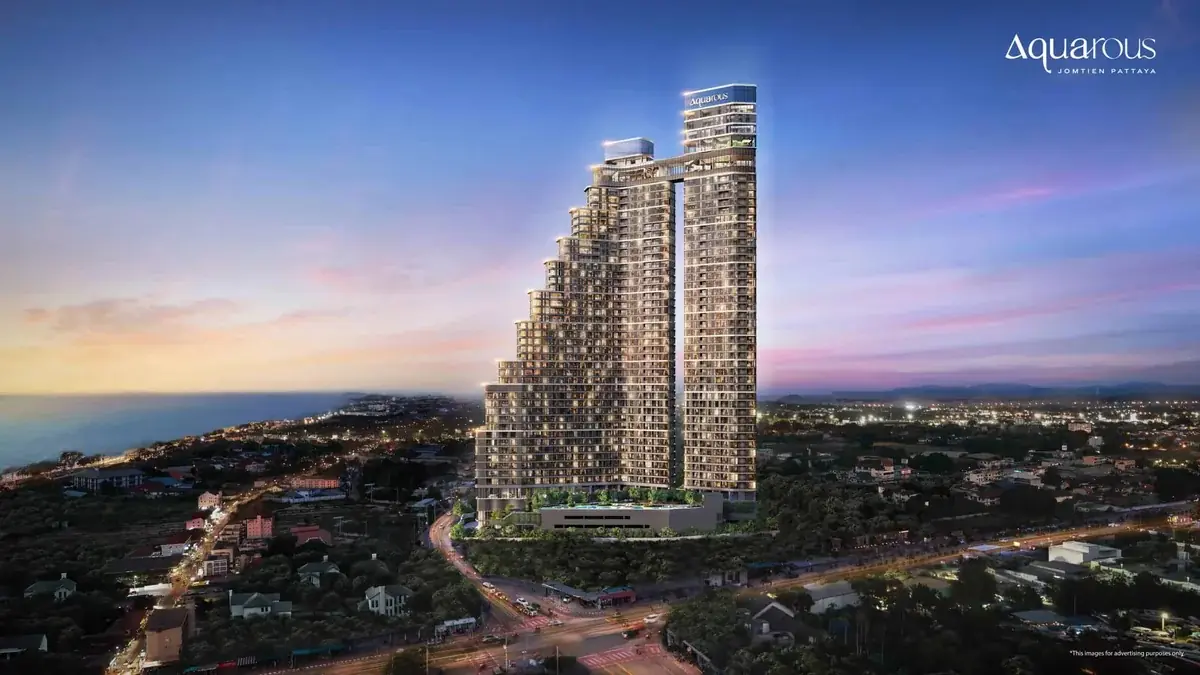
- Aquarous Jomtien, Foreign Quota from approx. 138,000 THB/m².
- Zenith Pattaya 2, an attractive entry point from approx. 100,000 THB/m².
- Panora Estuaria, modern architecture in a quiet location.
- Grand Solaire, central location, an established brand.
More on the mechanics and benefits in the guide Buying Off-Plan in Pattaya, as well as current market figures in the Off-Plan Price Report 2026.
Frequently asked questions about buying a condo as a foreigner in Thailand
Do I need a visa to buy a condo?
No. To acquire a condominium within the Foreign Quota you need neither a visa nor a residence permit. A valid passport and the FET Certificate are sufficient for the title transfer at the Land Office.
What happens if the Foreign Quota in my chosen project is full?
Then there is the Leasehold alternative (a long-term right of use). In practice, however, I always check quota availability before you reserve, so you specifically buy an available Freehold unit. Selecting the right project with available quota is precisely my task.
Do I need my own lawyer?
With a new build from a vetted developer, the contracts are standardised and have been checked by the authorities, your own lawyer is not necessary. With a private resale purchase, by contrast, a legal review is advisable. This is a clear advantage of the new-build route.
Can I rent out or sell my unit later?
Yes. As a Freehold owner you may rent out, sell and bequeath your unit. A realistic gross rental yield is around 5 to 8 % p.a. How this works out in concrete terms you can read under Rental yield realistically explained.
Do I really have to transfer the purchase price from abroad?
Yes, this is required by law. Only a transfer from abroad in foreign currency generates the FET Certificate, and without this certificate the title is not registered in a foreign name.
Conclusion: legal, transparent and well supported
Buying a condo in Pattaya is, for international buyers, a clear and legally secured route to Thai property ownership: Freehold in your name, governed by the Condominium Act, secured through the Foreign Quota and the FET Certificate. With the right support, the entire process is straightforward, the quota check, contract handling and the Land Office appointment I take off your hands.
Would you like to review an Off-Plan condo from our portfolio, or do you have questions about the legal situation? Write to me via the contact form, I'll get back to you personally. Feel free to download our free guide beforehand, which explains the complete buying process for international buyers step by step.
Note: This article is for general information only and does not constitute legal, tax or investment advice. All prices are guide values; portal prices are offers, not concluded deals.
Free Guide
68 pages of Pattaya insider knowledge, download for free
More on buying property in Pattaya