In short: Pattaya lies in the seismically least vulnerable region of Thailand: the Myanmar quake of 28 March 2025 (magnitude 7.7, epicentre around 1,000 km away) caused no damage here whatsoever. The collapse in Bangkok involved a single 33-storey building still under construction with proven construction defects - not a general failure of Thai buildings. Thailand's earthquake codes (expanded to 43 provinces in 2021) and regular inspections of high-rises from 23 metres upwards provide additional safeguards for new builds; the decisive factor is choosing an established developer with licensed structural engineers and reference projects.
On 28 March 2025, a severe earthquake in Myanmar shook large parts of Southeast Asia. In Bangkok, a high-rise under construction collapsed, with many fatalities, and suddenly many buyers from German-speaking countries were asking: just how safe is a high-rise condo in Thailand? I take that concern seriously and answer it here honestly, with facts rather than reassuring platitudes.
The short answer up front: Pattaya is considered to have low seismic exposure, considerably lower than Bangkok, and the Bangkok collapse was - according to the official investigation - a building-quality problem with a single structure under construction, not a general failure of Thai buildings. The more important lesson is this: it comes down to the developer and the build quality. That is exactly what we will examine in detail now.
Free Guide
68 pages of Pattaya insider knowledge, download for free
What really happened in March 2025
On 28 March 2025, an earthquake of magnitude 7.7 struck central Myanmar along the Sagaing Fault. The epicentre lay near Mandalay, around 1,000 kilometres northwest of Bangkok. It was a rare, exceptionally energetic quake whose waves were felt as far as Bangkok, amplified by the soft alluvial soil on which the capital sits.
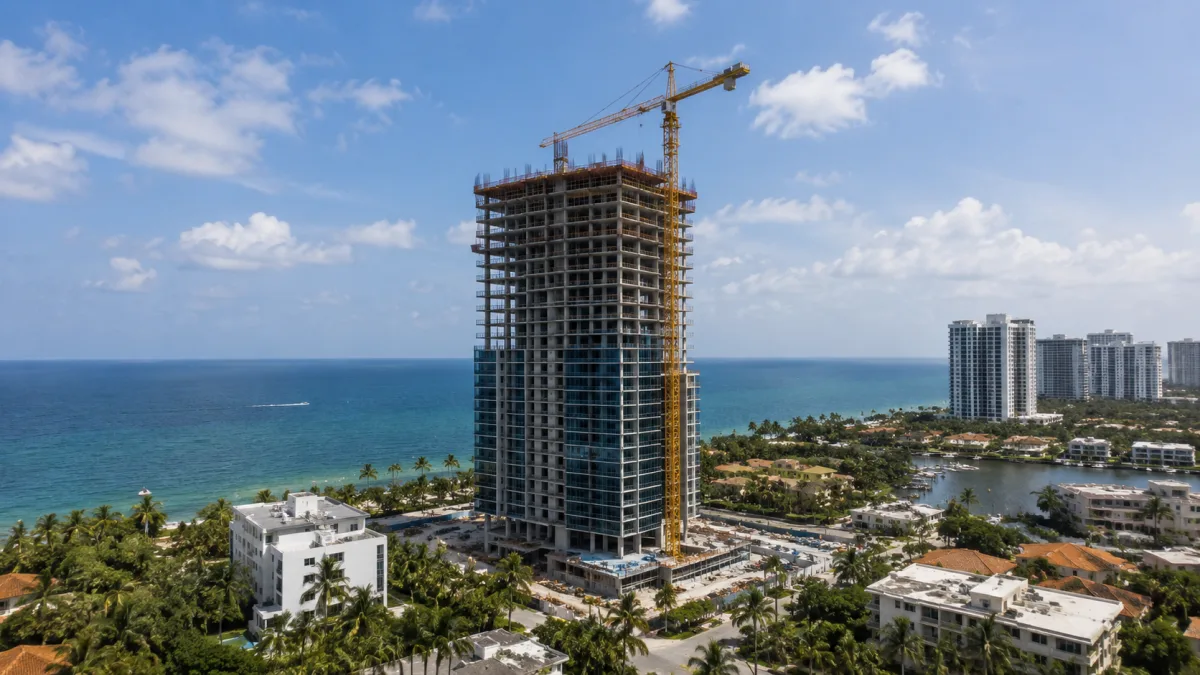
In Bangkok, a single building collapsed entirely: a 33-storey high-rise under construction for the Thai State Audit Office. Many people lost their lives, predominantly construction workers. Crucial for putting this into context: it was the only building in all of Thailand that collapsed. All other high-rises in Bangkok, far closer to the quake's energy than Pattaya, suffered only minor or cosmetic damage such as cracked plaster.
- Magnitude 7.7, epicentre in Myanmar (Sagaing Fault)
- Around 1,000 km from Bangkok
- In Bangkok only a single building collapsed (one under construction)
- All other high-rises: only minor/cosmetic damage
The true cause of the collapse
The official investigation reached a clear conclusion: it was not the earthquake itself but design and workmanship defects in this one building that were the actual cause. The load-bearing shear walls around the lift and stairwell core, which were supposed to absorb the seismic forces, failed.
Among the findings were concrete strength partly below standard, non-compliant reinforcement and a non-compliant design of the lift core. The government emphasised that the materials fundamentally met the requirements; the failure lay in the planning and execution. By the summer of 2025, more than 20 people had been charged, including those responsible at the construction firms involved.
The honest lesson from Bangkok is not "Thailand is earthquake-prone", but "build quality and developer choice are decisive".
Alexander ReifenschneiderWas Pattaya affected? And how high is the risk?
In Pattaya there were no relevant effects. The city administration confirmed that infrastructure, beaches and buildings suffered no damage whatsoever. Inspections revealed no new structural damage. While the quake was lightly felt in 57 provinces, the east coast remained practically untouched.
The reason is geography and geology. Pattaya lies on the east coast, the so-called Eastern Seaboard, far from all active faults. Thailand's real earthquake zones lie in the north and west near the border with Myanmar, around Chiang Rai and Chiang Mai for instance. The east coast also sits on firmer, more stable ground than Bangkok's soft alluvial soil, which amplifies the waves. Pattaya therefore falls into the country's lowest hazard category.
| Region | Earthquake risk |
|---|---|
| Northern Thailand (Chiang Rai, Chiang Mai) | high (near active faults) |
| Western Thailand (Myanmar border) | elevated |
| Bangkok | low, but soil resonance during large distant quakes |
| Pattaya / east coast (Chonburi) | very low (far from faults, firm ground) |
Thailand's earthquake building codes
Thailand has binding regulations for earthquake-resistant construction. The first ministerial regulation of 2007 covered 22 provinces; the current 2021 version was expanded to 43 provinces and tightened, with higher seismic loads and special requirements for buildings over 60 metres in height.
Interesting for Pattaya: the eastern region including Chonburi is the only region for which the law does not make earthquake-resistant design mandatory, precisely because it is classified as the lowest hazard category. This is a direct official confirmation of the low risk. Reputable developers nevertheless design the structure conservatively and soundly, which is part of quality.
After the incident of 2025, Thailand tightened its controls: in Bangkok, thousands of buildings were called in for safety checks, hundreds of engineers inspected high-rises, and a public online dashboard made the results viewable. High-rises from 23 metres in height are subject to regular structural inspections in any case. Attention to build quality has therefore increased, not decreased.
What buyers in Pattaya should look for
Even with low risk, the rule holds: quality is what counts. The most important safeguard is not the region but the choice of a good developer. Here is what you should look for.
Established developer with references. A reputable developer with completed projects and a solid track record demonstrably builds differently from an unknown provider with a conspicuously cheap project.
Verifiable build quality. Licensed structural engineers, proper building handovers and compliance with the codes are essential. Ask for structural and material certificates.
Beware of bargain prices. Conspicuously cheap projects from unknown developers are a warning sign, just as the collapsed building in Bangkok shows, where corners were cut on quality.
How to protect yourself against a disreputable or even insolvent developer is covered in detail in my article Off-plan and developer insolvency. This is exactly where the real lever for safety lies.
Conclusion: low hazard, but quality counts
Let us sum up honestly.
Pattaya has low seismic exposure. Its great distance from faults, firm ground and official classification as the lowest zone all clearly point to this.
The Bangkok collapse was an isolated case. A build-quality problem with one specific structure under construction, not evidence against Thai buildings in general.
No place is zero risk. Low hazard does not mean impossible, but Pattaya's profile is solid.
The choice of developer is decisive. Anyone buying from a quality-focused developer has a very good safety profile.
In my free Pattaya Property Guide you will find all aspects relating to build quality and purchase safety. An informal initial consultation is free of charge for buyers. I know the developers on the ground and will tell you honestly who stands for quality. This article is no substitute for structural or legal advice in an individual case.
Frequently asked questions
More on buying property in Pattaya