When you buy off-plan, you are paying for a promise that won't become reality for another 18 to 36 months. Whether that promise holds depends almost entirely on a single factor: the developer. An established developer with a demonstrable track record delivers even when the market wobbles. An inexperienced or undercapitalised provider starts to falter at the first sign of trouble.
The good news: reputability can be checked systematically before you buy. This article shows you the concrete steps that international buyers in Pattaya use to scrutinise a developer before they transfer the first instalment. The focus here is explicitly on the upfront vetting of the developer, not on the legal protection available once an insolvency has already occurred.
Visit completed past projects rather than trusting renderings
The most important and most honest test is also the simplest: ask to be shown the developer's completed projects and go there. Renderings are marketing; a building handed over five years ago is the truth. Pay attention to:
- Build quality after several years: How do the facade, pool, lobby and communal areas look today? Cracks, water damage or peeling finishes show how seriously the developer takes materials and workmanship.
- Management and preservation of value: Is the building management working? A well-maintained older project speaks for sustainable thinking, not for "build and disappear".
- Owners' voices: Talk to residents on site. Was the project handed over on time back then? Did the result match the sales brochure?
A reputable developer will be happy to arrange this viewing for you. Anyone who dodges the question or can only show "new, not yet finished" projects may not have a track record worth showing.

Track record on deadlines: does the developer keep their promises?
Delays are not unusual in Thailand, and three to six months of overrun happen even with good developers. What matters is the pattern. Research the last two or three projects: what was the announced completion date, and when was the project actually handed over? A developer who repeatedly overruns by one to two years or stops projects altogether is a clear warning sign. Forums, local Facebook groups and the Thai press often provide more here than any sales brochure.
Check financial strength and equity in the commercial register
A developer who finances the project largely from buyers' deposits is vulnerable: if the development sells slowly, construction stalls. A developer who brings their own equity and bank financing, on the other hand, keeps building even when not all units sell straight away.
In Thailand you can check the company at the Department of Business Development (DBD) of the Ministry of Commerce. There you will find the registration number, the date of incorporation, the status ("active"), the registered capital, the directors and, where filed, annual financial statements. Red flags include, for example, a very young company with minimal registered capital behind a large-scale project, or a status that indicates ongoing proceedings or an impending dissolution. Note: the data is mostly in Thai and is sometimes incomplete for limited-company-type entities, a local lawyer or agent can carry out a targeted check here.
EIA and permits: is building even allowed?
A frequently underestimated point: larger condo projects in Thailand require an approved Environmental Impact Assessment (EIA) before construction begins. The EIA becomes mandatory for residential developments with 80 units or more, or 4,000 m² or more of usable floor area. The developer submits the report to ONEP (Office of Natural Resources and Environmental Policy and Planning); without EIA approval, the authority will not issue a building permit.
For you, this means: a project that is already selling strongly but has neither EIA clearance nor a building permit carries a heightened risk of delay or cancellation. Parts of Pattaya are considered a particularly closely monitored environmental zone with additional requirements. Actively ask about the status of the EIA and the building permit, and ask to be shown proof.
Note: this article is not legal or tax advice. Verify permits, title deeds and contracts before any transaction through official sources (Land Office, ONEP, DBD) and an independent specialist adviser or lawyer.
Reputation, reviews and on-site construction progress
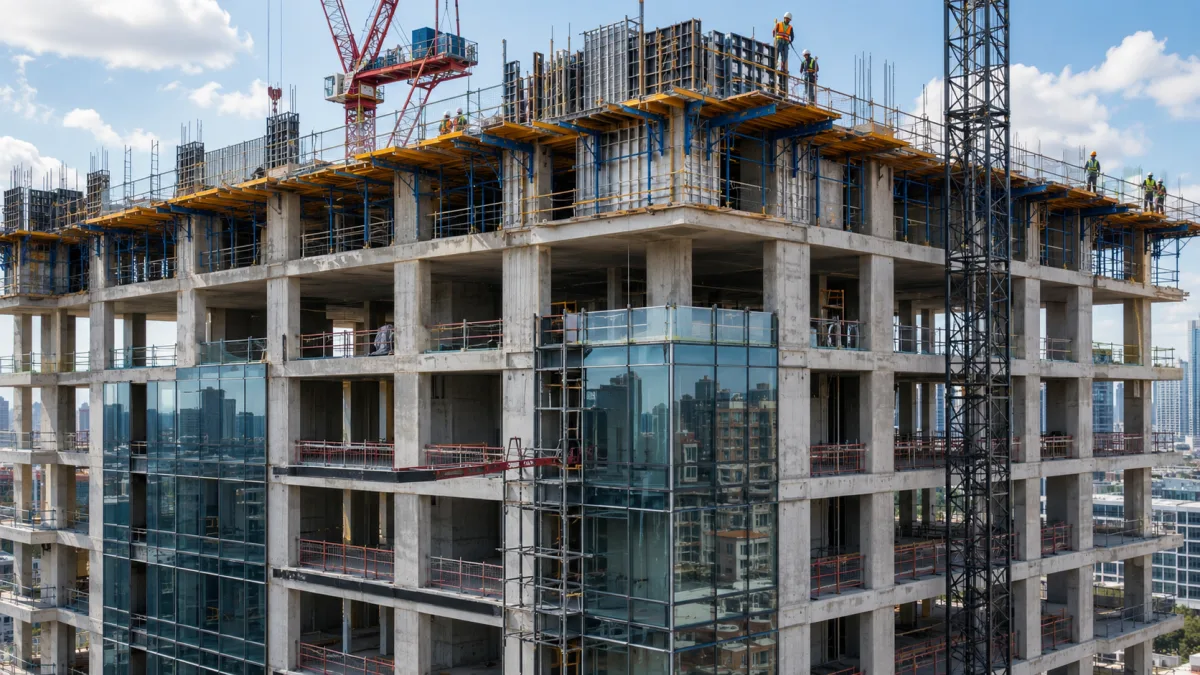
Reputation is built over years. Search for the company name together with terms such as "delay", "problem" or "review", read owner forums and check whether the developer has a professional presence with a real office, not just a profile in a messenger app. For ongoing projects, it is worth looking at the construction site: are there cranes, are teams visibly working, does progress match the schedule? A standstill lasting weeks is a serious signal.
Industry memberships and partnerships with established banks or well-known general contractors are an additional, though not a sole, mark of quality.
| Check point | Good sign | Warning sign |
|---|---|---|
| Past projects | Several completed developments you can visit | Only renderings, no finished property |
| Meeting deadlines | Handovers on schedule or a few months' delay | Repeated 1 to 2 years' delay or construction stops |
| Financial strength (DBD) | Solid registered capital, active status | Young company, minimal capital, ongoing proceedings |
| Permits | EIA and building permit in place | Sales under way, permits missing |
| Return promises | Realistic, verifiable assumptions | Guarantee above ~7% p.a., guaranteed for 3+ years |
Warning signs that should make you walk away
Some patterns crop up again and again with problematic providers. Be on your guard with:
- Unrealistic return promises: "Guaranteed 8 to 10% over 5 years" is a classic lure. Often a separate company with no significant assets carries the guarantee, if the payments stop, the buyer is left without security.
- Prices far below market: 30 to 50% below comparable values sounds tempting, but it is rarely a gift and more often an indicator of risk.
- Pressure and artificial urgency: "Only today at this price" is designed to prevent proper checking.
- Cash or anonymous payments as well as a refusal to show title deeds, the EIA or the building permit.
- Weak marketing: if the sales rate is below around 30% after six months, this can point to weak demand and possible construction delays.
Frequently asked questions
How many past projects should a reputable developer be able to show?
There is no fixed number, but ideally at least two or three completed and handed-over projects that you can visit. More important than the sheer quantity is that the properties were handed over on time and are in good condition today.
Where can I check the financial strength of a Pattaya developer?
Through the Department of Business Development (DBD) of the Thai Ministry of Commerce. There you can see registration, status, registered capital, directors and, in part, annual financial statements. Since much of it is in Thai, a local lawyer or agent helps with the interpretation.
What happens if a project is sold without EIA approval?
Without an approved EIA, the authority will not issue a building permit. If a developer is already selling before these clearances are in place, the risk of delays or a project being stopped increases. Always ask for proof of the permit status, and, when in doubt, have it checked by a specialist adviser.
Are guaranteed rental returns fundamentally untrustworthy?
Not necessarily, but caution is advised. Guarantees well above roughly 7% per year, or running for many years, often point to a "premium" built into the purchase price and to economic pressure. Check who carries the guarantee and whether that company actually has any assets.
Is it enough to rely on the agent?
A good agent takes a lot of the research off your hands, but does not replace your own due diligence or an independent lawyer. Make sure the agent only brokers projects from established developers and openly presents you with track-record evidence.
This is exactly where we come in: we broker exclusively projects from established developers with a demonstrable track record, in our view, this is the most important off-plan protection, long before contracts or insolvency questions become relevant. If you want to dig deeper, the article Developer Insolvency: Risk and Protection covers the legal protection side, and our guide to buying off-plan in Pattaya walks through the entire process. If you would like to have a specific developer or project checked, do get in touch: free initial consultation or download our free guide.
Free guide
68 pages of Pattaya insider knowledge, download for free