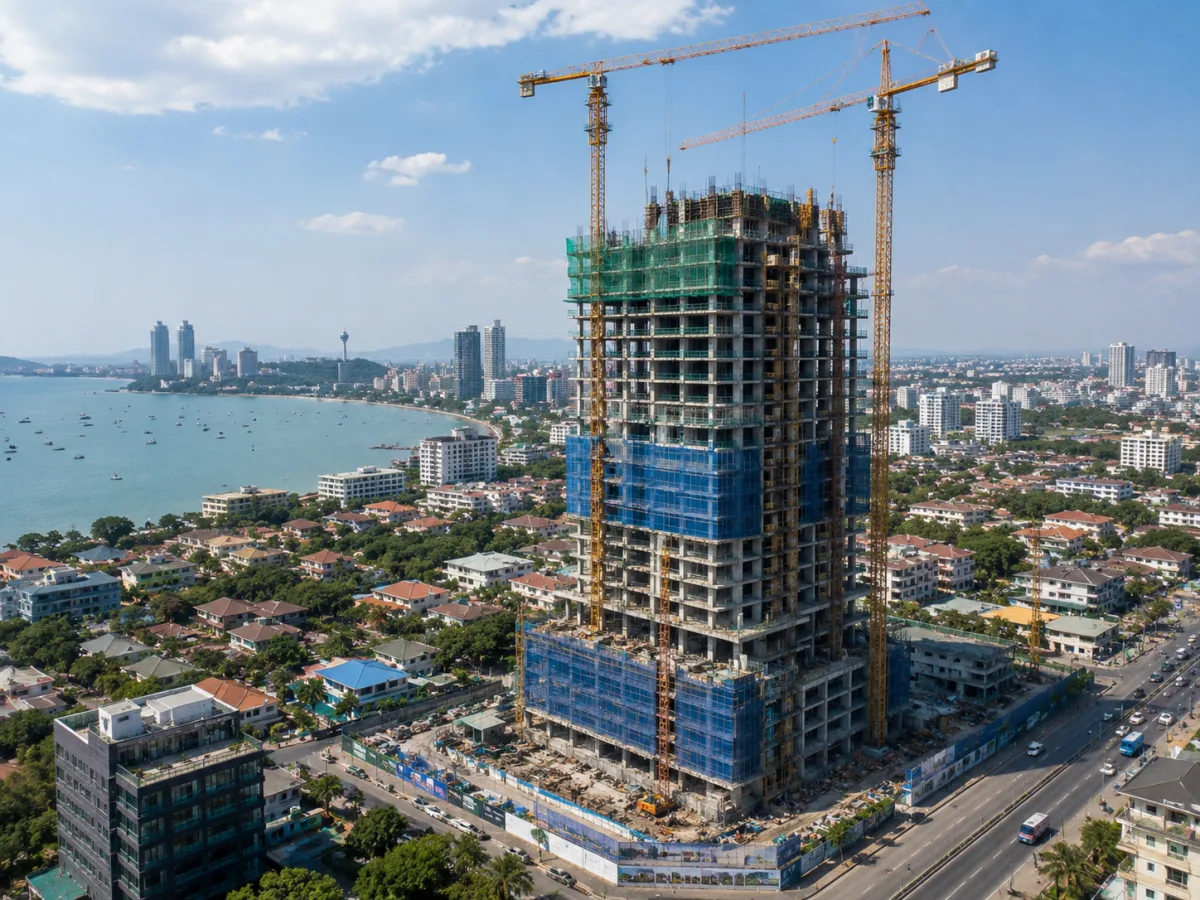
In short: The LTR visa (Long-Term Resident) grants wealthy foreigners a 10-year right of residence in Thailand, with just one report per year instead of every 90 days, free re-entry and tangible tax benefits. There are four categories, and especially for international retirees and investors who own a property in Pattaya it is often the most comfortable way to live here permanently. Important: buying a condo unit is a separate matter, for that you don't need a visa at all.
What the LTR visa actually is
The Long-Term Resident Visa, LTR for short, was introduced by the Thai Board of Investment (BOI) to bring wealthy and qualified foreigners into the country on a long-term basis. Unlike the classic retirement visa (which I describe in detail in a dedicated article on the retirement visa for Pattaya buyers), with the LTR you don't have to renew every year; instead, you receive from the outset a right of residence designed for 10 years (technically in two 5-year blocks).
In my practice I find that many of my international clients don't even have the LTR on their radar at first, they automatically think of the retirement visa. Yet for the right target group the LTR is far more relaxed in everyday life. Which visa options exist in general and which one suits your situation is something I have put together in my overview article on visas for property owners.

Buying and residency are two different things
This is the point I have to clarify most often, so let's get it out of the way right at the start: Ownership of a condo unit in Thailand is completely separate from residency status. You don't need a visa to buy a condominium in Thailand, a tourist with a 30-day stamp is legally just as entitled to acquire a freehold unit as a resident.
The visa concerns only how long and under what conditions you are allowed to stay in the country. So the property is not a prerequisite for the LTR, but it can be a helpful building block, because a qualified Thai investment counts towards the required assets in certain categories. More on that below.
The unit is yours, no matter which visa is in your passport. The LTR only governs how worry-free you get to live in it.
The four categories at a glance (as of 2026)
The LTR is divided into four groups. For international buyers the first two are usually the relevant ones, which is why I go into the most detail there.
1. Wealthy Global Citizen
- Assets: at least USD 1 million in total assets.
- Thai investment: of which at least USD 500,000 in qualified Thai assets, such as government bonds, shares or property.
- Key easing in 2026: The previously required USD 80,000 of personal annual income has been dropped. This opens the category up to people who are wealthy but no longer draw a classic salary, entrepreneurs who have sold up, investors, those living off private means.
2. Wealthy Pensioner
For many of my clients this is the most interesting door. Requirements:
- Age: from 50 years.
- Passive income: at least USD 80,000 per year from a pension or passive sources (not a salary), or at least USD 40,000 per year plus a Thai investment of at least USD 250,000.
- This is where the Pattaya property comes in: A freehold condominium can cover that USD 250,000 investment. So anyone who has "only" USD 40,000 to 80,000 in passive income closes the gap via their condo.
In practice this means: a pension from your home country plus a solid condominium in Jomtien or Wongamat can pave the way to the 10-year visa. If you want to know which investment amount leads to which return, do take a look at my investment calculator, it lets you play through nicely which unit works both as an investment and as a visa building block.
3. Work-from-Thailand Professional (remote workers)
- Income: at least USD 80,000 per year over the past two years.
- Employer: an established company abroad; the revenue threshold was lowered in 2026 from USD 150 million to USD 50 million.
- Easing: The former work-experience requirement has been dropped.
4. Highly-Skilled Professional
- For specialists and academics in Thailand's target industries.
- In 2026 the work-experience requirement was dropped and the group was extended to academic professors across all disciplines.
Health insurance and financial security
Across all categories, health cover is mandatory. As of 2026 you must provide proof of health insurance with at least USD 50,000 of cover, or alternatively a balance of at least USD 100,000 in an account as financial security. For international applicants an international health insurance policy is usually the most straightforward route; the statutory or private health insurance customary in your home country does not automatically meet the Thai criteria, so it pays to take a close look here.
The benefits that really count in everyday life
On paper the figures sound abstract. In daily life in Pattaya, my clients notice these points above all:
- 10 years of planning security instead of the yearly anxiety over renewal.
- Just 1 report per year instead of the tiresome 90-day report at the Immigration Office.
- Multiple re-entry included, you travel in and out without having to buy an expensive re-entry permit each time. For internationals who fly home several times a year, that is worth its weight in gold.
- Fast-track at the airports, your own, faster counter on arrival.
- Tax benefit: For Wealthy Global Citizens, Wealthy Pensioners and Work-from-Thailand Professionals, foreign income remitted to Thailand is exempt from Thai income tax (governed by Royal Decree No. 743).
- Optional digital work-permit application for around THB 3,000 per year, should you wish to work.
The tax benefit, but with one important limit
On the tax topic I deliberately rein my clients in a little, so that no false expectations arise: what is exempt is foreign income that is remitted to Thailand, for example your home-country pension or capital gains from Europe. Income that arises within Thailand, for instance rental income from your Pattaya unit, interest on Thai accounts or dividends from Thai companies, remains subject to regular tax in Thailand.
And something very important for international citizens: the LTR changes nothing about your tax situation back home. Whether and how you remain liable for tax there depends on double-taxation agreements and your residency status. That is a matter for your tax adviser at home, I can explain the Thai side to you, but the home-country tax side belongs in expert hands.
Costs and the application process
The government processing fee is THB 50,000 per person for the ten years if the visa is collected in Thailand; if issued via an embassy or as an e-visa it can be more expensive. The process in broad terms:
- Online application to the BOI with evidence of assets, income and insurance.
- Review by the BOI, the preliminary approval (endorsement) is usually granted within about 20 working days.
- After approval, visa issuance; overall, most qualified applicants reckon on one to two months from submission to visa.
A brief but central note: Thailand has no notary. Neither for the property purchase nor for the visa do you sign anything "notarised". The transfer of ownership of your unit runs through the Land Office, and the decisive document is the sales contract with the developer. These documents, the Sale and Purchase Agreement and the title deed (Chanote), are, incidentally, exactly the evidence with which you prove a property as a Thai investment for the LTR.
Is the LTR worth it for you? An honest assessment
I'll be deliberately level-headed here: the LTR is not for everyone. Anyone moving to Pattaya on a modest pension who doesn't want to invest USD 250,000 is often better off and cheaper with the classic retirement visa. The LTR plays to its strengths where wealth or high passive income are already in place, then it is simply the more comfortable right of residence with greater planning security.
Many of my international clients cleverly combine the two: they buy a high-quality new-build unit that delivers a return and provides the proof of investment for the LTR. Which projects are suitable for this you can see in my overview of current new-build projects, and when you're weighing two units against each other, my comparison tool helps. For a fundamental introduction to the topic of buying in Pattaya, see my guide to buying property in Pattaya.
Because regulations can change, please note: the figures mentioned here are as of 2026. You should check the current regulations before any decision, I'll support you with that and put you in touch with specialised lawyers and tax advisers when things get concrete.
Frequently asked questions
Do I need an LTR visa to buy a unit in Pattaya?
No. Ownership of a condo unit in Thailand is completely separate from residency status. You can acquire a freehold unit even as a tourist. The LTR concerns only your stay in the country, not the right to buy.
Can I use my Pattaya property as proof of investment for the LTR?
Yes, in the relevant categories. For the Wealthy Pensioner, a freehold unit can cover the required Thai investment of USD 250,000; for the Wealthy Global Citizen it can form part of the USD 500,000. What matters are the sales contract and the title deed, both currently dated.
Is my foreign income tax-free with the LTR?
Foreign income remitted to Thailand is exempt from Thai income tax in the three categories mentioned. Income that arises in Thailand itself, such as rental income from your unit, remains taxable, however. Your tax situation back home is unaffected.
How does the LTR differ from the normal retirement visa?
The LTR runs for ten years, requires only one annual report and offers tax benefits as well as fast-track, but it presupposes considerably higher wealth or income. The classic retirement visa is renewed annually and has lower hurdles. Which one fits depends on your finances.
Do I have to take out Thai health insurance for the LTR?
You need health insurance with at least USD 50,000 of cover or, alternatively, a balance of USD 100,000 as security. An international policy is usually the easiest route for international applicants; domestic statutory insurance generally does not meet the criteria.
If you're considering whether the LTR visa suits your situation and which property in Pattaya works both as a sensible investment and as a visa building block, feel free to get in touch for a free, no-obligation conversation, via WhatsApp or through the contact form. I'll accompany you in person in Pattaya, and when you buy you pay 0% commission as the buyer, the developer covers it.
Free Guide
68 pages of Pattaya insider knowledge, download for free