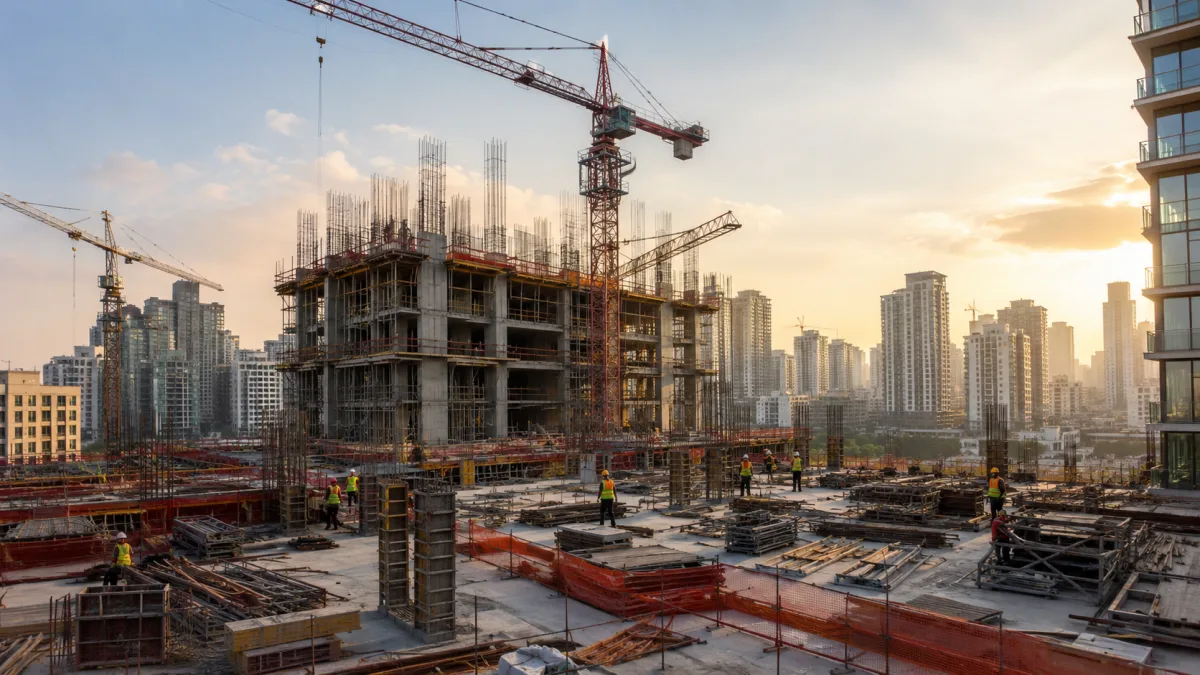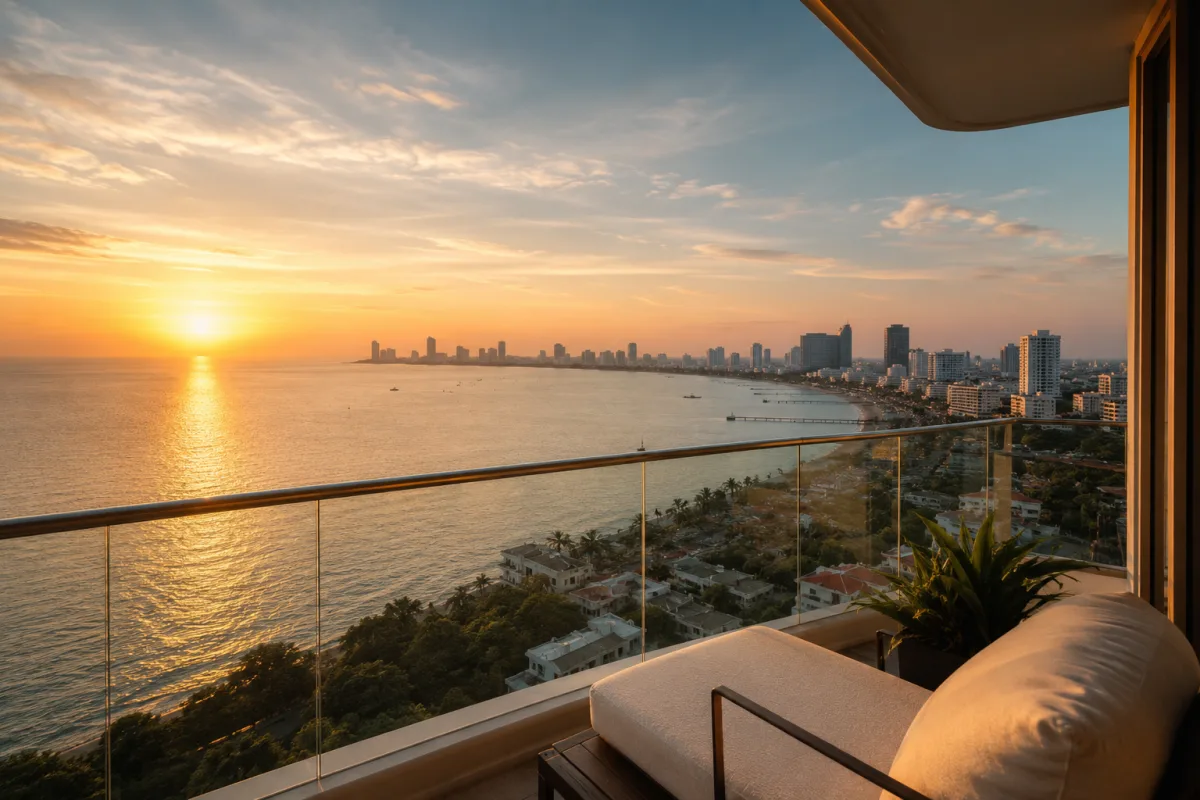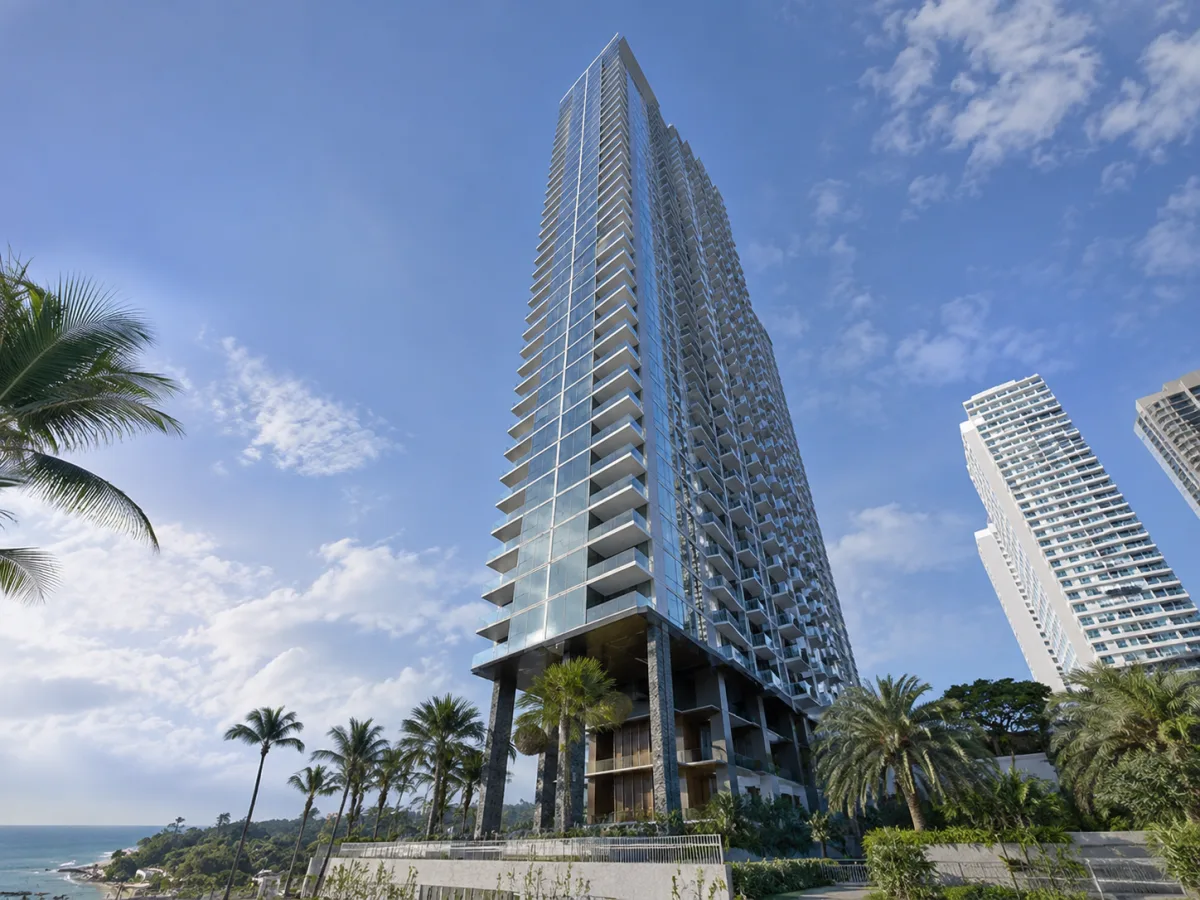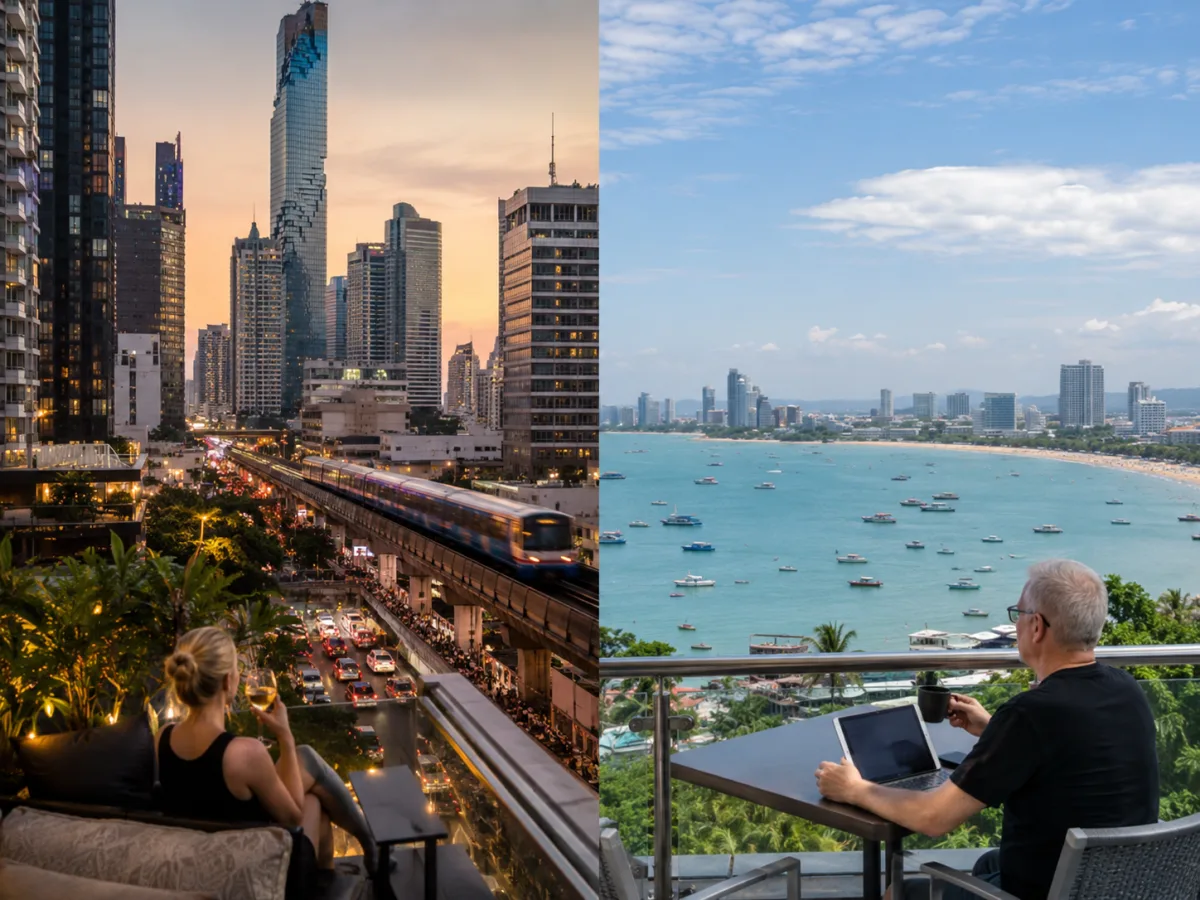
In brief: Anyone looking to invest in Bangkok or Pattaya is comparing two very different markets: Bangkok is the larger, more liquid metropolitan market with prices of around 130,000–200,000 THB/m² in central locations, yet central yields are often only 3–5% gross and oversupply is widespread. Pattaya offers lower entry prices, roughly 5–8% gross yield, and broad rental demand driven by tourism plus EEC-related inward migration. For DACH buyers seeking proximity to the beach, quality of life and solid returns, Pattaya is generally the more pragmatic entry point – and I will select the right location and developer for you.
Bangkok or Pattaya: an overview of the two markets
Thailand essentially has two dominant condo markets for foreign buyers: the capital Bangkok and the coastal city of Pattaya, roughly 130 kilometres to the south-east. The two operate on completely different logic. Bangkok is a business and rental market with over ten million inhabitants, a high-rise skyline and a dense BTS/MRT rail network. Pattaya is a tourism, lifestyle and increasingly residential market on the Gulf of Thailand.
For DACH investors, the core question is rarely "Where is the most prestigious address?" but rather: where does the combination of purchase price, ongoing yield, rental demand, quality of life and resaleability best match my goals? That is exactly what we compare here with concrete figures – this is not investment advice; all prices are indicative and do not represent completed transactions.

Purchase prices: what does a square metre really cost?
In Bangkok the median asking price for condos in 2026 is around 135,000 THB/m², with averages more typically in the range of 140,000–155,000 THB/m². In the central premium locations of Sukhumvit, Silom and Sathorn, 200,000 THB/m² is becoming the norm, with top-tier projects asking 200,000–350,000 THB/m². Affordable outer districts such as Bang Na drop below 80,000 THB/m² – but rental demand there is thinner and the foreign quota within a building is often already full.
In Pattaya, new-build prices per square metre range from around 115,000 to 260,000 THB/m² depending on the district. Central Pattaya and Jomtien sit at roughly 130,000–220,000 THB/m², Na Jomtien from approximately 115,000 THB/m², and the premium Wongamat/Naklua area up to 260,000 THB/m² and beyond. Comparable new-build property in Pattaya therefore tends to cost less than in central Bangkok – often with better specifications per baht, because land costs are lower. I explain how the price per square metre translates into a realistic total price in the article What a condo really costs.
Rough EUR benchmarks (conversion approx. 38–39 THB/€): studios from around €100,000, one-bedroom units roughly €120,000–170,000, two-bedroom units approximately €180,000–250,000. This range applies to both cities – in Bangkok that buys fewer square metres in a central location, while in Pattaya you tend to get more floor space and proximity to the sea.
Rental yield: 3–5% in central Bangkok, 5–8% in Pattaya
This is arguably the most important difference. In central Bangkok locations, square-metre prices are so high that gross rental yields are frequently only 3–5%. Northern or well-connected outer areas reach 6–8%, and the city-wide average works out to around 6%. In Pattaya and Jomtien, new-build condos consistently generate around 5–8% p.a. gross – supported by tourism, long-term tenants and work-from-anywhere professionals.
Important: these are gross figures. Net yields in both markets are typically 1–2 percentage points lower, once common area fees, sinking fund contributions, maintenance and any management fees are deducted. I work through what remains step by step in the article Rental yield explained realistically. The ongoing cost items are explained under ongoing costs of a condo.
You should not mix yield with the off-plan price advantage: buyers who enter during an early construction phase sometimes pay up to 40% less than the completion price – that is capital appreciation potential, not rental income. Separately, ongoing market price growth runs at roughly 3–5% p.a. Keeping these three figures clearly distinct from one another is half the battle when it comes to investment success.
The direct comparison: Bangkok vs. Pattaya
The table below sets the key investment criteria side by side. All figures are indicative for new-build/off-plan in 2026.
| Criterion | Bangkok | Pattaya |
|---|---|---|
| Market character | Metropolis, business & rental | Tourism, lifestyle, EEC residence |
| Central price (THB/m²) | approx. 200,000, peak 350,000 | approx. 130,000–220,000, peak 300,000+ |
| Entry possible from (THB/m²) | < 80,000 (outer areas) | approx. 115,000 (Na Jomtien) |
| Gross yield | central 3–5%, outer 6–8% | approx. 5–8% p.a. |
| Tenant profile | Expats, employees, students | Tourists, long-stay, remote workers, retirees |
| Market price appreciation | flat to +2–3%, prime stronger | approx. 3–5% p.a. |
| Liquidity / time to sell | prime 3–6 months, outer 6–12+ | location-dependent, new-build in demand |
| Oversupply | high in outer areas (approx. 58,000 units) | limited buildable land in prime locations |
| Quality of life | urban, traffic, smog | beach, climate, quieter |
Rental demand and liquidity: who rents, who buys back?
In Bangkok the main tenants are expats, well-paid Thai employees, students and business travellers. Demand is strong, but so is supply: at the end of 2024 around 58,000 unsold condo units were on the market across the city. This means central, metro-adjacent properties (Asoke, Phrom Phong, Sathorn) remain easy to let and sell – at market prices they change hands within 3–6 months. In overdeveloped outer zones it can take 6–12 months or more, and price reductions of 5–10% are common there.
Pattaya's rental demand rests on several pillars: more than 35 million expected visitors to Thailand in 2026, a growing number of long-stay tourists and remote professionals, and classic DACH retirees. A notable quality trend is emerging – properties close to good supermarkets and cafés record around 25% higher occupancy than pure "sea-view, no infrastructure" locations. For liquidity, this means that what is in demand is well-located, well-maintained new-build from a recognised developer, not the cheapest property available. You can read about why the developer's brand underpins resaleability in the Pattaya Property Forecast 2026/2027.
Quality of life and the EEC factor
For many DACH buyers the property is not purely an investment vehicle but also a second home or retirement residence. Here Pattaya scores clearly: beach, warm climate, a relaxed pace, short distances and an established German-speaking infrastructure. Bangkok offers a cosmopolitan atmosphere, top-tier hospitals and a dense public-transport network, but also traffic, air pollution and higher everyday living costs. I show how monthly living expenses break down in the monthly budget for Pattaya.
One structural driver favours Pattaya: the Eastern Economic Corridor (EEC). The industrial zones in Chonburi and Rayong are attracting international skilled professionals and executives, for whom Pattaya is increasingly becoming an "executive suburb" – generating genuine long-term rental demand beyond tourism. The planned high-speed rail link (Bangkok–U-Tapao, nine stations including Pattaya) is an attractive future option, but is progressing more slowly than announced; it should therefore be treated as a bonus rather than a reason to buy. I explore in more depth why the EEC infrastructure is nonetheless a genuine value driver in the article EEC infrastructure as an investment driver.
Legal framework: the same in both cities
Whether Bangkok or Pattaya – the same rules apply to foreign buyers. A condo can be purchased as genuine freehold ownership in your own name within a building's 49% foreign quota. The requirement is that the purchase amount is transferred from abroad in a foreign currency and exchanged in Thailand; the bank then issues the FET certificate for this purpose. I explain the difference between foreign quota, freehold and leasehold in the article Foreign Quota, Freehold and Leasehold, and the money transfer process in the FET certificate guide.
One buyer advantage with new-build: those purchasing off-plan from a vetted developer generally do not need their own lawyer, because the contracts are standardised and reviewed. For a private resale purchase, however, legal support is advisable. I verify which developers build reliably and deliver on time – that is exactly what I am here for.
Which location suits which type of buyer?
Bangkok may be the right choice if you are targeting a prime, metro-adjacent premium location specifically, prioritise value stability over ongoing yield and can live with 3–5% gross yield in a central location. The deep, liquid market makes a later sale easier in such locations.
Pattaya is usually the more fitting entry point if you are seeking a higher ongoing yield (around 5–8%), lower entry prices, beach and lifestyle quality and the option to use the property yourself in retirement. Add to that the off-plan leverage: in an early construction phase you can enter at up to 40% below the completion price. I compare which location suits you in the district comparison; current price levels are set out in the Off-Plan Price Report 2026.
Frequently asked questions about investing in Bangkok or Pattaya
Where is the rental yield higher – Bangkok or Pattaya?
Generally Pattaya. Central Bangkok locations often deliver only 3–5% gross due to high purchase prices, while Pattaya consistently achieves around 5–8% p.a. Bangkok's outer areas can also reach 6–8%, but demand there is more volatile.
Is Bangkok the safer market because it is larger?
Size means more liquidity in prime locations, but also more oversupply in outer areas (around 58,000 unsold units). Safety comes less from the city's size than from location, developer and entry price – and that applies in both cities.
Can I as a German national acquire property in both cities?
Yes. In both Bangkok and Pattaya you can purchase a condo within the 49% foreign quota as freehold in your own name, provided the funds are transferred from abroad in a foreign currency and a FET certificate is issued.
Does the EEC play a role in choosing a location?
For Pattaya, yes. The Eastern Economic Corridor brings skilled professionals and executives to the region, which supports long-term rental demand. Bangkok benefits from it only indirectly. The planned high-speed rail link is a bonus, not a reason to buy.
Which city is better suited as a retirement residence?
Usually Pattaya: beach, climate, a more relaxed pace, short distances and an established German-speaking infrastructure. Bangkok offers a cosmopolitan atmosphere and world-class medical care, but is more hectic and more expensive in everyday life.
Are you weighing up whether Bangkok or Pattaya is the better fit for your investment goals? I compare specific properties, locations and payment plans with you and find the right entry point – contact me without obligation via the contact form. My free guide to buying a condo in Pattaya provides deeper background knowledge.
Free Guide
68 pages of Pattaya insider knowledge — download for free