
In short: Renting an apartment in Pattaya is straightforward: a copy of your passport is enough, the deposit is two months' rent, and furnished studios start at around 8,000 baht a month. For many international expats, renting is the ideal trial phase before buying – once you know after a few months which neighbourhood suits you, moving into your own condo lets you settle into life in Thailand far more cheaply than renting permanently ever could.
Thailand attracts thousands of newcomers every year. Some come for a few weeks, others stay for good. And at some point almost everyone asks the same question: rent or buy? If you're not yet sure whether Thailand is the right long-term choice, it makes sense to start by renting. That's a smart move – and it's exactly why I'm answering the most common questions from my day-to-day advisory work here. Because renting in Thailand differs in several key ways from what you may be used to back home.
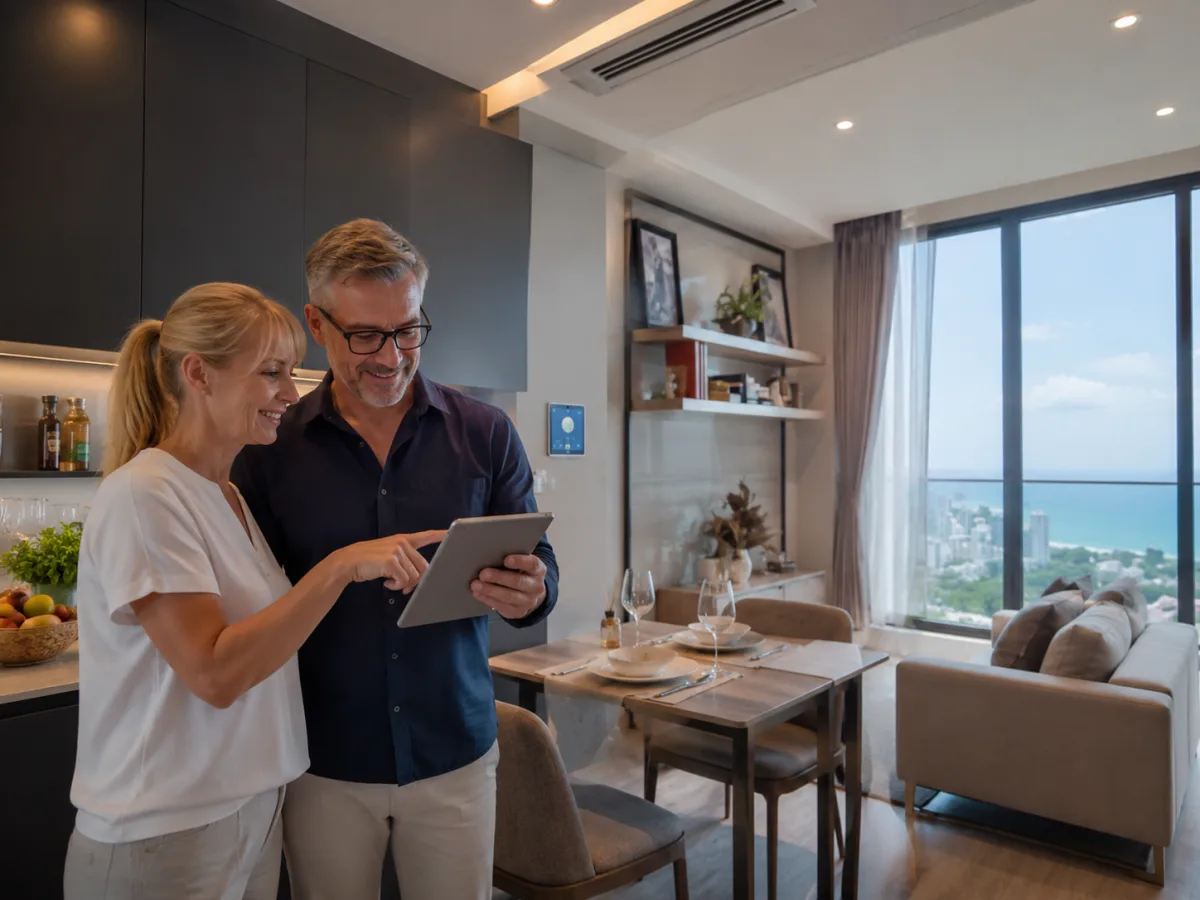
How does renting in Thailand work in general?
Thailand has no statutory tenant-protection regime like the one in Germany. That may sound unfamiliar at first, but it's not a disadvantage: both sides act more freely, and whatever is written in the lease applies. That's why it's so important to read the contract carefully before signing – or to have it read for you.
Typical leases run for six or twelve months. Shorter terms are possible, but usually cost 10 to 20 per cent more. Long-term tenants generally get better conditions, because landlords value continuity – a reliable international tenant is welcome in Pattaya and has a strong negotiating position.
What about the deposit?
The standard deposit in Thailand is two months' rent. On top of that, the first month is payable in advance. That means: when you move in, you often pay three months' rent at once – so for a 15,000-baht apartment, that's 45,000 baht (around 1,150 euros). You should factor this into your cash-flow planning.
The deposit is refunded when you move out, provided there is no damage. A handover protocol with photos is not as common in Thailand as in Germany, but I recommend it to every one of my clients. It protects both sides from misunderstandings.
What documents do I need as a foreigner?
Far fewer than in Germany: usually a copy of your passport is enough. Some landlords, especially in larger developments, also ask for your visa page. There is no credit check, credit-bureau report or proof of income. From the first viewing to moving in, often only two to three days pass.
What does a rental apartment in Pattaya cost?
Pattaya is very attractive in this respect – and a genuine value-for-money winner by national standards. The current guide figures (as of 2026, depending on location and fit-out):
| Apartment type | Rent per month (THB) | approx. in euros |
|---|---|---|
| Furnished studio, good location | 8,000–15,000 | €205–385 |
| 1-bedroom in a well-kept condo | 15,000–30,000 | €385–770 |
| 2-bedroom, premium location | from 25,000, often 35,000+ | from €640 |
| Sea-view unit in a top development | 30,000–60,000 | €770–1,540 |
For comparison: in Bangkok or Phuket you often pay double for comparable quality. That's another reason why many people who want to live in Thailand permanently choose Pattaya. I've broken down in detail just how far your overall budget stretches in my article on the cost of living in Pattaya. All prices are guide figures and can vary depending on negotiation.
Are utilities included in the rent?
Usually not – which surprises many newcomers. Electricity and water are generally paid separately. With electricity in particular, the rule is: ask about the tariff before signing and have it set down in writing. Good to know: since 2025/2026, tighter consumer-protection rules have applied in Thailand. Commercial landlords (with five or more rented units) may now only pass on electricity and water at the actual supply tariff – mark-ups above the state MEA/PEA tariff are no longer permitted there. With private individual landlords, it's still worth checking the agreed tariff.
Water is cheap and barely registers. Electricity, on the other hand, can quickly come to 2,000 to 5,000 baht a month if the air conditioning runs continuously. Communal areas such as the pool, gym and security service are, however, covered by the common area fee – and that is borne by the owner, not the tenant. I explain what lies behind this fee in my article on the running costs of a condo in Pattaya.
Renting as a trial phase: the smartest route to your own condo
This, in my view, is where the greatest strategic value of renting lies – and this point is often underestimated. If you're toying with the idea of buying in Pattaya, the best use of your rental period is as a paid test phase:
- Experience the neighbourhoods live: Wongamat, Pratumnak, Central Pattaya, Jomtien and Na Jomtien feel completely different. Three months on the ground tell you more than a hundred YouTube videos. My neighbourhood comparison for Pattaya gives you an overview.
- Assess development quality: as a tenant, you experience how management, pool maintenance and the security service work day to day – valuable knowledge for the later buying decision.
- Get to know the seasons: high season, rainy season, hot months – once you've rented for a year, you know exactly what to expect.
- Follow construction progress: if you reserve a new-build project during your rental period, you move straight into your own condo on completion – and have followed the construction phase in a relaxed way, right there on the spot.
This is exactly the path many of my clients take: rent for 6 to 12 months first, survey the market at leisure in parallel, and then buy at an early construction stage – where new-build units are sometimes up to 40 per cent cheaper than on completion. The rental period thus turns from a cost factor into a knowledge advantage. The clever part: off-plan projects can often be reserved with a comfortable payment plan spread across the construction period, so you only pay instalments during your rental period. You can read how this works in detail in the guide Financing a condo and payment plans. You'll find my fixed selection of current new builds in the project overview.
Is renting worth it – or should I buy straight away?
This is the question I hear most often. My honest answer: if you don't yet know Thailand, renting is the right first step. But if you already know that you want to live here permanently or spend time here regularly, buying is the financially more attractive decision.
A worked example: 20,000 baht in monthly rent is 240,000 baht a year – over ten years, 2.4 million baht flowing to the landlord. For the same amount, you can already get your own new-build condo in Pattaya: Zenith Pattaya 2 starts from around 100,000 THB/m². If you invest a little more, you'll find premium quality at Grand Solaire Noble (142,000–219,000 THB/m²) or at the beachside Copacabana Coral Reef in Jomtien, which as a rental property can additionally generate around 5–8% gross rental yield per year. You can read what's realistic when it comes to yields in my article Rental yield realistically explained.
On top of that comes market performance: prices in Pattaya have been rising by around 3–5% per year for years. As a tenant, you watch this appreciation – as an owner, you benefit from it. I explain step by step how getting into a new-build project actually works in the guide Buying off-plan in Pattaya. (Not investment advice; all figures are guide values.)
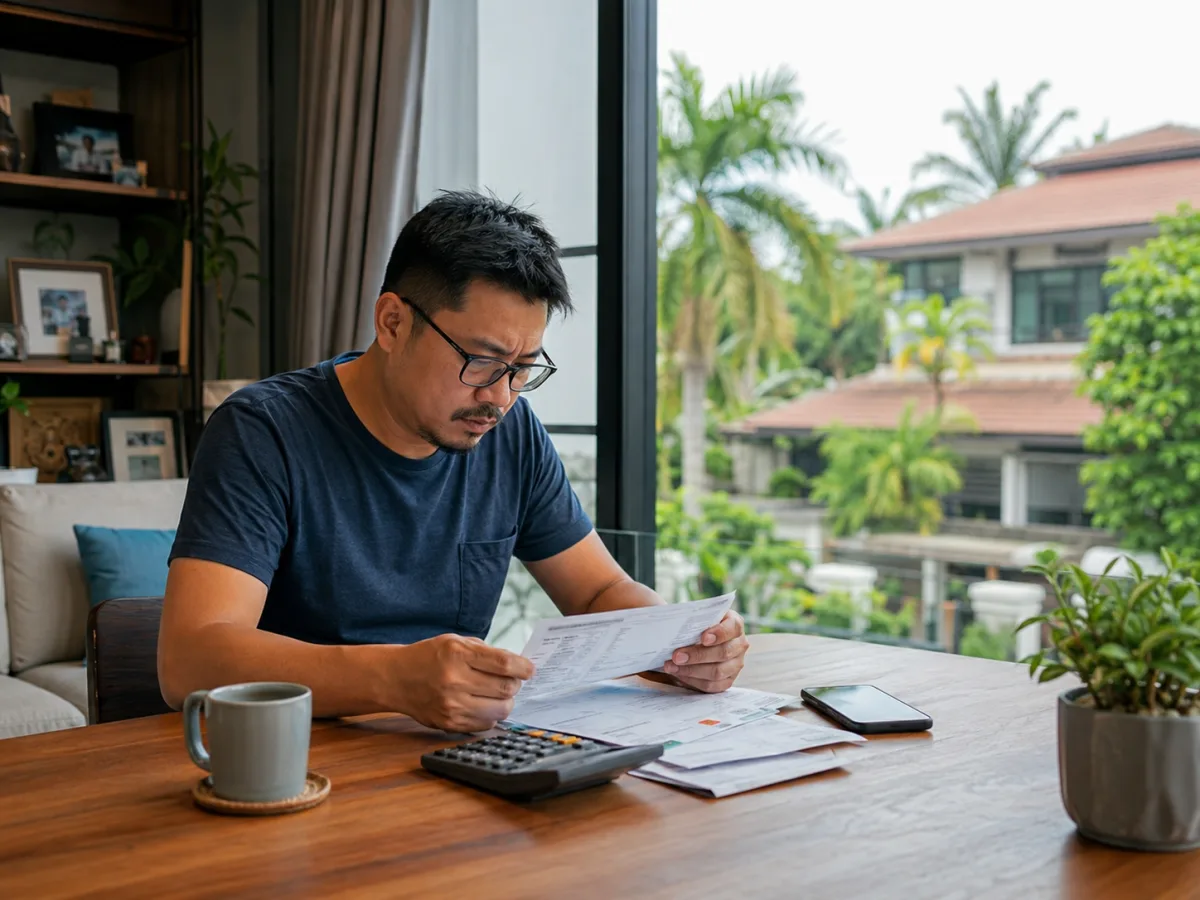
What should I look out for in the lease?
A few points are especially important:
- Lease term and termination terms clearly set down in writing
- Electricity tariff asked about before signing and anchored in the contract
- Deposit and return conditions clearly defined
- Furnishings and fit-out documented, ideally with photos
- Point of contact and maintenance responsibility clarified (air-conditioning servicing is usually the landlord's job)
For longer terms or higher rents, a brief contract review can make sense – it's quick and cheap to arrange in Thailand. In reputable developments, however, these are mostly established standard contracts that are fair and easy to follow.

Common questions about renting an apartment in Pattaya
Which visa do I need to rent in Thailand?
No special one. Any foreigner with legal residence may rent an apartment – whether on a tourist visa, a Non-Immigrant visa or a Thailand Privilege (formerly Elite) visa makes no difference for the lease. For a longer stay, you should simply keep an eye on your visa situation; your home country's foreign ministry website offers a good overview of the entry requirements.
Can I, as a tenant, terminate whenever I want?
That depends on the contract. Most contracts have a minimum term; anyone who ends a one-year lease after four months risks losing the two months' rent deposit. If you need to stay flexible, you should negotiate shorter terms or a termination clause from the outset – which often succeeds, because landlords value reliable international tenants.
How quickly can I find a rental apartment in Pattaya?
Much faster than in Germany. The supply is large, viewings can be arranged at short notice, and often only a few days lie between first contact and moving in. In high season (November to February) the choice is a little smaller and prices are tighter – if you can, search in the low season.
Can I rent first and later buy in the same development?
Yes, and it's actually a proven route: you get to know the development, the neighbourhood and the management as a tenant, then buy afterwards with a good feeling. Often even more attractive is switching to a new-build project at an early construction stage – such as Aquarous Jomtien (foreign quota from 138,000 THB/m²) – because that's where the entry price is lowest and you can still freely choose the unit and the view.
What happens to my deposit when I move out?
It is refunded, provided there is no damage beyond normal wear and tear. Refunds are usually made within 14 to 30 days, often after the final electricity bill has come in. A move-in protocol with photos makes the return completely hassle-free in practice.
My verdict as Der Pattaya Makler
Renting in Thailand is more straightforward than many people think: little bureaucracy, plenty of choice, fair prices. Pattaya offers exceptional value for money in this respect – whether for a few months or for the long term. And used correctly, your rental period is far more than a stopgap: it's your personal trial phase, in which you get to know the neighbourhoods, the developments and your own rhythm of life in Thailand before taking the next step.
If at some point you realise you want to stay, I'm the right person to talk to: I help you understand when the switch from tenant to owner makes financial sense for you – and which project suits you. Let's have a no-obligation chat: you can reach me directly via the contact form, and in the free Pattaya property guide you'll find everything important for your decision compactly summarised.
Free guide
68 pages of Pattaya insider knowledge — download free
More on buying property in Pattaya