When buying a condo in Pattaya, very few DACH buyers think about the day they want to send the money back to Germany. Yet that moment determines whether the sale later becomes a smooth bank appointment or a paperwork battle. The good news: anyone who documented the original fund transfer properly has already done most of the work.
This article explains how sale proceeds can be legally repatriated in foreign currency, what documents the Thai bank requires, which taxes apply on a sale and where things tend to go wrong in practice. An important caveat: this is not legal or tax advice. Foreign exchange, tax and visa rules change; always verify with an official source (Bank of Thailand, Revenue Department) or a specialist adviser before taking action.
Why the FET proof suddenly becomes crucial at the point of sale
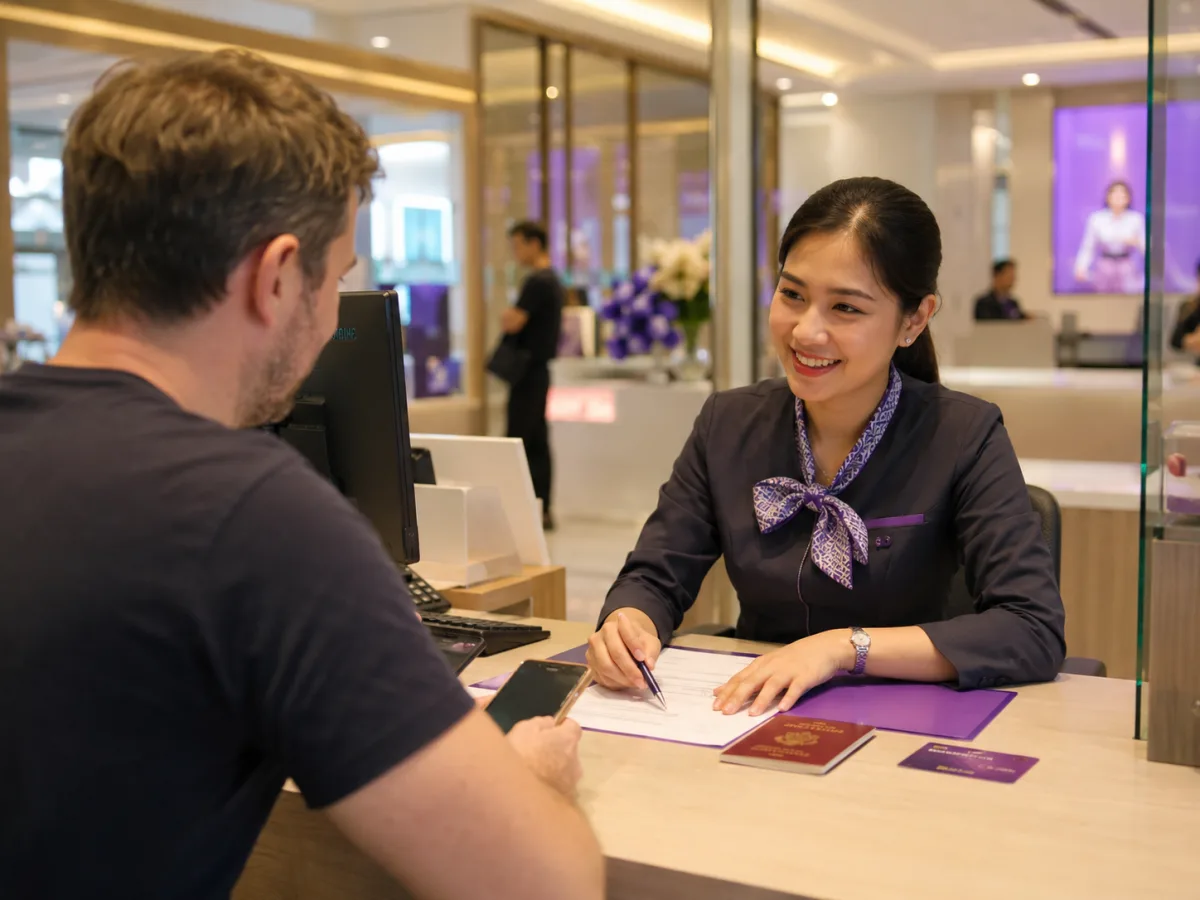
The Foreign Exchange Transaction Form (FET, formerly known as "Thor Tor 3" / ต.ท.3) is the official confirmation from your Thai bank that foreign currency was brought in and exchanged into Thai Baht (THB). At the time of purchase you needed it to have the condo registered in a foreign name. At the point of sale it takes on a second, often underestimated role: it is your passport for repatriation.
The principle Thai banks apply is straightforward: you are entitled to transfer back out, in foreign currency, the amount you can demonstrably prove you originally brought in – without additional foreign exchange hurdles. If that proof is missing, the bank becomes significantly more cautious, and what should be a routine transaction turns into a case requiring clarification. Anyone who lost the FET at the time of purchase, or never received it correctly, will only find out years later at the counter. This is precisely where our off-plan approach comes in: we pay attention to documentation from day one.

What documents the bank requires for repatriation
To process the outward transfer of sale proceeds, the bank will typically check the following documents:
- The original FET form or Credit Note from the purchase phase (proof of the foreign currency amount brought in).
- The Land Office-stamped sales contract from the sale (bearing the Garuda seal).
- The Land Office tax receipt(s) for the taxes and fees paid at the time of transfer.
- A copy of the title document (Chanote) for the unit.
- Passport copy and, where required, evidence of the purpose of the transfer.
For amounts equivalent to approximately 50,000 USD or more, the bank will issue a new FET form for the outgoing transaction; for smaller amounts a Credit Note or bank letter is usually sufficient. Tip: keep your purchase documents in an organised file throughout the entire holding period – ideally as scans and as originals.
Repatriation in foreign currency – how the money flows
On completion of the sale, the proceeds initially arrive in THB (often via a bank cheque/cashier's cheque at the Land Office). From your Thai bank account they are then converted into foreign currency (e.g. EUR) and transferred back to Germany. The key factor determining the euro amount that arrives is the exchange rate on the day of conversion – not the rate at which you originally brought the funds in.
This creates a double leverage effect: if the THB has appreciated against the euro since purchase, you receive more euros per baht – even if the THB sale price is unchanged. If it has depreciated, your euro proceeds are reduced. Those with flexibility can time the conversion strategically or negotiate the rate with their bank.
Sale taxes and fees – separate from repatriation
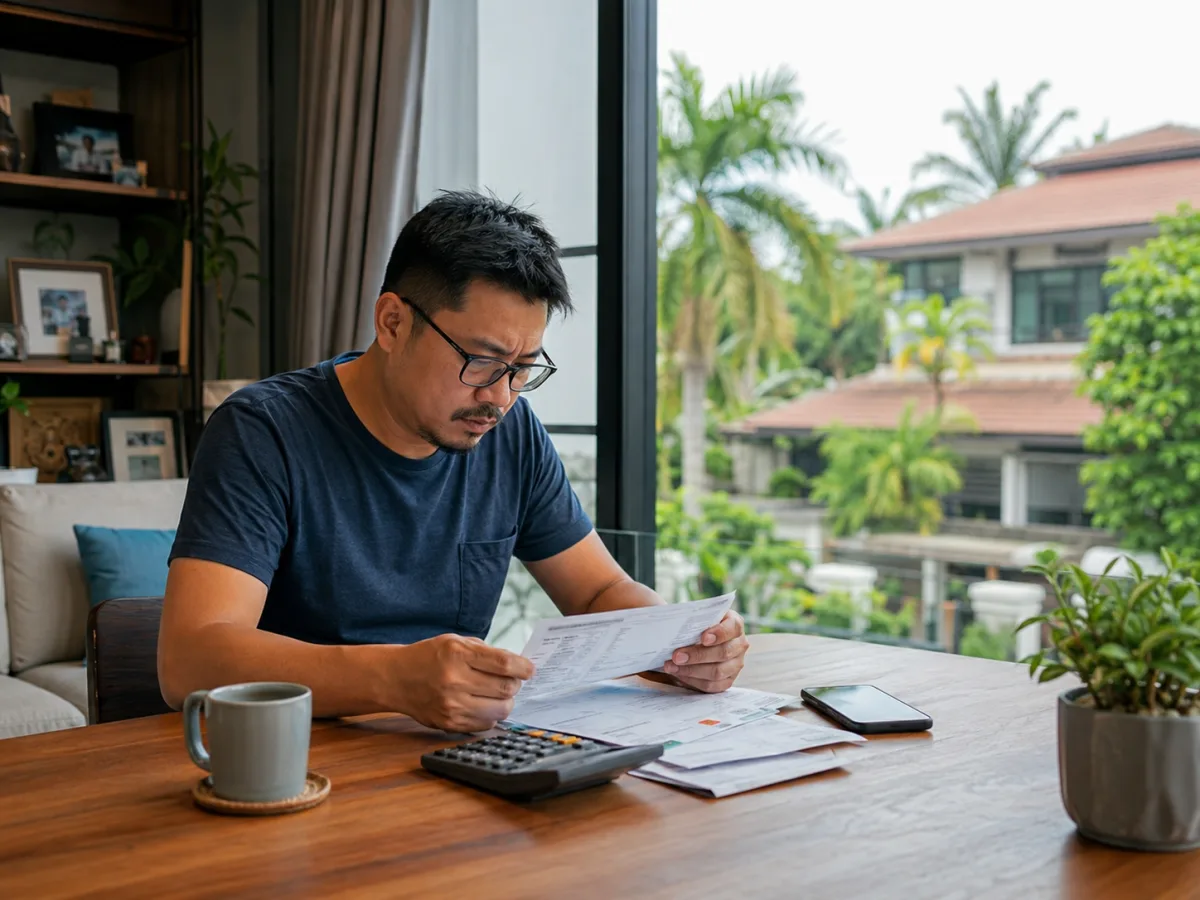
An important distinction: the repatriation itself does not trigger any tax. Taxes and fees are levied beforehand, at the point of ownership transfer at the Land Office, and reduce the amount that actually reaches your account. The figures below are indicative (as of 2026) – the exact Withholding Tax depends on the holding period and the official appraised value and can only be calculated on a case-by-case basis.
| Item | Indicative rate | Notes |
|---|---|---|
| Transfer Fee | 2% of the higher value (appraised/sale price) | Often split 50/50 – negotiable; reduced rates generally available to Thai nationals only |
| Specific Business Tax (SBT) | 3.3% | Only if held for fewer than 5 years |
| Stamp Duty | 0.5% | Instead of SBT, where held for 5 years or more |
| Withholding Tax (individual) | roughly approx. 1–3% (range, case-dependent) | Progressive, dependent on holding period & appraised value; longer holding period reduces the burden |
The Withholding Tax is calculated in stages: a flat cost allowance is deducted from the official appraised value based on the holding period, the remainder is divided by the number of years held, taxed progressively and then grossed back up. Rule of thumb: the longer you hold, the lower the effective rate. In total, sellers should expect roughly 2.5% to over 6% in fees and taxes on the transaction value – who pays what is partly a matter of negotiation and should be addressed in the sales contract.
Typical pitfalls – and how to avoid them
- FET lost or never received correctly: The most common repatriation headache. When bringing funds in, always request the FET/Credit Note and archive it securely.
- Purpose of payment missing on the transfer: If the transfer description did not state "purchase of condominium" or similar, linking the funds later can be difficult.
- Wrong expectations of the bank: Not every branch handles this process routinely. Establish early on exactly which documents your bank requires.
- Exchange rate underestimated: The euro amount is only fixed at the point of conversion – an unfavourable day can make a noticeable difference.
- Double taxation overlooked: Whether and how any gain is taxable in Germany is governed by the Germany–Thailand double taxation agreement on a case-by-case basis – a tax adviser is essential here.
Frequently asked questions
Do I absolutely need the FET form for repatriation?
For a smooth, hassle-free repatriation of the originally imported amount, the FET proof is the key document. Without it, the bank becomes more cautious and requires more clarification; it is not impossible, but considerably more involved.
Can I repatriate more than I originally brought in?
The amount you originally evidenced via FET can generally be transferred out in foreign currency without difficulty. For amounts beyond that (e.g. capital gains), normal foreign exchange rules apply; discuss this with your bank in advance.
Does the transfer to Germany trigger Thai tax?
The repatriation itself is not a taxable event. The sale taxes (Withholding Tax, Transfer Fee, and where applicable SBT/Stamp Duty) are already levied at the point of ownership transfer at the Land Office, before the money reaches you.
How long should I keep the purchase documents?
Throughout the entire holding period and beyond the sale. The FET/Credit Note, sales contract, Chanote copy and payment receipts should be kept in an organised dossier – ideally both digitally and as originals.
Do I have to pay tax on the proceeds in Germany?
That depends on the individual case and the double taxation agreement between Germany and Thailand. This is not tax advice – have your specific situation reviewed by a specialist adviser before the sale.
The bottom line: a clean sale starts with a clean purchase. Anyone who brings funds in correctly from the start and secures the FET will sell later without nasty surprises – that is not a promise of a specific price, but of an orderly process. That is precisely what we pay attention to with off-plan purchases from day one. How the fund transfer works in formal terms is explained in our article on the FET certificate and money transfer; how resale works in the market is covered in our guide to condo resale in Pattaya. If you would like to discuss your specific situation, feel free to arrange a free initial consultation – or download our free guide first.
Free Guide
68 pages of Pattaya insider knowledge — download for free