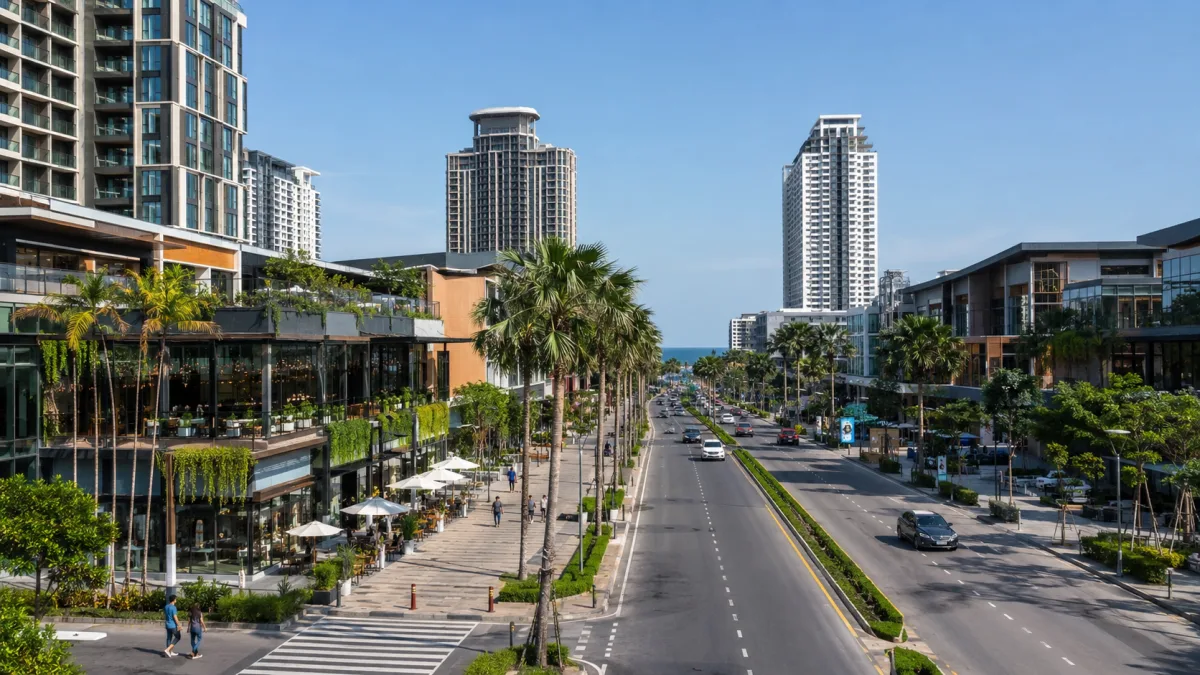
In short: The rental yield in Pattaya is around 5-8% per year gross - a very attractive figure by international standards. After deducting running costs such as the common area fee, management, calculated vacancy and taxes, you are usually left with roughly 1-2 percentage points less net. Those who calculate honestly from the outset buy with realistic expectations - and that is exactly where we support you as your English-speaking agent on the ground.
Why the distinction between gross and net rental yield in Pattaya matters so much
Many of the yield promises you read online refer to the gross rental yield: annual rent divided by the purchase price. That is a good first orientation - but it is not what actually ends up in your account at the end of the year. The net rental yield deducts all running costs and shows you the real return.
At "Der Pattaya Makler", we see honest advice as our USP. Instead of luring you with fantasy figures, we work through openly with you what is realistic. The good news up front: even after all deductions, Pattaya remains a location with above-average returns - driven by strong tourism, a growing expat community and the infrastructure investments in the Eastern Economic Corridor.
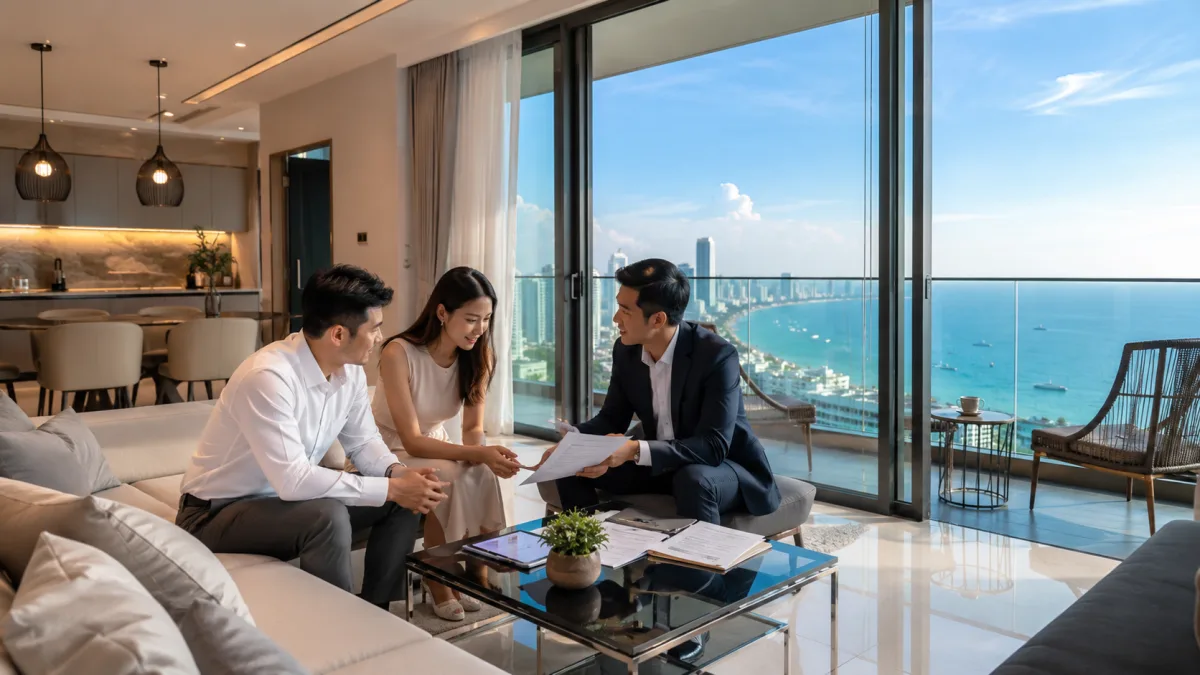
How to calculate the gross rental yield
The formula is simple:
- Gross rental yield (% p.a.) = (monthly rent × 12) ÷ purchase price × 100
A concrete example using figures from our portfolio (anonymised, illustrative sample calculation, not guaranteed values):
- One-bedroom condo in Jomtien, purchase price: 4,500,000 THB (around 116,000 €)
- Achievable monthly rent (long-term): 25,000 THB
- Annual rent: 25,000 × 12 = 300,000 THB
- Gross rental yield: 300,000 ÷ 4,500,000 = 6.7% p.a.
This places the property right in the typical Pattaya corridor of around 5-8% gross. Beachfront locations and well laid-out studios or one-bedroom units in new-build projects often reach the upper end.
Which costs reduce the net yield
Several items are deducted from the gross rent. None of them is dramatic - but they all belong in a serious calculation. Here are the most important:
1. Common Area Fee (CAM)
The common area fee funds the pool, gym, security, cleaning and garden maintenance. In Pattaya it is typically 25-100 THB per m² per month. For a 35 m² studio that is roughly 1,500-2,000 THB per month. More on this in our detailed article on running costs and the sinking fund.
2. Management / Property Management
If you do not let the property yourself on site, you appoint a property manager. The usual rate is 10-15% of the monthly rent during the letting period - often reduced to 10% in the first year if the property was bought through the agent. In return, the manager takes care of finding tenants, handovers, accounting and minor repairs.
3. Calculated vacancy
No property is let 365 days a year. For long-term lets, the fundamentals are pleasingly solid: city-wide the take-up rate is around 76%, and in Pattaya City as high as around 87%. Realistically, for a good location we calculate with about one vacant month per year (around 8%).
4. Maintenance & reserves
Minor repairs, refreshes between tenants and the building's sinking-fund contributions add up. A rule of thumb of 3-5% of the annual rent set aside as a reserve is a sound calculation.
5. Tax on rental income
Rental income is taxable in Thailand. The good news: there is a flat-rate deduction of 30% of the gross rent without the need for receipts. Tax residents (180 days or more of stay per year) pay progressive tax on the remainder (0-35%), although the basic allowance often keeps the effective tax burden low - in many cases under 5% of the gross rent. Non-residents pay a flat 15% withholding tax, part of which can be reclaimed via a tax return. We explain the details and legal structuring in the article on taxes when buying a condo in Pattaya.
Gross vs. net: the honest sample calculation in a table
Let us take our one-bedroom condo from Jomtien (purchase price 4,500,000 THB, monthly rent 25,000 THB, annual rent 300,000 THB) and deduct all the costs. Figures rounded, illustrative example:
| Item | Amount per year (THB) | Note |
|---|---|---|
| Gross rent | +300,000 | 25,000 THB × 12 |
| Common area fee | −21,000 | approx. 50 THB/m² × 35 m² × 12 |
| Management (10%) | −30,000 | on rent received |
| Vacancy (approx. 1 month) | −25,000 | ~8% shortfall |
| Maintenance/reserve | −12,000 | approx. 4% of annual rent |
| Tax (effective) | −14,000 | after 30% flat rate, illustrative |
| Net return | ≈ 198,000 | after all deductions |
The result:
- Gross rental yield: 300,000 ÷ 4,500,000 = 6.7% p.a.
- Net rental yield: 198,000 ÷ 4,500,000 = 4.4% p.a.
The difference of around 2 percentage points is typical and is in line with market observations, according to which running costs usually reduce the net yield by 0.5-1.5 points, and somewhat more with full external management. Those who let the property themselves or have shorter vacancies end up closer to the upper end of the range.
Why Pattaya remains attractive despite deductions
A net yield of a good 4% - plus capital appreciation - is strong by international standards. For context: in many large German cities, net rental yields on condominiums are often below 3%, and at significantly higher purchase prices per square metre. Three points make Pattaya particularly interesting:
- Capital appreciation on top: The market grows by around 3-5% per year. This appreciation is added to the rental yield - the two are separate figures that add up.
- Off-plan price advantage: In an early construction phase you sometimes buy up to 40% cheaper than at completion. That is an additional appreciation lever - not to be confused with the ongoing rental yield. You can read how this works at buying off-plan in Pattaya.
- New-build premium: New, well-equipped units achieve around 20% higher rents and prices than older stock - and are considerably more sought after by tenants.
You will also find a detailed, honest assessment of the achievable returns in our article rental yield explained realistically, as well as a full breakdown of the purchase price at what a condo really costs.
How to optimise your net yield in Pattaya
The levers for a better net yield are clear - and we help you set each one correctly:
- Choose the right location and project: Proximity to the beach and the city, as well as sought-after floor plans, reduce vacancy. Our district comparison shows which neighbourhoods are suited to what.
- New build from a vetted developer: Standardised contracts, modern fittings, low maintenance needs in the first years - ideal for letting. We handle the selection of the right developer for you; that is what we are here for.
- Negotiate management costs: When buying through us, the management fee can often be reduced in the first year.
- Make use of the tax return: Those who file a Thai tax return can partially reclaim overpaid withholding tax.
Our flagship projects for landlords
Three of our projects are particularly strong on yield and popular with tenants:
- Grand Solaire Noble - central location, new build, from approx. 142,000 THB/m².
- Aquarous Jomtien - close to the beach with Foreign Quota, from approx. 138,000 THB/m².
- Zenith Pattaya 2 - attractive entry price from approx. 100,000 THB/m².
You will find an overview of all current projects in our project overview.
Frequently asked questions about gross and net rental yield in Pattaya
How high is the realistic net rental yield in Pattaya?
With a gross rental yield of around 5-8%, after deducting the common area fee, management, vacancy, maintenance and taxes, you are usually left with a net rental yield of around 4-6% per year. Self-managing landlords and properties in prime locations tend to be at the upper end.
What is the difference between rental yield and capital appreciation?
The rental yield is the ongoing return from letting (around 5-8% gross). Capital appreciation (~3-5% p.a. in the market, plus an off-plan advantage of sometimes up to 40% by completion) relates to the value of the property itself. The two figures are separate and add up to your total return.
As an international buyer, do I pay tax on my rental income?
Yes, rental income is taxable in Thailand. However, there is a flat-rate deduction of 30%, and the effective tax burden remains low for many landlords. A double taxation agreement generally prevents double taxation. We clarify the details individually and refer you to our tax article.
Is a property manager worth it despite the 10-15% fee?
For most international owners, yes. Finding tenants from afar, organising handovers and keeping accounts is time-consuming. The manager ensures lower vacancies and a smooth process - which often more than offsets the fee.
How do I find out what yield my desired property will deliver?
Best of all together with us: for every specific property we draw up an honest gross and net calculation for you, including realistic rent assumptions for the respective location. Not investment advice, but a transparent basis for your decision.
Conclusion: calculated honestly, Pattaya remains strong
The gross rental yield shows the potential, the net rental yield the reality - and both speak a clear language in Pattaya: with around 5-8% gross and a good 4-6% net plus capital appreciation, Pattaya is among the most attractive locations for international investors. What matters is planning with realistic figures from the very start. That is precisely our promise to you.
Let us draw up your personal yield calculation together. Get in touch without obligation via our contact form - or first secure our free Pattaya property guide with all the basics on buying a condo. We look forward to supporting you honestly and competently.
Free Guide
68 pages of Pattaya insider knowledge — download for free