In short: The rental yield in Pattaya realistically sits at around 5–8 % per year (gross) – net, depending on the project, management and occupancy, you are usually left with around 4–6 %. Anyone who cleanly distinguishes gross from net yield, works with honest occupancy rates and picks the right project is rarely disappointed in Pattaya. What the calculation looks like in detail – including a concrete studio example from Jomtien – is shown in this article.
Why rental yield in Pattaya is so often misunderstood
Hardly any figure is used as inconsistently in property marketing as the rental yield. One person means the gross yield before all costs, the next a guaranteed payout from the developer, the third a projection based on two perfect holiday months. The result: figures ranging from 4 to 15 per cent circulate side by side – and buyers don't know what to believe.
The good news: Pattaya is among the highest-yielding condo markets in Thailand. International market analyses report gross yields of around 6–8 % for well-located units in Pattaya and Jomtien, supported by year-round tourism, a growing expat community and the EEC infrastructure in the hinterland. But: these figures are only credible if you know what's behind them. That's exactly what we'll look at now.

Rental yield in Pattaya: gross versus net – the crucial difference
The gross rental yield is the simplest calculation: annual rent divided by purchase price, times 100. A condo costing 3,500,000 THB that brings in 18,000 THB per month generates 216,000 THB in annual rent – so around 6.2 % gross. This figure is useful for a quick comparison of two properties, but it isn't what ultimately lands in your account.
The net rental yield deducts all ongoing costs. In Pattaya, these are typically:
- Common Area Fee (CAM): depending on the project, around 40–70 THB per m² per month – for a studio usually 1,500–3,000 THB monthly. More on this in the article on ongoing costs, the Common Area Fee and the Sinking Fund.
- Property Management: for long-term lets around 10–15 % of the rental income, for short-term lets 20–30 % (including guest care, check-in, cleaning coordination).
- Maintenance and reserves: realistically 0.5–1 % of the purchase price per year – air-conditioning servicing, minor repairs, fresh mattresses and paint every few years.
- Vacancy: even the best property sits empty for two to four weeks between two tenants now and then.
- Taxes: rental income is taxable in Thailand; with typical studio earnings, the burden remains moderate thanks to allowances and standard deductions. The article on taxes when buying a condo in Pattaya provides an overview.
As a rule of thumb: in Pattaya, there is a gap of around 1.5 to 2.5 percentage points between gross and net yield. So 6–7 % gross realistically becomes 4–5.5 % net – with very good occupancy and lean management, even more.
A concrete worked example: a studio in Jomtien
Let's run through a typical scenario – a new-build studio of 26 m² in Jomtien, close to the beach, taken over furnished. The figures match the current market level (Jomtien off-plan: approx. 138,000–220,000 THB/m²):
| Item | Amount (THB) |
|---|---|
| Purchase price (incl. furniture package) | 3,500,000 |
| Long-term rent per month | 18,000 |
| Gross annual rent (12 months) | 216,000 |
| Common Area Fee (2,500/month) | −30,000 |
| Property Management (10 %) | −21,600 |
| Maintenance/reserve | −15,000 |
| Net annual income | 149,400 |
That gives a gross yield of around 6.2 % and a net yield of around 4.3 % – with a relaxed long-term let to a single tenant, no guest turnover, no seasonal risk. Converted at roughly 38–39 THB per euro, that's around €90,000 invested and about €3,850 in net income per year.
Important for context: a comparable investment in a major German city currently often returns only 2.5–3.5 % gross – at significantly higher entry prices. To see what is really included in the purchase price in Pattaya, read the article What does a condo in Pattaya really cost?.
Occupancy scenarios: how the type of letting changes your yield
With short-term lets (monthly and seasonal rentals), the income per night is higher, but costs and fluctuation increase. The decisive factor is an honest occupancy assumption. Pattaya has the advantage of a long high season (November to March) plus stable demand from expats and long-stay holidaymakers – market data shows healthy occupancy rates for well-located units, in central locations sometimes above 80 % during the season. For the calculation, we'll still be conservative. The same studio, let in flexible monthly and weekly packages through professional management:
| Scenario | Occupancy | Income/year (THB) | Costs (Mgmt. 25 %, CAM, reserve) | Net yield |
|---|---|---|---|---|
| Cautious | 55 % | ~240,000 | ~105,000 | ~3.9 % |
| Realistic | 70 % | ~300,000 | ~120,000 | ~5.1 % |
| Very good | 85 % | ~365,000 | ~136,000 | ~6.5 % |
The lesson: the difference between 55 and 85 % occupancy alone shifts the net yield by over 2.5 percentage points. That's exactly why three factors are so decisive – location, project quality and management. A pool project with a genuine resort facility, within walking distance of the beach, simply rents out better than an anonymous block on an arterial road. Which location suits which strategy is shown in the in-depth district comparison of Wongamat, Pratumnak, Jomtien, Central and Na Jomtien.
What really influences the yield
1. The entry price
The yield is made at the point of purchase. Anyone who buys at an early construction stage secures prices that are sometimes up to 40 % below the level at completion – and every 100,000 THB saved at purchase permanently increases the later rental yield. How buying off-plan works step by step is explained in the guide Buying off-plan in Pattaya.
2. Fit-out and furnishing
A well-furnished studio in Pattaya quickly achieves 15–25 % more rent than the bare standard version – at an extra cost of often just 150,000–250,000 THB. Hardly any investment pays for itself faster.
3. On-site management
A good property management company costs money but delivers occupancy, punctual rent payments and value-preserving care. A bad one costs yield. Choosing the right management is one of the areas where I actively support my buyers.
4. Facilities and micro-location
Tenants pay for experience: infinity pools, fitness, co-working, proximity to the beach, cafés and supermarkets within walking distance. Market observers report noticeably higher occupancy rates for units with good local amenities nearby.
Seller promises versus reality: how to recognise credible figures
So that you can assess offers with confidence, here are the typical patterns – and how to read them:
- “10–12 % yield!” – Almost always a gross projection from the best weeks of the high season, scaled up to twelve months, with no costs. Credible providers state year-round occupancy and net figures.
- Guaranteed rental yield (Rental Guarantee): Some developers offer e.g. 5–7 % guaranteed for 2–5 years. This can be a fair building block – for instance if you don't want to rent out the unit yourself at first. The decisive point is that the project remains lettable on its own merits even after the guarantee expires. That is exactly what I check before every recommendation.
- “Comparable rents” from portals: Portal listings are asking prices, not concluded deals. Actual contract rents are often somewhat lower – work with the conservative figures.
- Yield mix: Some providers add rental yield and expected capital appreciation together into a fantasy figure. The clean approach is: rental yield around 5–8 % gross p.a., market price appreciation separately around 3–5 % p.a. – two different metrics that you don't mix.
My principle: I'll work out every property for you using conservative assumptions – better to be positively surprised than disappointed. All figures are of course guide values and not investment advice.
Where the best rental yields arise in Pattaya
The high-yielding locations are those with year-round demand and a moderate entry price. Currently particularly interesting – in this order:
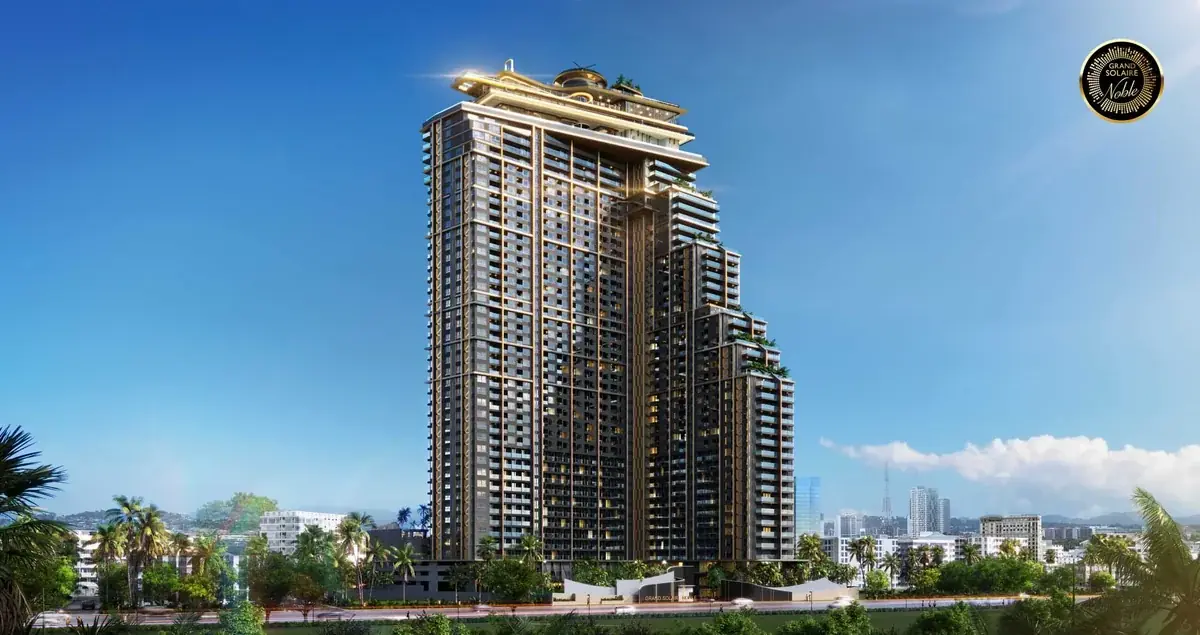
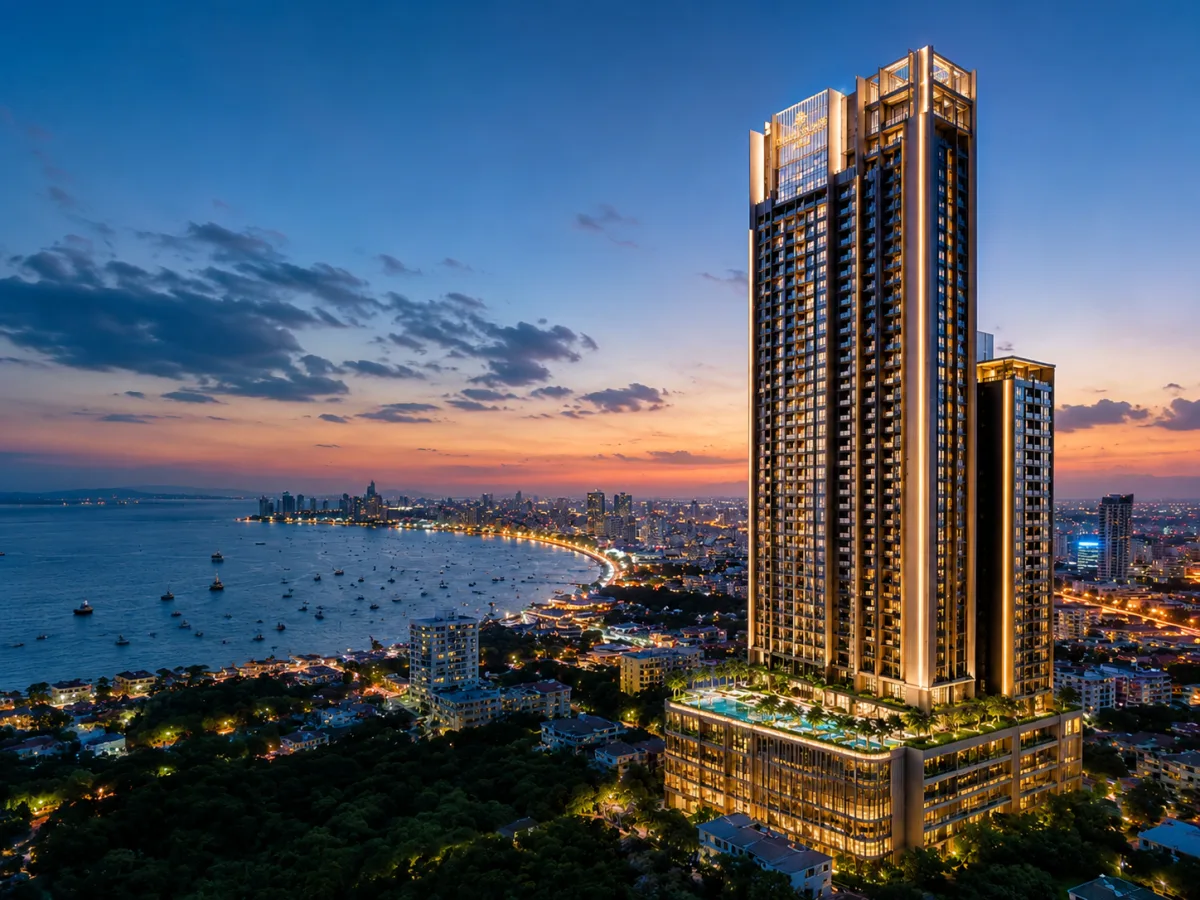
- Grand Solaire Noble (Central/South Pattaya): a luxury high-rise in a central location with an enormous facility package – ideal for well-heeled short-term and seasonal tenants, entry from approx. 142,000 THB/m².
- Copacabana Coral Reef (Jomtien): a resort concept right on Jomtien Beach Road – the kind of project that holiday guests actively seek out.
- Aquarous Jomtien: a beachfront new-build with foreign-quota units from approx. 138,000 THB/m² – a strong ratio of entry price to rental potential.
- Zenith Pattaya 2: entry from around 100,000 THB/m² – here the low purchase price is what makes the yield; ideal for a first investment.
Which location and which project suits your strategy – long-term, short-term or a mixed model – depends on your budget and goals. A complete market overview with square-metre prices for all districts is provided by the Pattaya Off-Plan Price Report 2026.
Yield is only half the truth: total return is what counts
Anyone who looks only at the rental yield overlooks the second return lever: capital growth. The Pattaya market has been growing steadily for years at around 3–5 % per year, driven by record tourism and the EEC infrastructure projects. On top of that comes the structural off-plan advantage: those who buy early in a project benefit from the price rise up to completion – an effect that has nothing to do with the ongoing rental yield but complements it perfectly. A studio that delivers 4.5 % net while simultaneously rising in value beats many classic forms of investment in the overall picture – with an asset you can use yourself, whenever you like.
Frequently asked questions about rental yield in Pattaya
What rental yield is realistic in Pattaya?
Around 5–8 % per year gross, depending on location, project and letting model. Net, after the Common Area Fee, management and reserves, you are usually left with around 4–6 % – at the upper end with a good project choice and professional management.
Is long-term or short-term letting more profitable?
Short-term letting brings more income with good occupancy, but requires professional management and a tourist-friendly project. Long-term letting is more predictable and lower-maintenance. Many of my clients run a mixed model: short-term in the high season, monthly in the low season.
How high are the ongoing costs of a condo in Pattaya?
The main items are the Common Area Fee (approx. 40–70 THB/m² monthly), Property Management (10–30 % of the rent depending on the model) and a maintenance reserve of 0.5–1 % of the purchase price per year. For a studio, this typically adds up to 60,000–90,000 THB annually.
Are developers' rental guarantees credible?
With vetted developers: yes, as a calculable entry-level building block. The important thing is that the guarantee is not pre-financed through an inflated purchase price and that the project remains lettable on the open market afterwards. I check both before recommending a project – that's what I'm here for.
Do I have to pay tax on rental income in Thailand?
Yes, rental income is generally taxable in Thailand. Thanks to allowances and standard deductions, however, the burden remains manageable with typical studio earnings. The double taxation agreement with Germany prevents double taxation.
Can I manage the letting from Germany?
Yes – with a local property management company, letting, guest care and maintenance all run entirely on-site. You receive monthly statements and don't need to be in Thailand. I'll support you in selecting a reliable management company.
How quickly will I find a tenant?
In sought-after locations such as Jomtien, Pratumnak or Central Pattaya, a well-equipped studio is usually let within a few weeks – demand from expats, winter residents and long-stay holidaymakers is stable year-round.
Would you like to know what net yield is concretely achievable with your budget? I'll happily work out two to three suitable projects for you with conservative figures – honestly, transparently and in German. Simply write to me via the contact form or download the free guide with all the basics on buying a condo in Pattaya.
Free Guide
68 pages of Pattaya insider knowledge — download free