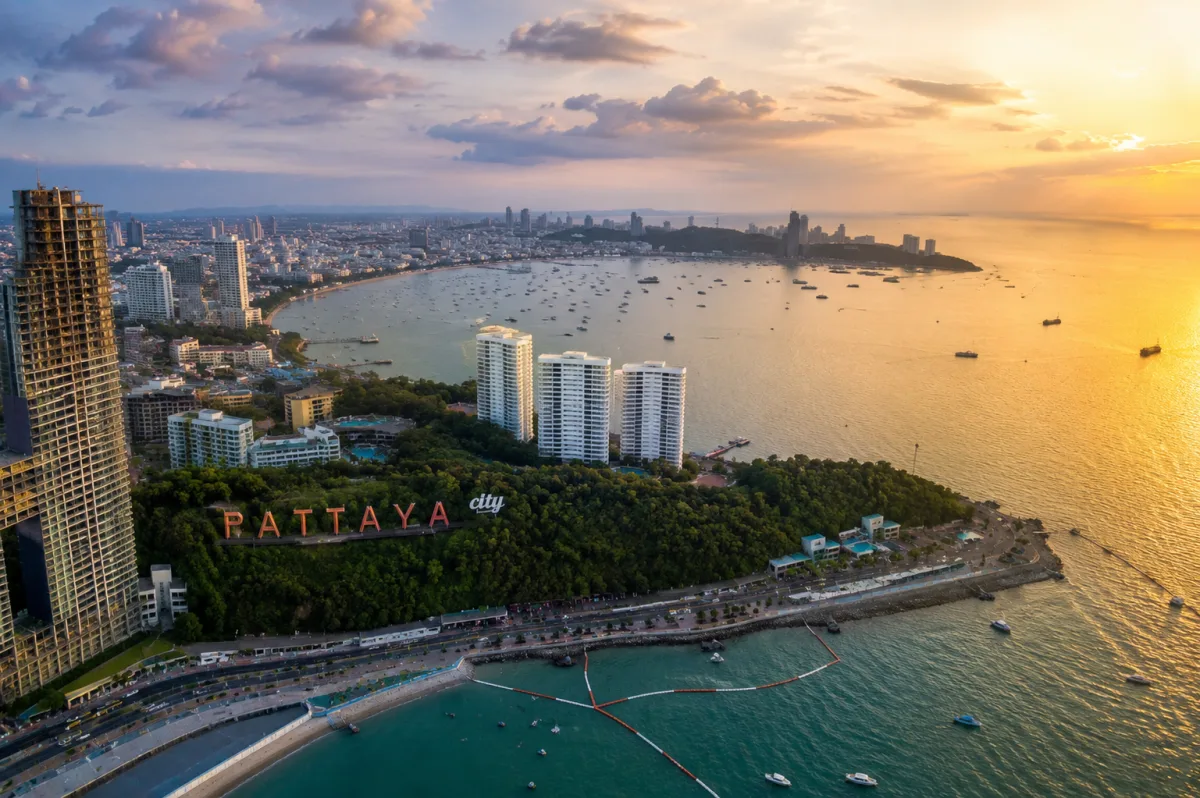
In short: Pattaya beats Phuket for property investors in almost every measurable category: entry prices are roughly 30 to 50 per cent lower, rental demand runs year-round rather than seasonally, and with the Eastern Economic Corridor (EEC) plus the U-Tapao airport expansion, Pattaya has Thailand's strongest state-backed investment driver right on its doorstep. Anyone looking to buy a condo for between 100,000 and 250,000 euros and achieve around 5–8% gross rental yield per year is clearly better off in Pattaya.
Pattaya vs. Phuket at a glance: the comparison table
Both locations rank among Thailand's most popular property markets — but for investors from Germany, Austria and Switzerland, what ultimately counts are the hard numbers. Here is the direct comparison of the most important criteria:
| Criterion | Pattaya | Phuket |
|---|---|---|
| New-build prices per m² (Foreign Quota) | approx. 100,000–220,000 THB, prime Wongamat locations up to 260,000 THB | approx. 135,000–220,000 THB average, top locations such as Bang Tao/Cherngtalay considerably higher |
| Studio entry point (new build) | from approx. €100,000, in projects such as Zenith Pattaya 2 from ~100,000 THB/m² | realistically from approx. €140,000–160,000 |
| Accessibility | 2 Bangkok airports (BKK/DMK) within 1.5–2 hrs, U-Tapao 30–45 min | only 1 airport (HKT), island location, long transfer times in traffic |
| Infrastructure driver | EEC special economic zone, U-Tapao expansion (approx. 290–300 billion THB), Motorway 7 | predominantly tourism-driven, no comparable state programme |
| Rental market | year-round: tourists, expats, EEC professionals, long-term tenants | strongly seasonal (high season Nov–April), monsoon dip May–Oct |
| Rental yield (gross) | about 5–8% p.a., evenly spread across the year | similar peaks possible, but seasonal vacancy phases |
| Cost of living | noticeably cheaper (no island surcharge) | approx. 15–25% more expensive (transport, restaurants, services) |
The result is unambiguous — let us look at the individual points with concrete figures.
Purchase prices per square metre: in Pattaya, investors get more for their money
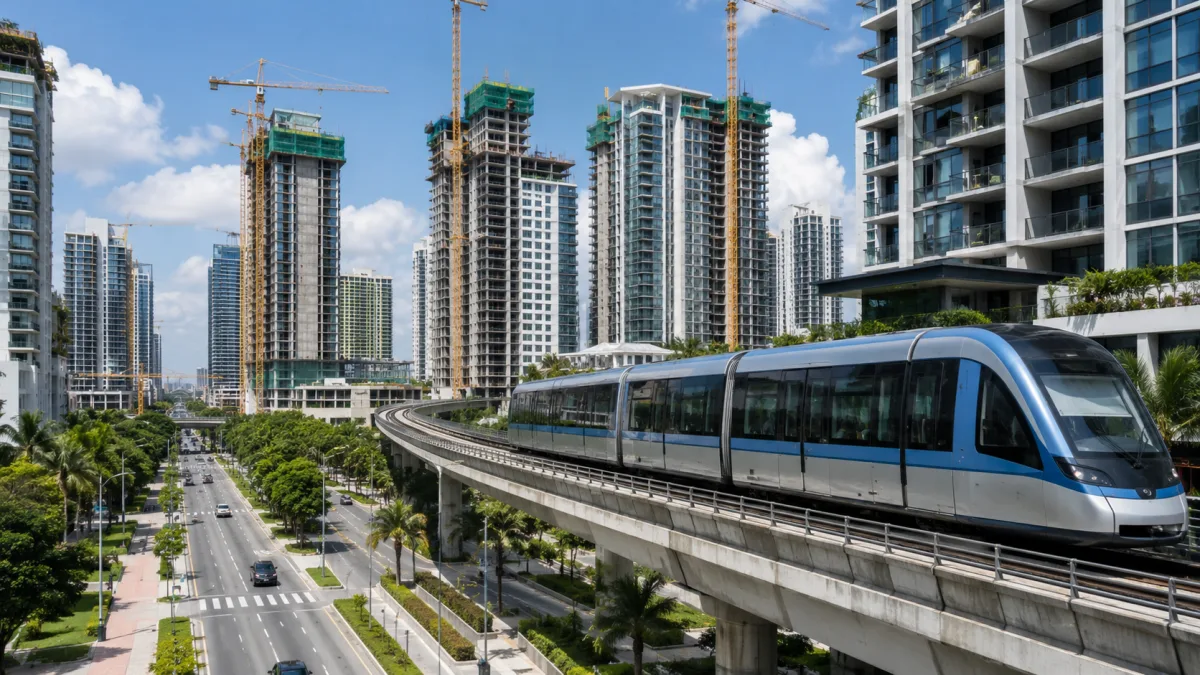
The single most important lever of any property investment is the purchase price. And here Pattaya is unmistakably ahead:
- Pattaya (new build/off-plan): Jomtien 138,000–220,000 THB/m², Pratumnak Hill 120,000–200,000 THB/m², Central Pattaya 130,000–200,000 THB/m², Wongamat/Naklua as a premium location 140,000–260,000 THB/m². Entry-level projects such as Zenith Pattaya 2 start from around 100,000 THB/m².
- Phuket (new build): The island average in 2026 is around 135,000–144,000 THB/m², good locations cost 150,000–180,000 THB/m², and in the sought-after west-coast areas such as Cherngtalay or Bang Tao, prices of 140,000–220,000 THB/m² and more are asked — considerably higher for branded residences.
Converted into euros (at a rate of around 38–39 THB/€) this means: in Pattaya a sensible new-build studio starts at around €100,000, a one-bedroom apartment is around €120,000–170,000, and a two-bedroom condo is €180,000–250,000. On Phuket you generally have to budget 30 to 50 per cent more for comparable quality at a comparable distance from the beach — quite simply because the island location restricts available building land and international hype drives prices up. All prices are guide values from current listings, not guaranteed final purchase prices.
On top of this comes the off-plan lever: anyone entering an early construction phase in Pattaya buys at times up to 40% cheaper than on completion — an increase in value that works on top of the ongoing market price rise of around 3–5% per year. I have compiled the concrete figures on this in the Pattaya Off-Plan Price Report 2026.
Rental yield and rental market: year-round demand beats seasonal business
Phuket's rental market works like a classic island resort: in the high season from November to April occupancy is excellent, but during the monsoon period from May to October tourist demand noticeably tapers off. Anyone renting there has to offset the weak months with the strong ones.
Pattaya works differently — and that is the decisive difference for investors:
- Year-round tourist season: Thanks to its proximity to Bangkok (a good 1.5 hours), Pattaya attracts visitors during the week and in the low season too — weekend guests from the capital, international tourists, and trade-fair and business travellers.
- Expat and long-term market: Tens of thousands of residents from Europe, Russia, China and Korea live in the city permanently and rent long-term.
- EEC professionals: The industrial zones of the Eastern Economic Corridor around Chonburi and Rayong bring engineers, managers and technicians into the region who are looking for high-quality condos on a monthly and yearly basis — a tenant segment that Phuket does not have in this form.
Realistically, Pattaya offers around 5–8% gross rental yield per year — and that evenly distributed across the year, not as a seasonal lottery. How this range breaks down in detail and what is left after costs, I explain in depth in the article Rental yield in Pattaya explained realistically.
Accessibility: two metropolitan airports against a single island
Equally important for both lettability and personal use: how do tenants and owners reach their condo?
- Pattaya: From Bangkok-Suvarnabhumi airport (BKK) you reach Pattaya via Motorway 7 in about 1.5 hours, from Don Mueang (DMK) in around 2 hours. Together, both Bangkok airports offer direct flights from Frankfurt, Munich, Vienna and Zurich as well as connections to practically every major city in Asia. In addition, the regional U-Tapao airport is only 30–45 minutes away.
- Phuket: The island depends on a single airport (HKT). Direct flights from the German-speaking region are seasonally limited; the route usually runs via Bangkok plus a domestic flight. On site, the transfer from the airport to the west coast can quickly take another hour or more due to the dense island traffic.
For investors this means: Pattaya is a spontaneous weekend destination by car for by far the largest reservoir of guests in Asia — Greater Bangkok with over 10 million inhabitants. Phuket structurally lacks this stable demand base.
Infrastructure and the EEC: Pattaya's built-in investment turbo
Perhaps the biggest difference between the two locations is decreed by the state: Pattaya lies right in the middle of the Eastern Economic Corridor, Thailand's most important special economic zone. The key points relevant to property buyers:
- U-Tapao expansion: The airport project, worth around 290–300 billion THB, reached the construction phase in April 2026 with the official "Notice to Proceed". The first expansion stage for 12 million passengers is due to open in 2028; the second runway is already under construction.
- Eastern Aviation City: An aerotropolis area with commercial, logistics and maintenance zones is being created around U-Tapao — development of the commercial areas starts in 2026.
- Transport links: Motorway 7 already provides a high-capacity connection between Pattaya and Bangkok today; the planned high-speed rail link between the three airports will further reduce travel time in the longer term.
Each of these building blocks brings jobs, purchasing power and rental demand into the region — and supports the long-term value development of condos in Pattaya. Phuket has nothing comparable: the island remains almost entirely dependent on tourism. You will find a detailed analysis in the article EEC infrastructure as an investment driver for Pattaya.
Cost of living: the island surcharge makes itself felt
Pattaya also adds up in everyday life. Because almost all goods have to be transported long distances to Phuket and the island's tourist price structure dominates, residents there pay roughly 15 to 25 per cent more than in Pattaya, depending on the category:
- Restaurants: A good Thai dish costs 60–120 THB in Pattaya, often 150–250 THB in Phuket's tourist zones.
- Transport: In Pattaya, baht buses run for 10–20 THB per trip; on Phuket, taxis and tuk-tuks are notoriously expensive — short trips can quickly cost 300–500 THB.
- Service charges: Common area fees in Pattaya new builds are usually around 40–70 THB/m² per month — often higher on Phuket in comparable developments.
For owner-occupiers this means a considerably more relaxed monthly budget, and for landlords more attractive overall costs from the tenant's perspective. You will find concrete figures for a realistic monthly budget under Cost of living in Pattaya.
Legal framework: Foreign Quota clearly at an advantage
Legally, the same framework applies in both regions: the Thai Condominium Act allows foreigners to acquire up to 49% of the floor area of a condominium as full ownership (freehold, Foreign Quota) — with their own entry in the land register. The practical difference lies in the supply:
- In Pattaya, the market is strongly geared towards condos under Foreign Quota — exactly the form of ownership that is ideal for buyers from the German-speaking region. With my projects, I secure the Foreign Quota for my clients at an early stage.
- On Phuket, the villa segment dominates in many resort locations, which is usually only accessible to foreigners via leasehold structures (30-year lease) — without genuine ownership.
When buying a new build from a vetted developer, the contracts are also standardised — a separate lawyer is not necessary here; I take care of selecting the right developer, which is precisely what I am here for. You can read all the details on the forms of ownership in the article Foreign Quota, freehold and leasehold for buyers from the German-speaking region.
Which projects in Pattaya are interesting right now
Anyone wishing to take advantage of Pattaya's price and yield benefit will currently find an exceptionally strong off-plan offering. Three examples from my portfolio:
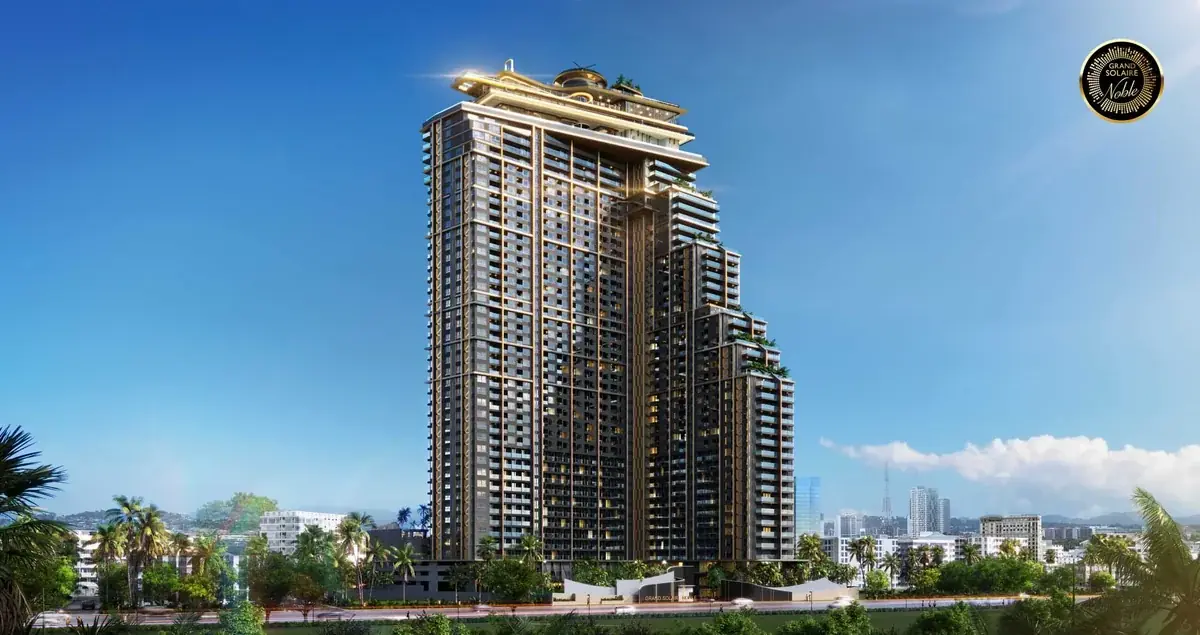
- Grand Solaire Noble – luxury high-rise in the centre of Pattaya, 142,000–219,000 THB/m², with a rooftop pool and full hotel infrastructure.
- Copacabana Coral Reef – beachfront resort living in Jomtien with a spectacular pool landscape, ideal for holiday letting.
- Aquarous Jomtien – modern large-scale project near Jomtien Beach, Foreign Quota 138,000–217,000 THB/m².
For comparison: for the same per-square-metre prices on Phuket you usually only get existing stock in the second or third row — whereas in Pattaya you get a new build in a top location with modern fit-out and the new-build premium of around 20% in value over older resale.
Frequently asked questions about Pattaya vs. Phuket for investors
Isn't Phuket the "classier" address for property buyers?
Phuket has a strong luxury image, which plays out above all in the villa segment from €500,000 upwards — mostly only as leasehold. In the condo segment, which is relevant for most investors from the German-speaking region, Pattaya offers the more modern property in a better location for the same budget — and as genuine freehold ownership at that.
How do the rental yields differ in concrete terms?
Good gross yields are possible in both markets; in Pattaya they are around 5–8% per year. The difference is the distribution: thanks to its proximity to Bangkok, its expat community and EEC professionals, Pattaya lets year-round, whereas Phuket has significant demand dips during the monsoon period from May to October.
Doesn't Phuket also benefit from state infrastructure?
In isolated cases, yes — but no programme on Phuket is comparable to the Eastern Economic Corridor. The U-Tapao expansion near Pattaya alone moves around 290–300 billion THB and has been officially in the construction phase since April 2026; the first stage for 12 million passengers is due to open in 2028.
As a German, can I buy equally safely in both regions?
Yes, the Condominium Act applies nationwide: foreigners may own up to 49% of a condo's floor area as freehold. In Pattaya, however, the supply of Foreign Quota units is considerably larger, while on Phuket many properties are only offered as leasehold.
Is Phuket worthwhile as a complement to a Pattaya investment?
Anyone who already has a diversified portfolio can consider Phuket as an addition. For entering the Thai market and for the best ratio of purchase price, yield and growth prospects, however, Pattaya is clearly the more efficient choice.
My conclusion: Pattaya is the more rational choice for investors
Phuket is a beautiful holiday island — but as an investment location, Pattaya wins this comparison clearly: entry prices 30–50% lower, a year-round rental market with around 5–8% gross yield per year, two metropolitan airports plus U-Tapao within reach, and with the EEC a state-backed growth engine that will sustain the region for years to come. On top of this comes the off-plan advantage of at times up to 40% versus the completion price and an ongoing market price rise of around 3–5% per year. All the figures mentioned are guide values and not investment advice — but the direction is unambiguous.
Would you like to know which project in Pattaya suits your budget and your goals? Write to me without obligation via the contact form — I will get back to you personally. Or first download my free guide: there you will find the complete buying process, all the costs and the most important locations explained concisely.
Free Guide
68 pages of Pattaya insider knowledge — download for free